THE HOMESTEAD
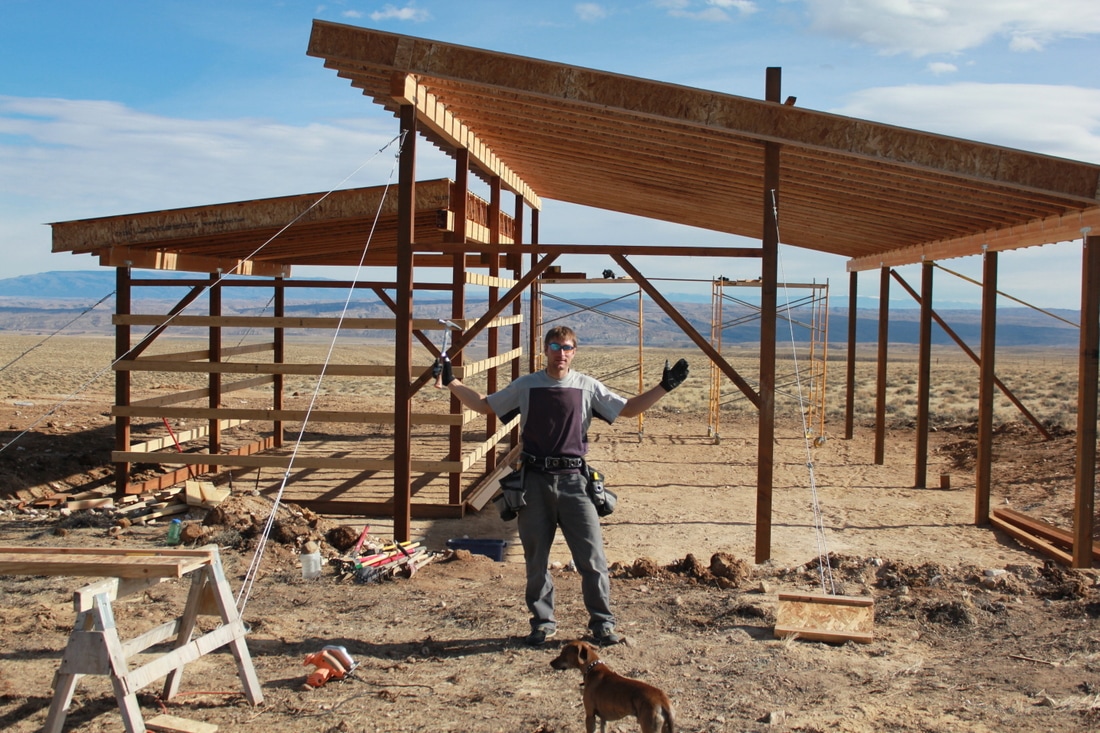
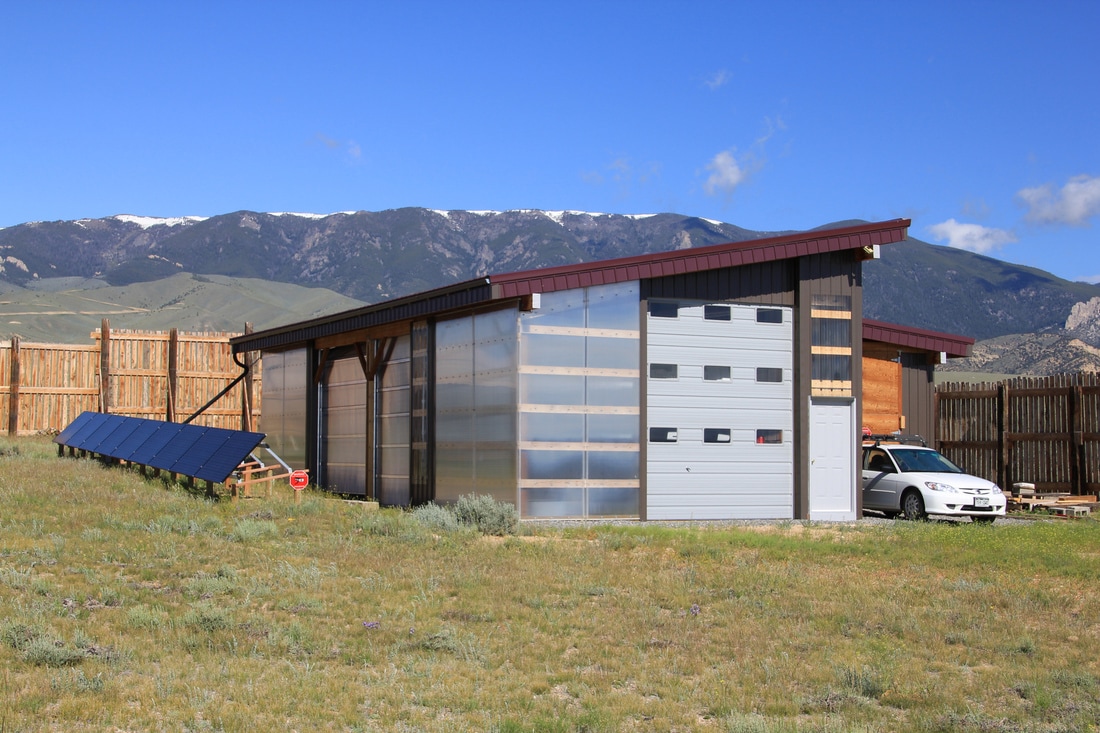
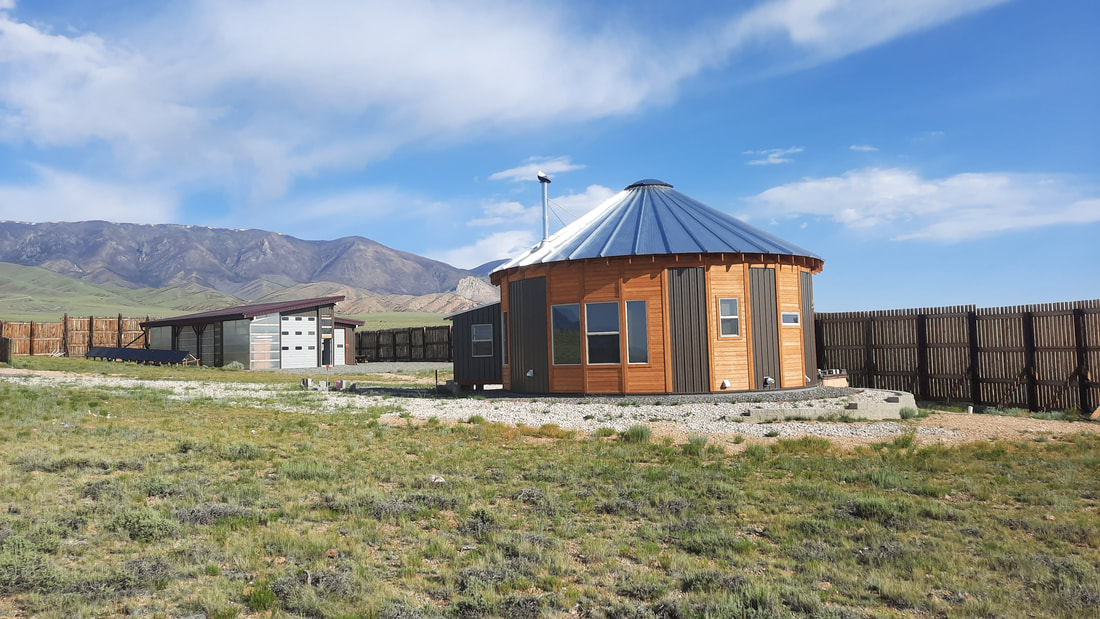
In 2009, the idea of building an off-grid homestead turned from a dream to reality as I signed closing papers for a 22 acre piece of land underneath Montana's eastern Beartooth Front, in the south central part of the state, just southeast of Red Lodge. General ideas about how to develop it became more frequently contemplated, and I vowed to spend the three years I figured it would take to pay off the land to learn as much as possible and put the planning pen to paper. In 2012, with the deed in hand, I headed south from Alaska to Montana to dig myself in and get something permanently established. The plan began to unfold and evolve, and the adventure moved from theory to practice.
I suppose I should take a step back. There was a rationale behind the concept of a homestead that I had grasped back in 2002, when I bought a large RV to live in, but also to have around for the future. I had no time frame or agenda for buying land; back then I didn't really give it much thought, but it was the general plan. As the years passed, and the number of places in which I had lived and traveled through had increased, I began paying attention to realty postings online and in the field, and visiting land for sale. I gained a better idea of which places suited my soul's desires, and which ones were practically realistic and affordable. The image captions throughout this page help to tell this story, from land shopping to brainstorming, and planning to swinging hammers during the first building phase.
I suppose I should take a step back. There was a rationale behind the concept of a homestead that I had grasped back in 2002, when I bought a large RV to live in, but also to have around for the future. I had no time frame or agenda for buying land; back then I didn't really give it much thought, but it was the general plan. As the years passed, and the number of places in which I had lived and traveled through had increased, I began paying attention to realty postings online and in the field, and visiting land for sale. I gained a better idea of which places suited my soul's desires, and which ones were practically realistic and affordable. The image captions throughout this page help to tell this story, from land shopping to brainstorming, and planning to swinging hammers during the first building phase.
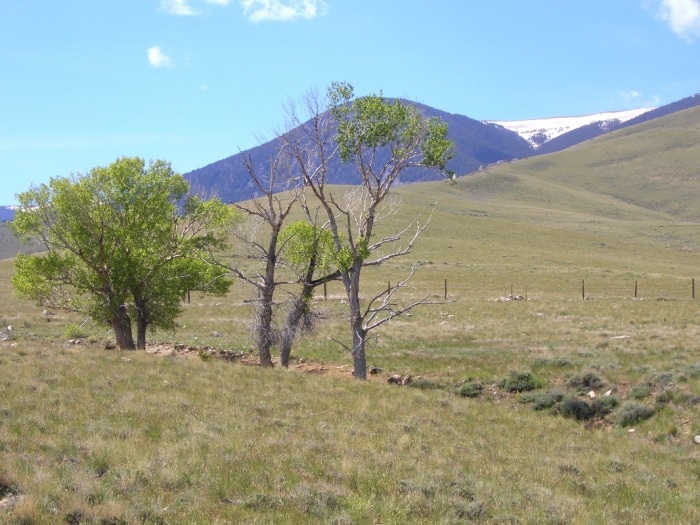

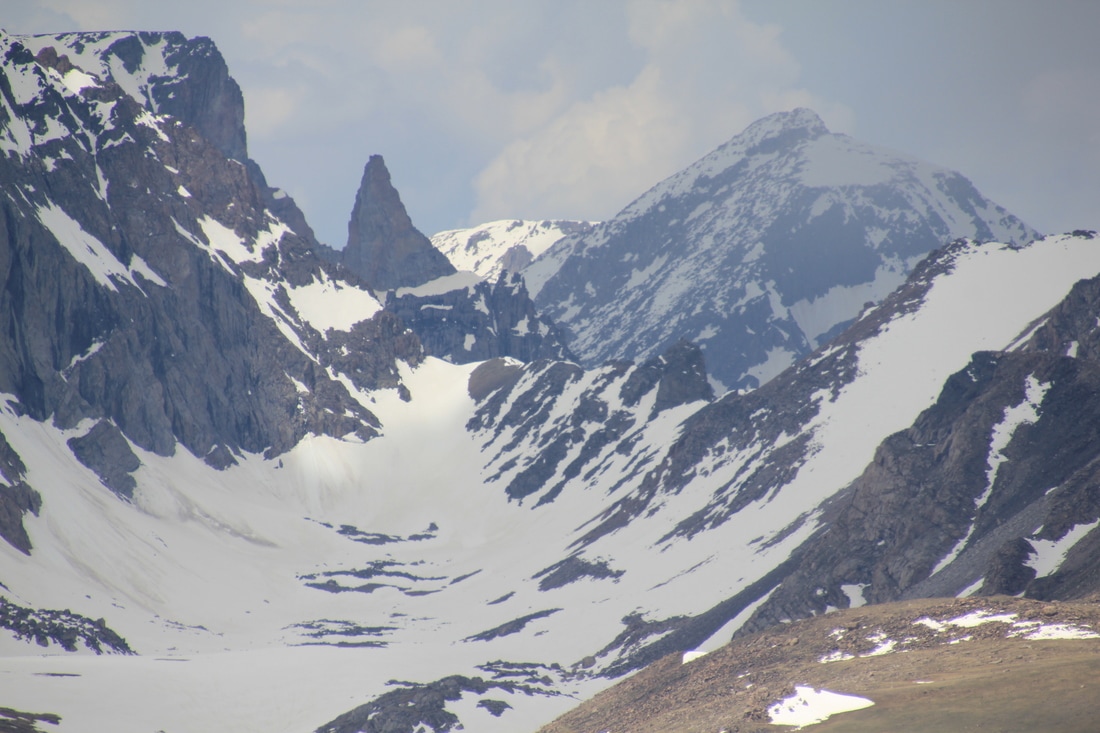
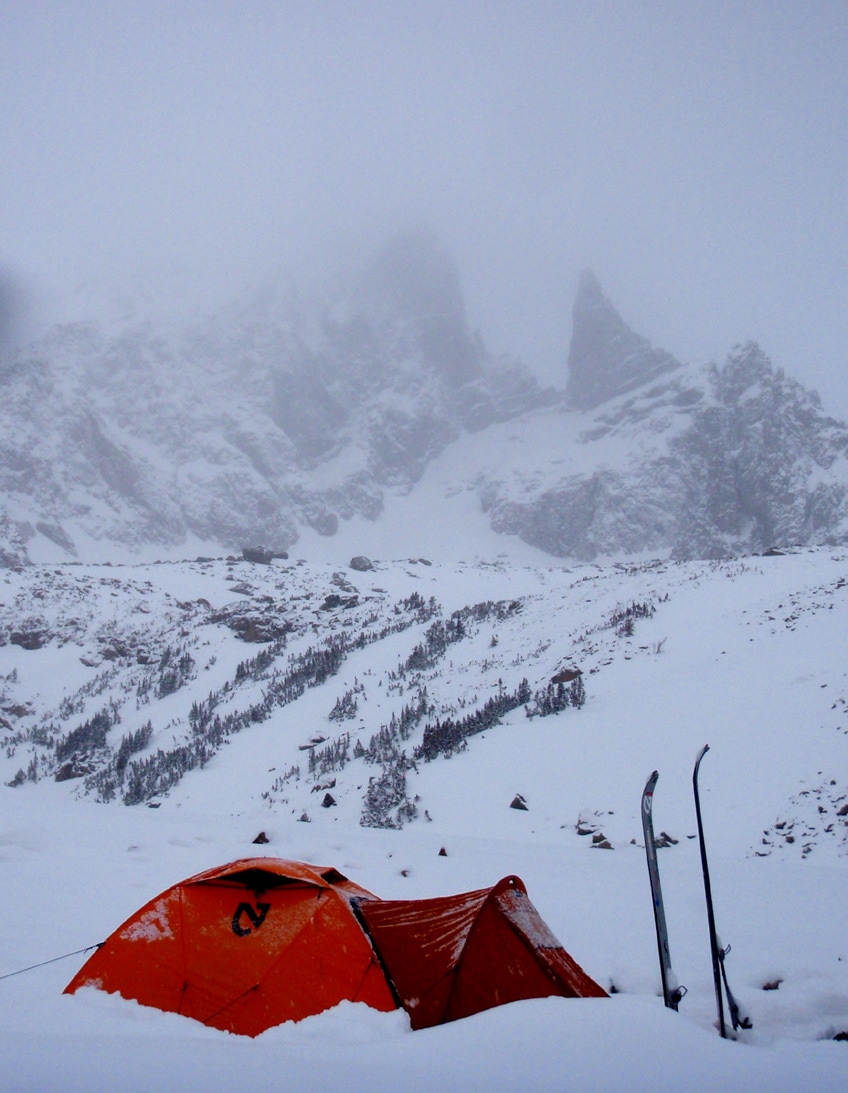
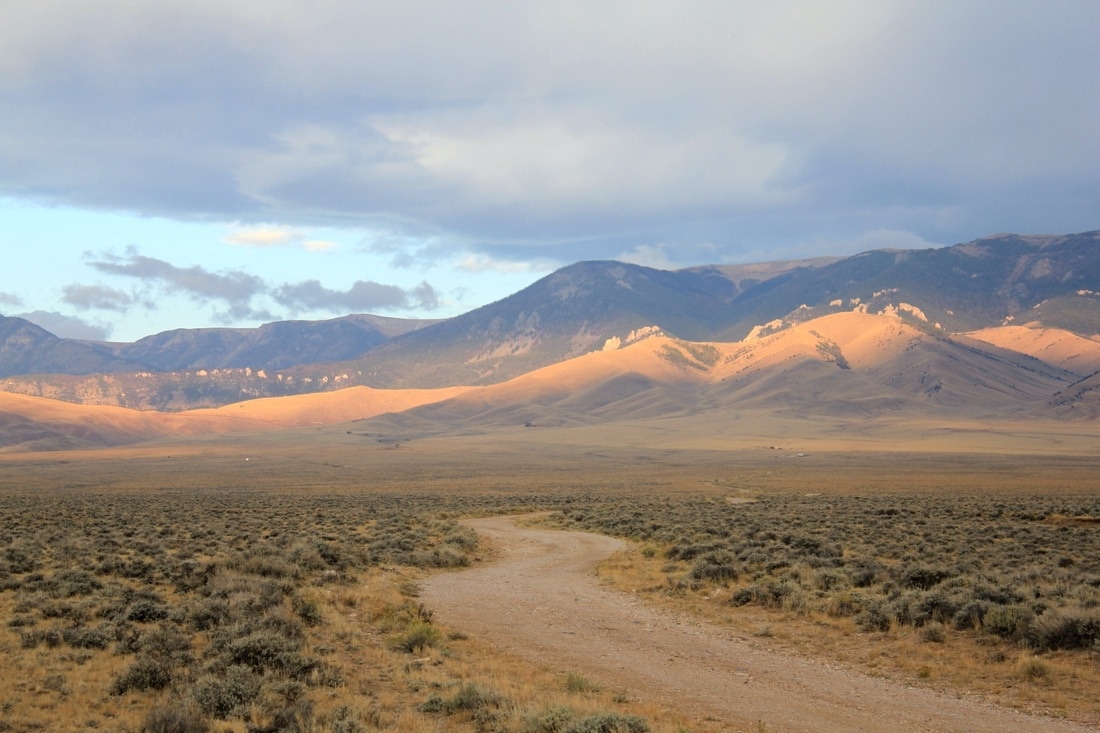
I had looked around extensively in Nevada and Colorado, but found the right lot not far from Red Lodge, at an elevation of exactly 5000 feet. It lies within a rain shadow, and is arid, yet its crystal clear groundwater is fed by lofty peaks above that get plenty of rain and snow. I felt like it's the best of both worlds -- lots of sun for powering and heating a homestead and allowing for more reliable all-season access, yet adequate and reliable water supplies. It also has incredible access to big mountains with loads of climbing opportunities, a water table only 150 feet below grade, farming and ranching within a few miles, and the ability to essentially build what you want to. Upon learning that the realty could finance it at only 5% down, the decision quickly made itself when I found the right lot. It was a real gem, bordering BLM land on the south and west sides, and with a ravine running though the lot to add some topographical diversity. The search was over.
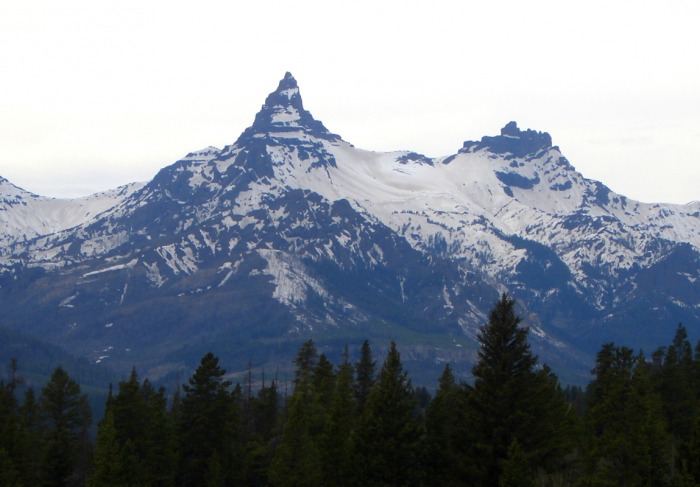
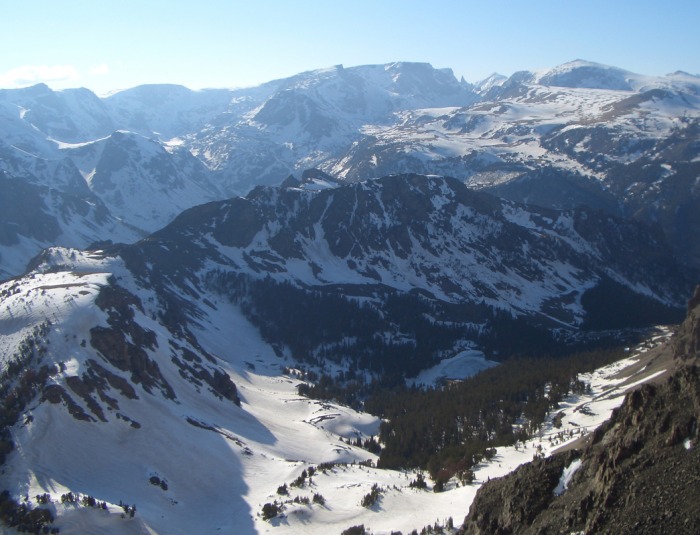
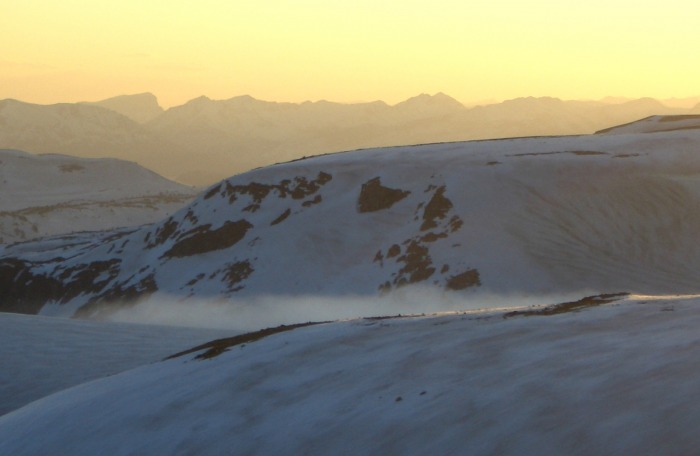


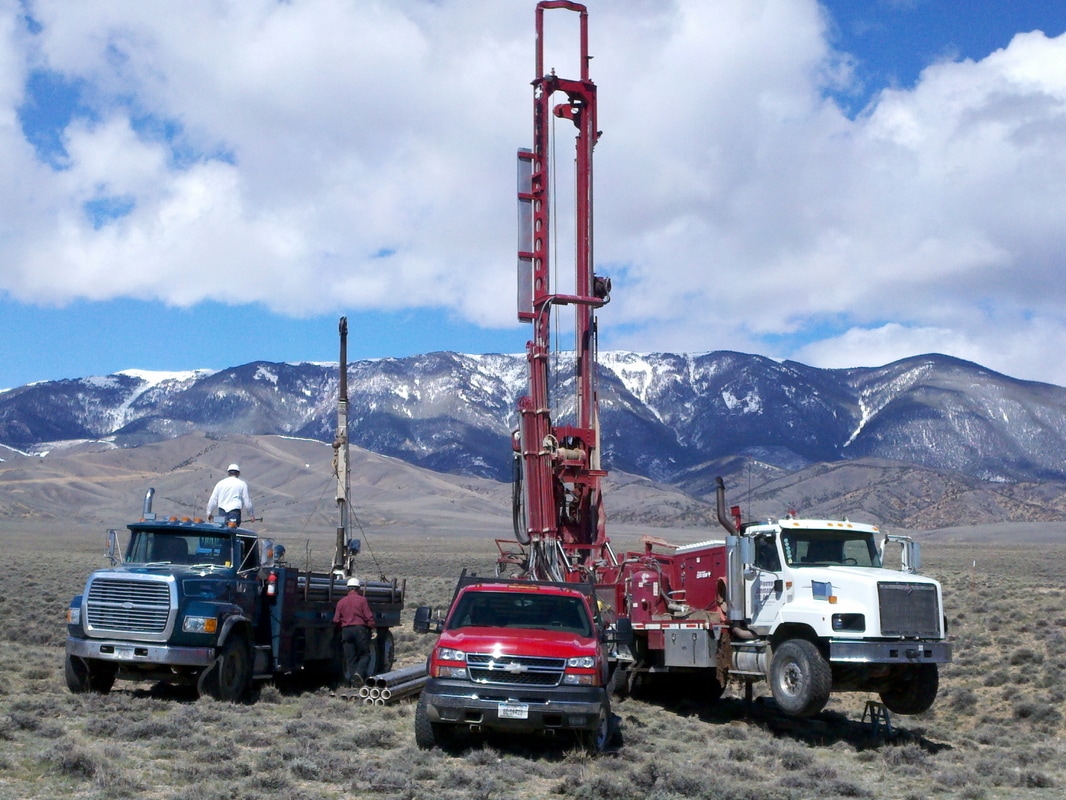
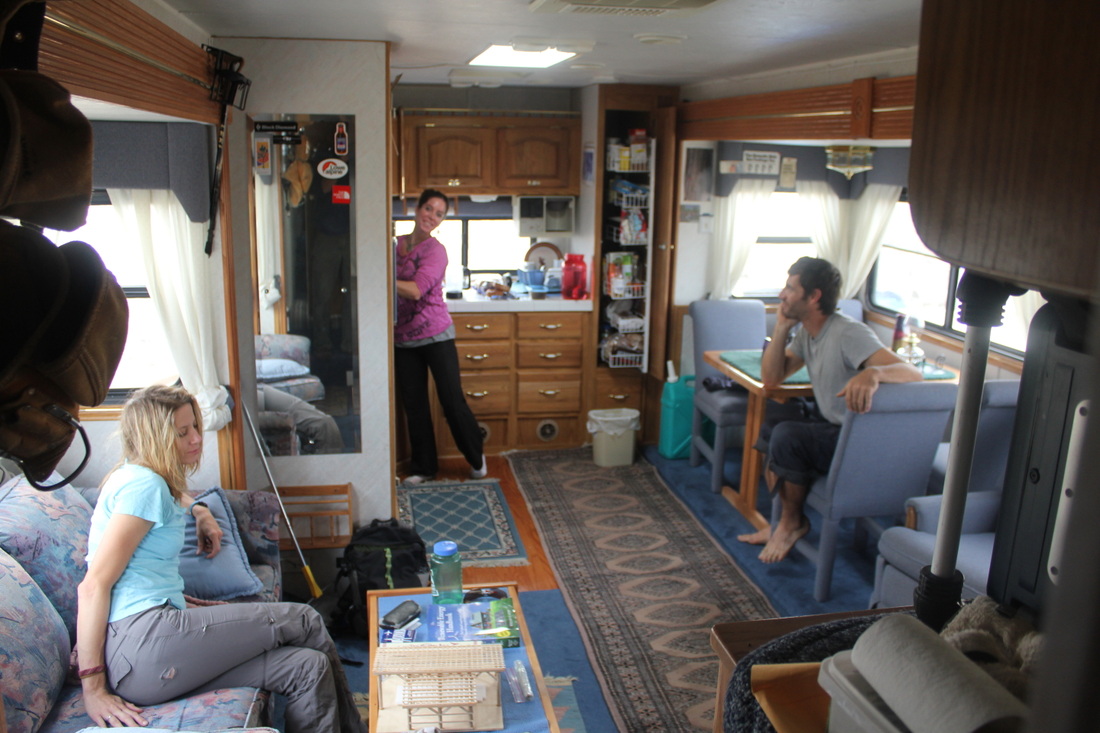
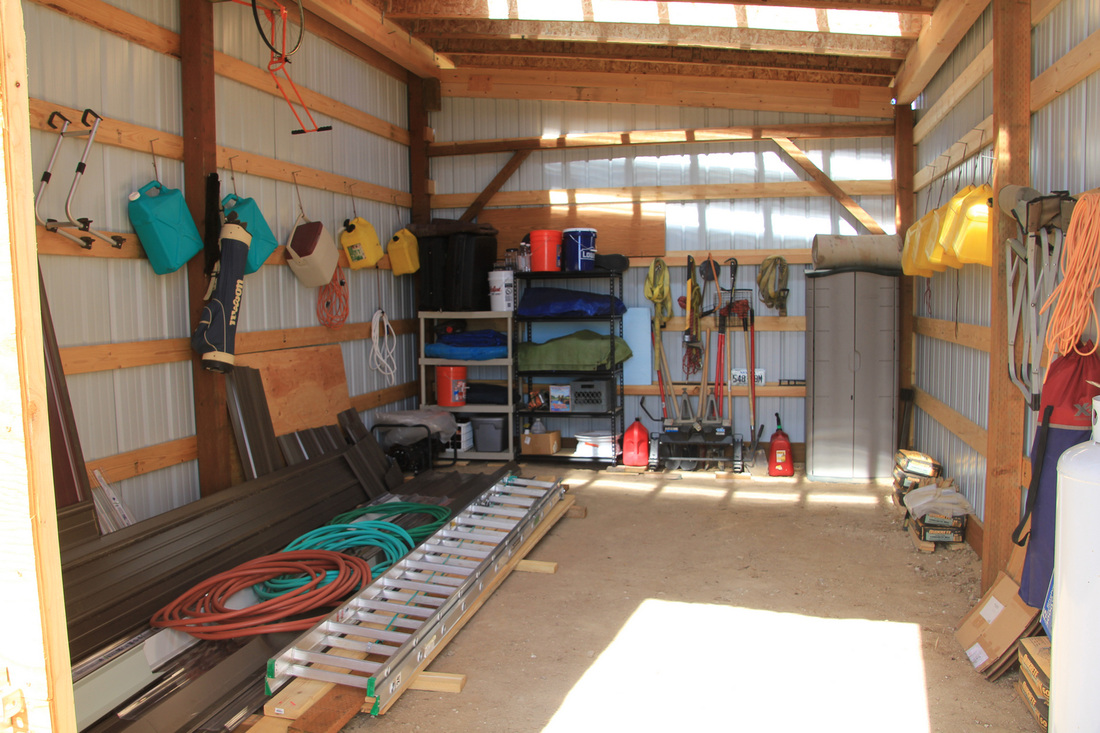
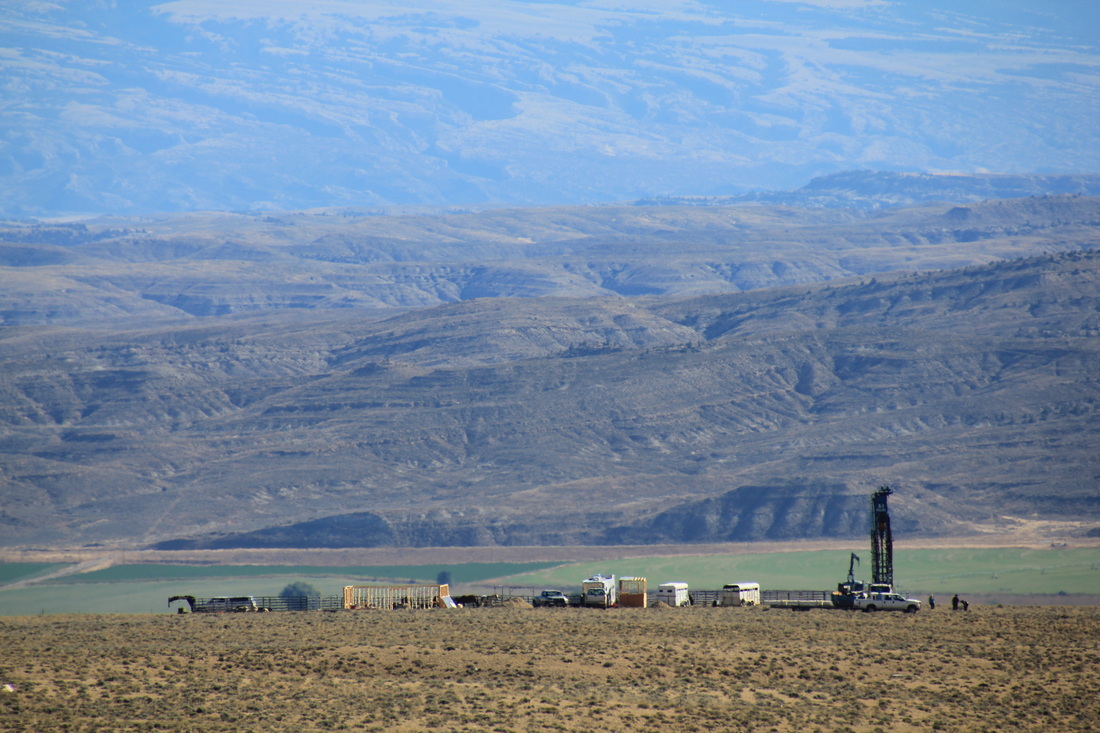
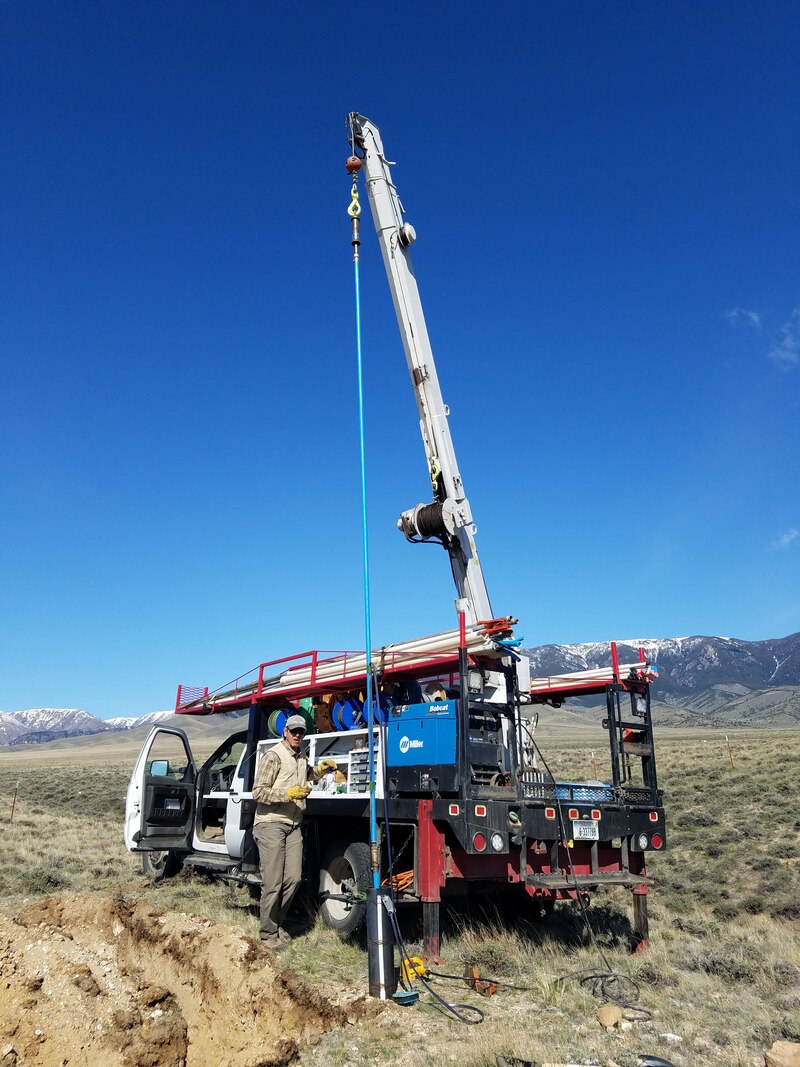
In the summer of 2012, the check cleared for the final payment on the land and I was ready to start on my outbuilding. In case you're wondering, it was less than $1,000 an acre at that time, for reasons related to access, which I later solved. I hitched up my trusty 20 year old pickup and flatbed trailer in Fairbanks, Alaska, and hit the road for a two month long trip. I had looked at all sorts of options, including conventional kit barns, tension fabric structures, and hiring pole barn contractors to build a custom design. The basic idea was to have lots of indoor storage capacity, plus a shelter to keep the fifth wheel out of the elements. The building and RV would serve as a medium term home scenario; a comfortable place to stay with solar panels, a generator, and tools with which to work on things when I visit. I also had water; in 2011 I had a well drilled and lucked out when I hit perfectly drinkable water at 140 feet and picked up 10 gallons a minute by 210 feet.
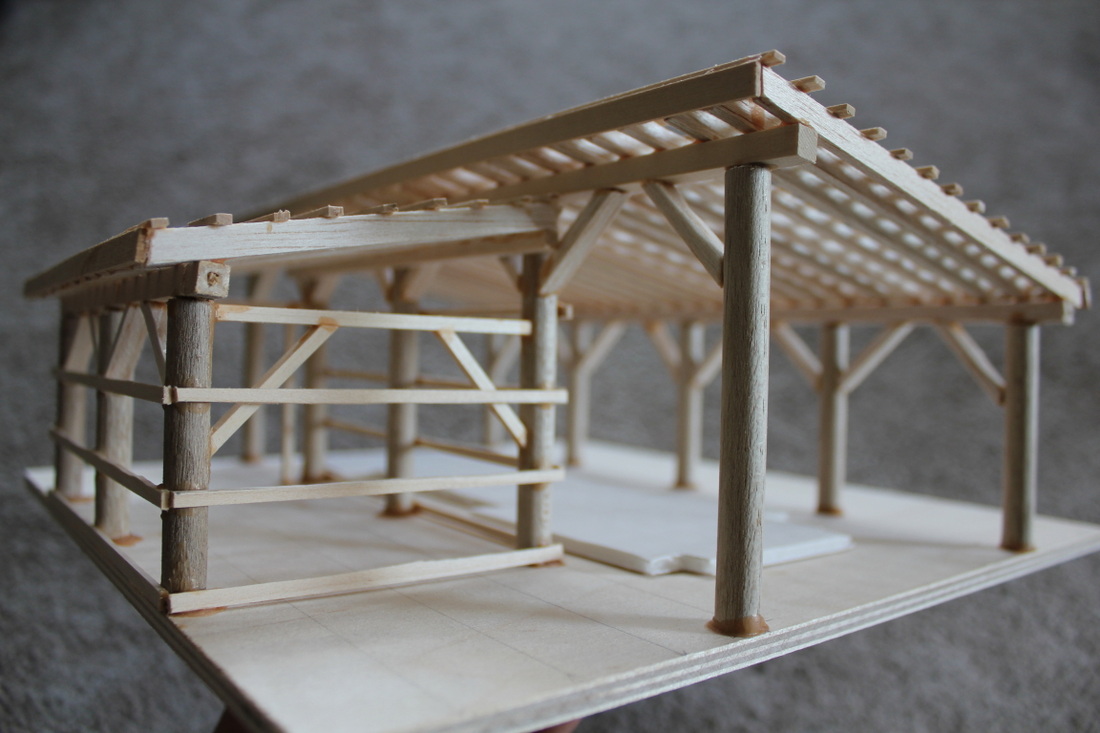
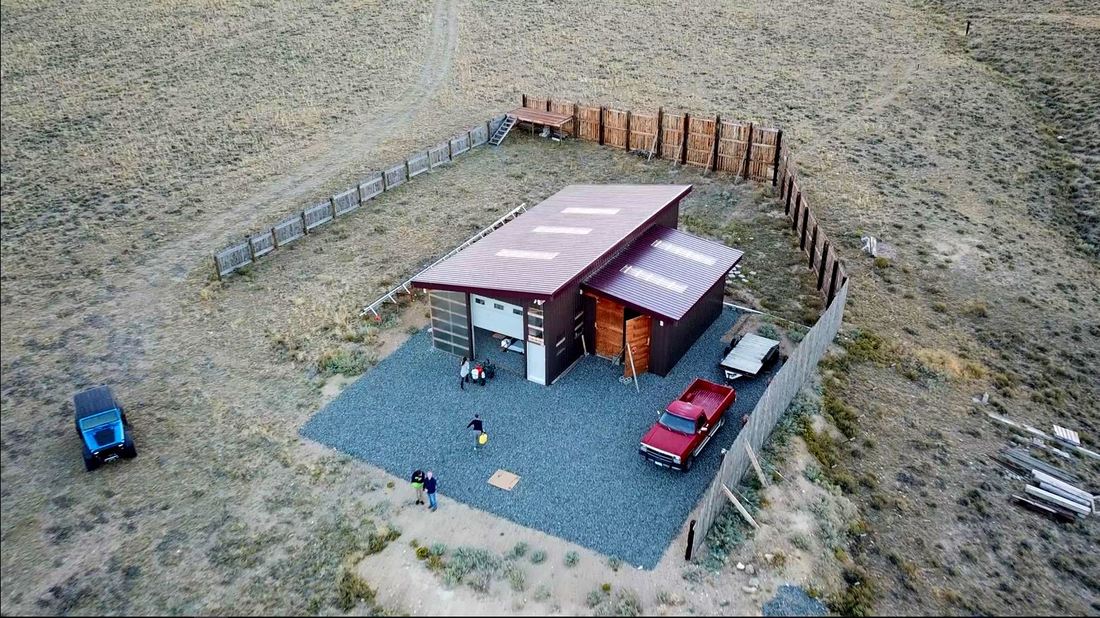
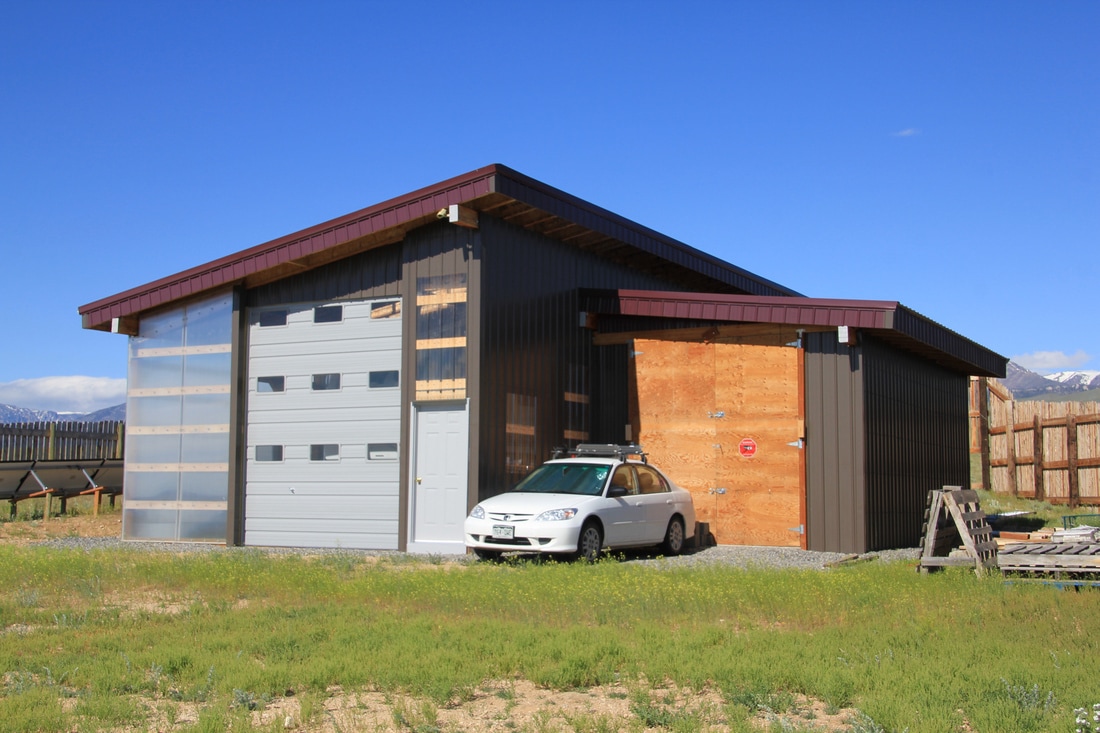
I ended up designing a less conventional, less expensive building that would allow for much more versatility in the long run. It would suit my planned needs for a temporary residence -- and later, a homestead outbuilding -- but also would be suitable to turn into a solar home someday if economic circumstances prevent me from starting on a whole new structure. My building was simple and clean -- a 48 x 22 foot lean-to open pole barn with a 28 x 17 foot attached shop space, all with dirt floors. I built a scaled model and ordered the materials, which clocked in at a little more than $11,000 total -- way less than the $28,000 the contractor had quoted.
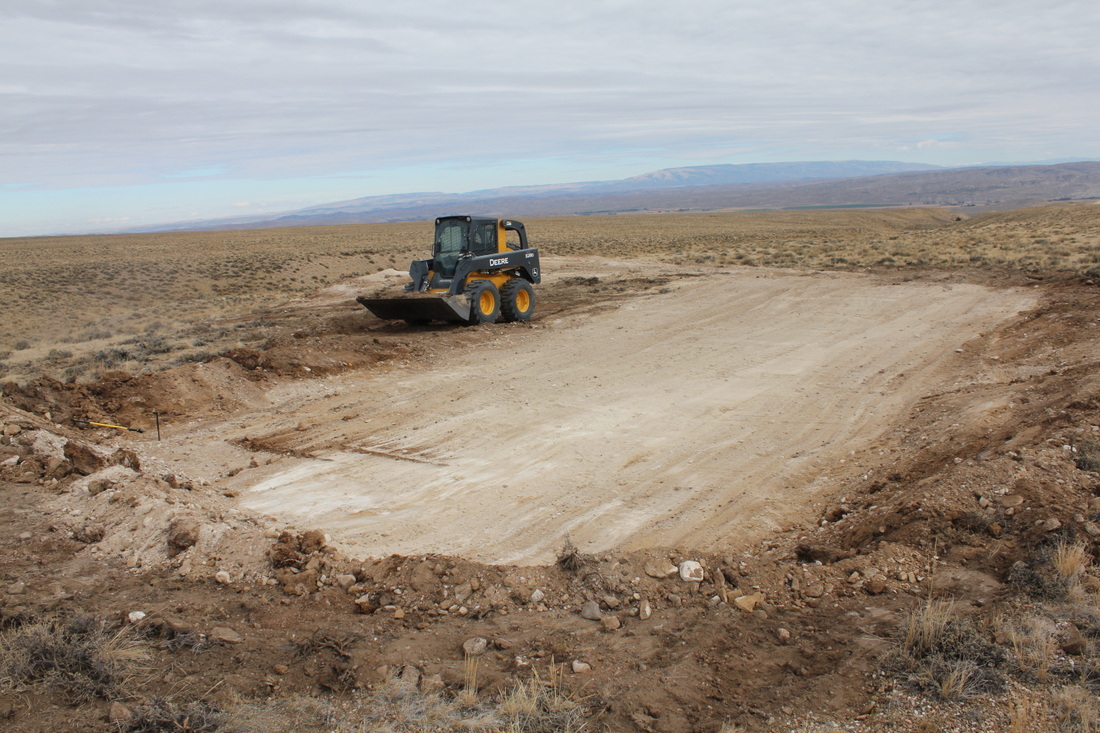
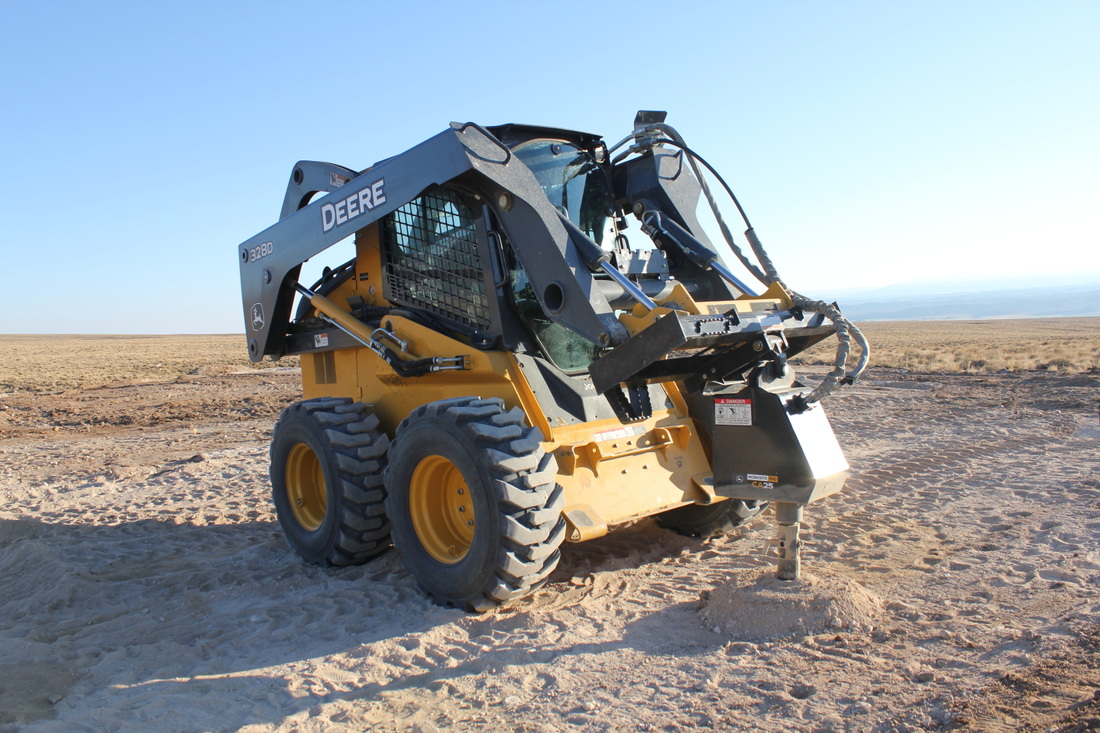
As I pulled away from Fairbanks after months of preparation, planning, and a tool buying spree, I had no idea how difficult it would be to actually build this thing mostly alone and with no heavy equipment aside from the excavation bobcat. After 5,000 miles of driving over the course of two weeks to bring my truck, fifth wheel, camper, flatbed trailer, and several tons of supplies and gear to the land from Alaska, Nevada, and Billings, I was ready to begin the project. Around 40 days later, without a single rest day, I was mostly finished, but utterly exhausted and physically compromised. Click here to read a short story about this gnarly but fulfilling experience.
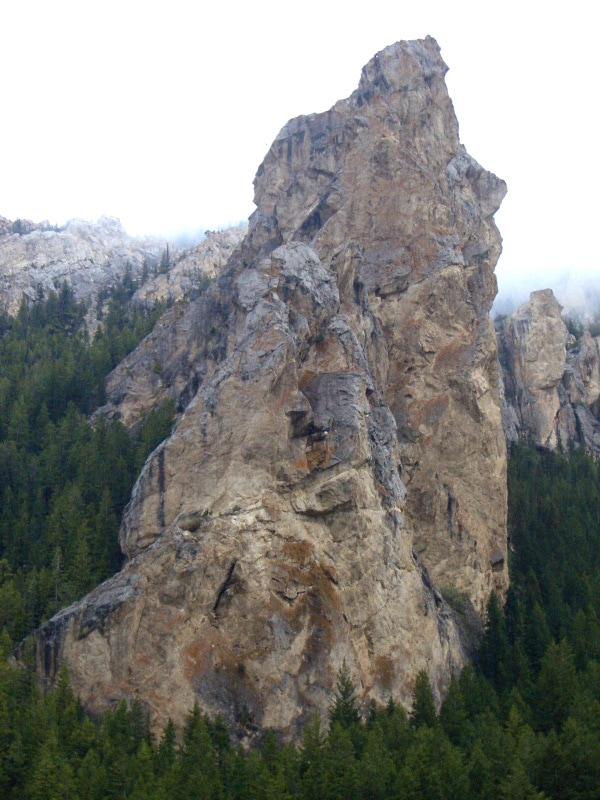
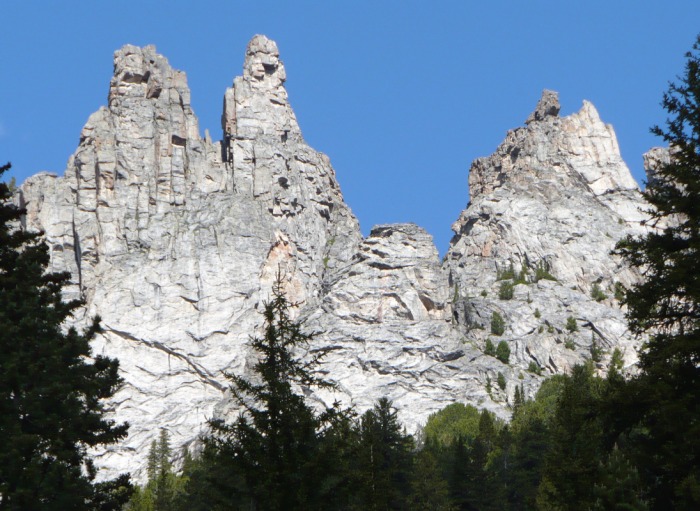
In the spring of 2013 I returned to put on the roof steel, build a deck, and more walls, putting in an additional three weeks of work -- mostly solo -- in order to do so. Fortunately on that trip I was able to go climbing twice, on the wonderful but sharp Meeteetse Spires.
I ended up designing a less conventional, less expensive building that would allow for much more versatility in the long run. It would suit my planned needs for a temporary residence -- and later, a homestead outbuilding -- but also would be suitable to turn into a solar home someday if economic circumstances prevent me from starting on a whole new structure. My building was simple and clean -- a 48 x 22 foot lean-to open pole barn with a 28 x 17 foot attached shop space, all with dirt floors. I built a scaled model and ordered the materials, which clocked in at a little more than $11,000 total -- way less than the $28,000 the contractor had quoted.
As I pulled away from Fairbanks after months of preparation, planning, and a tool buying spree, I had no idea how difficult it would be to actually build this thing mostly alone and with no heavy equipment aside from the excavation bobcat. After 5,000 miles of driving over the course of two weeks to bring my truck, fifth wheel, camper, flatbed trailer, and several tons of supplies and gear to the land from Alaska, Nevada, and Billings, I was ready to begin the project. Around 40 days later, without a single rest day, I was mostly finished, but utterly exhausted and physically compromised. Click here to read a short story about this gnarly but fulfilling experience.
In the spring of 2013 I returned to put on the roof steel, build a deck, and more walls, putting in an additional three weeks of work -- mostly solo -- in order to do so. Fortunately on that trip I was able to go climbing twice, on the wonderful but sharp Meeteetse Spires.

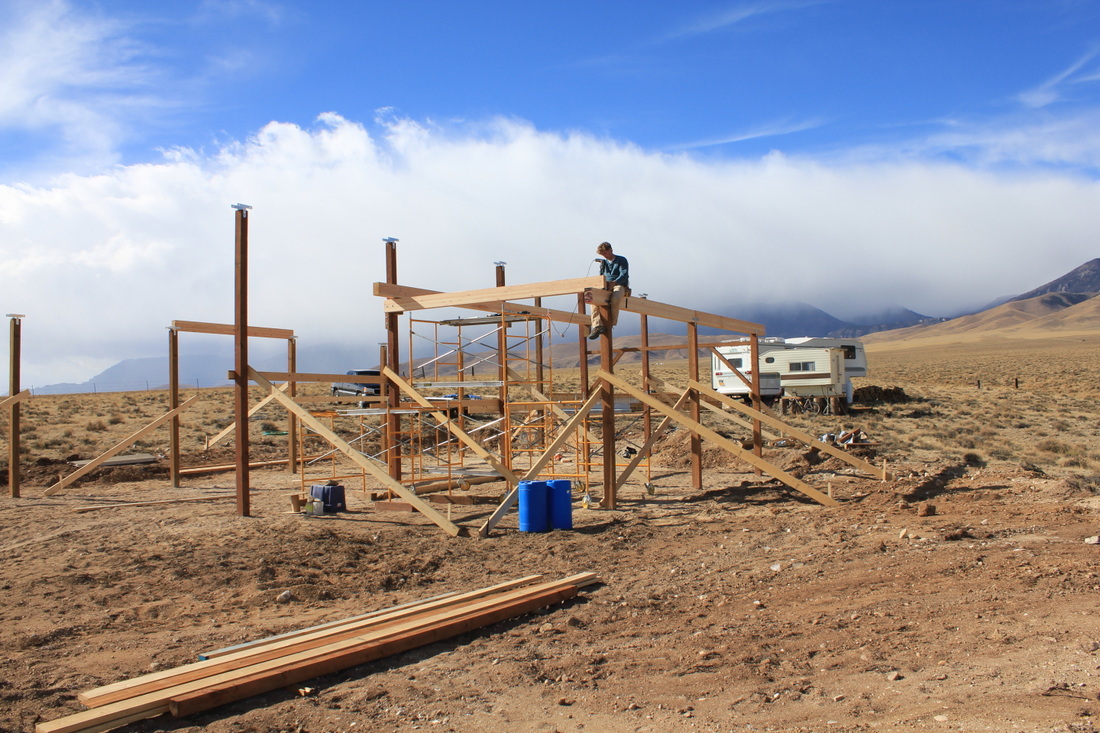
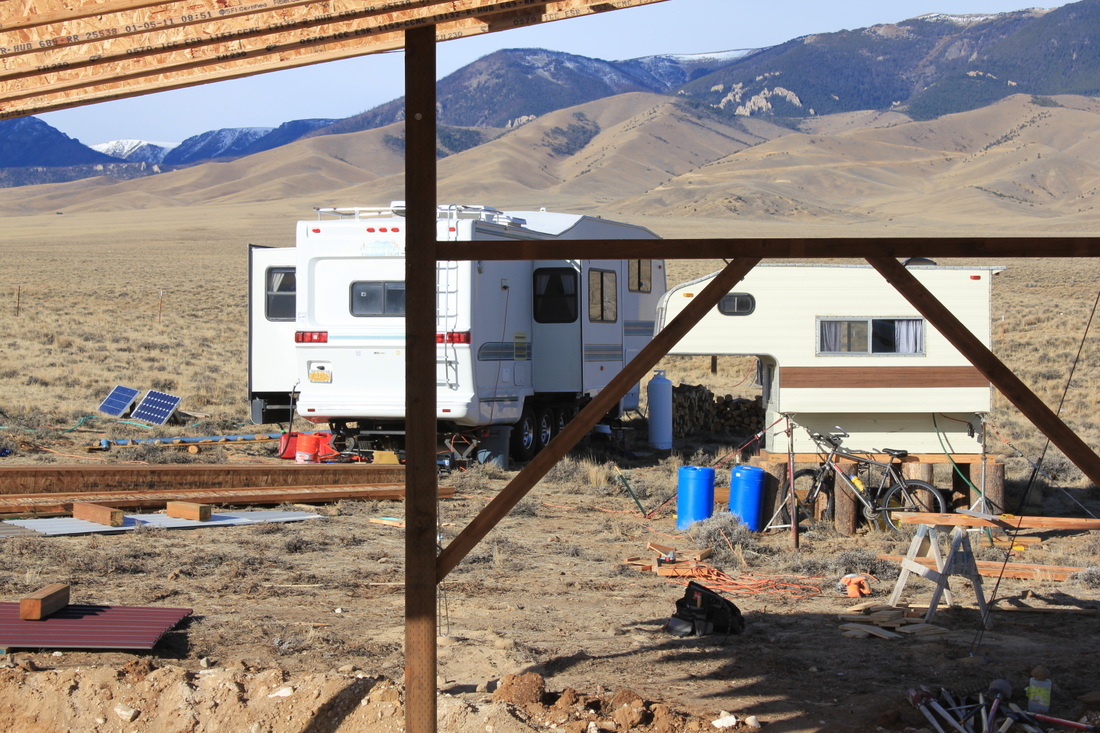
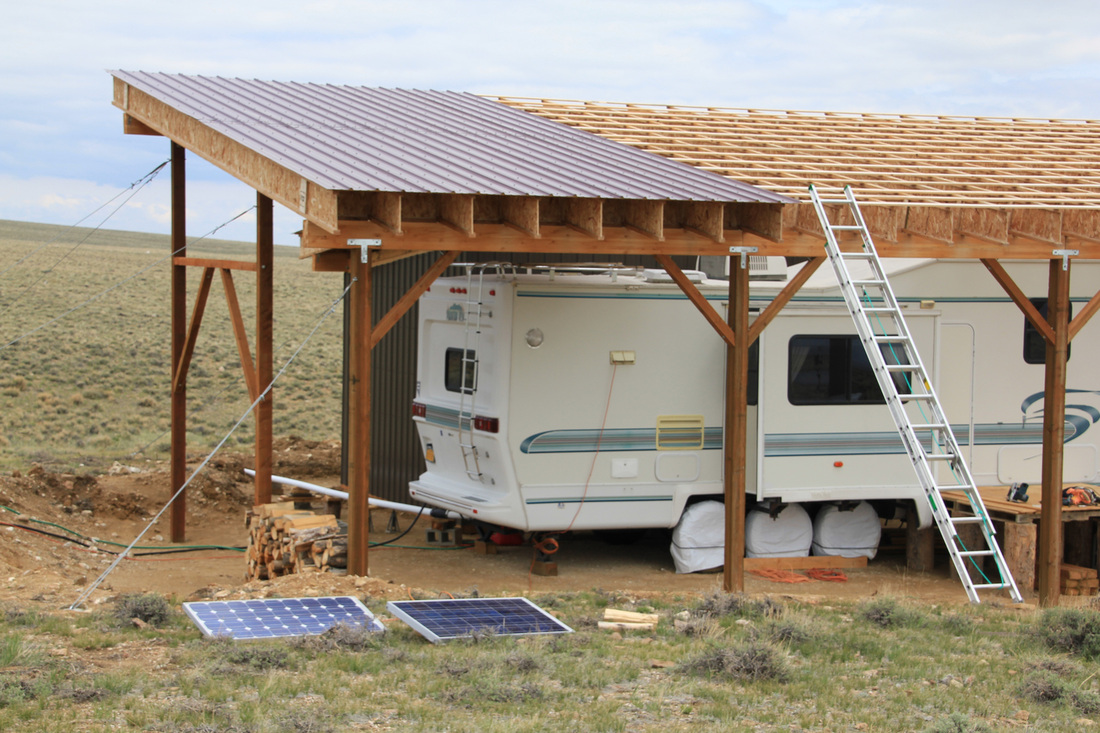
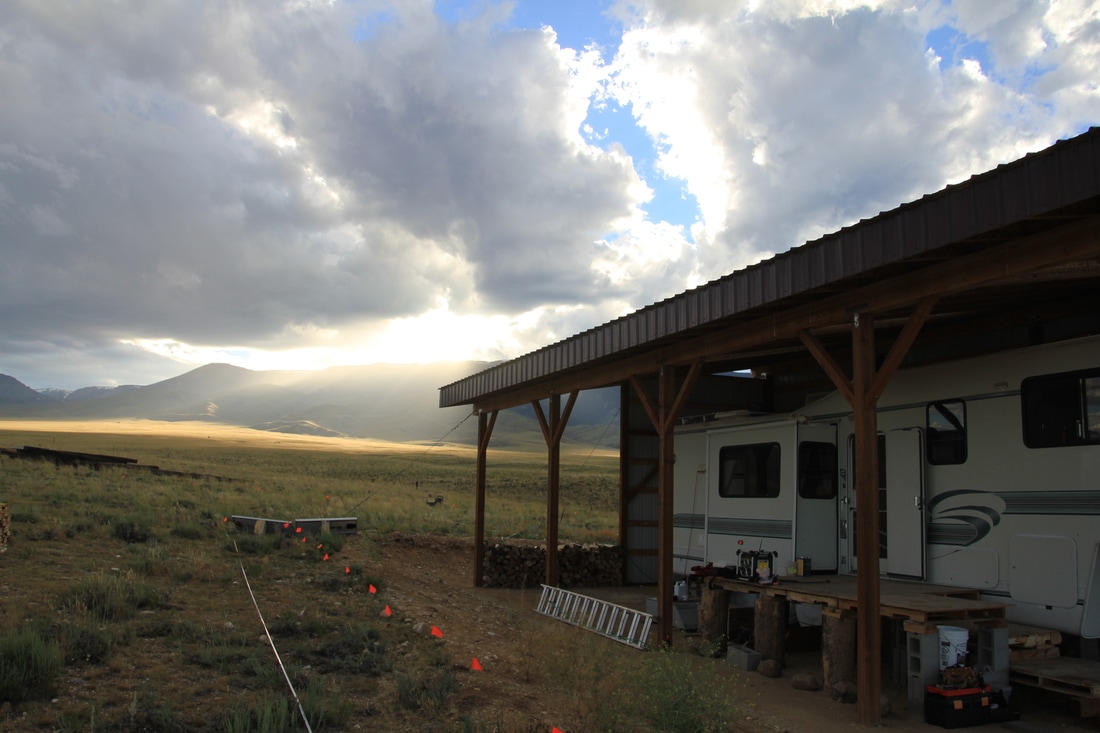
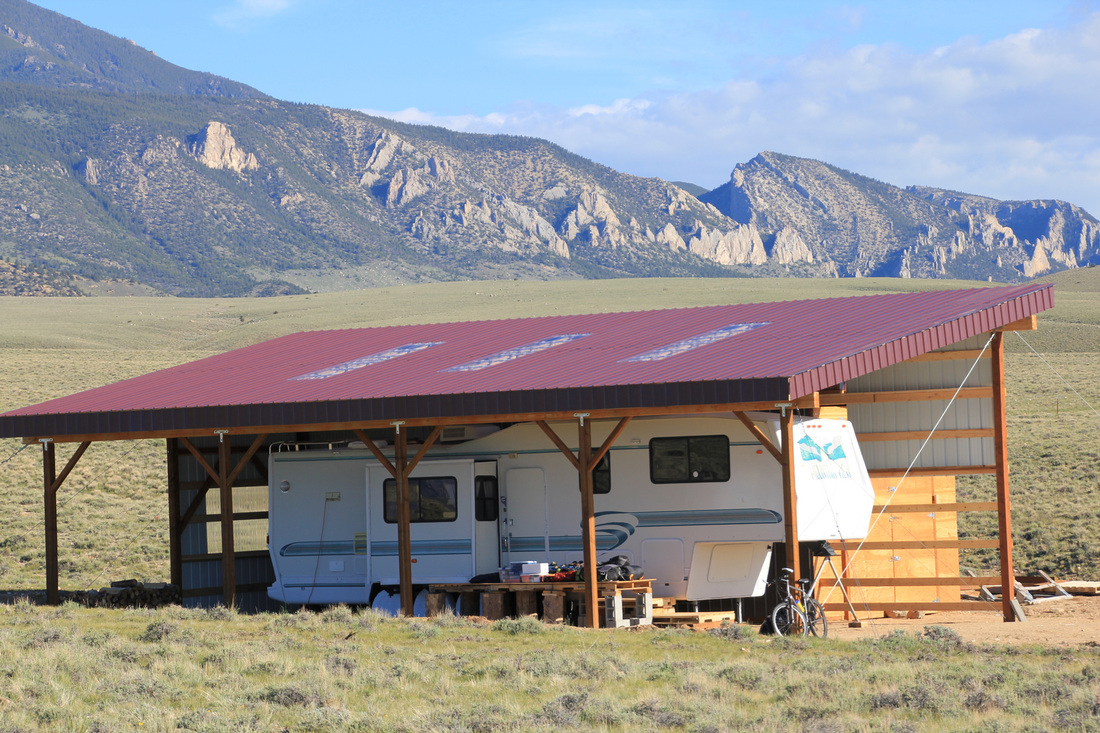
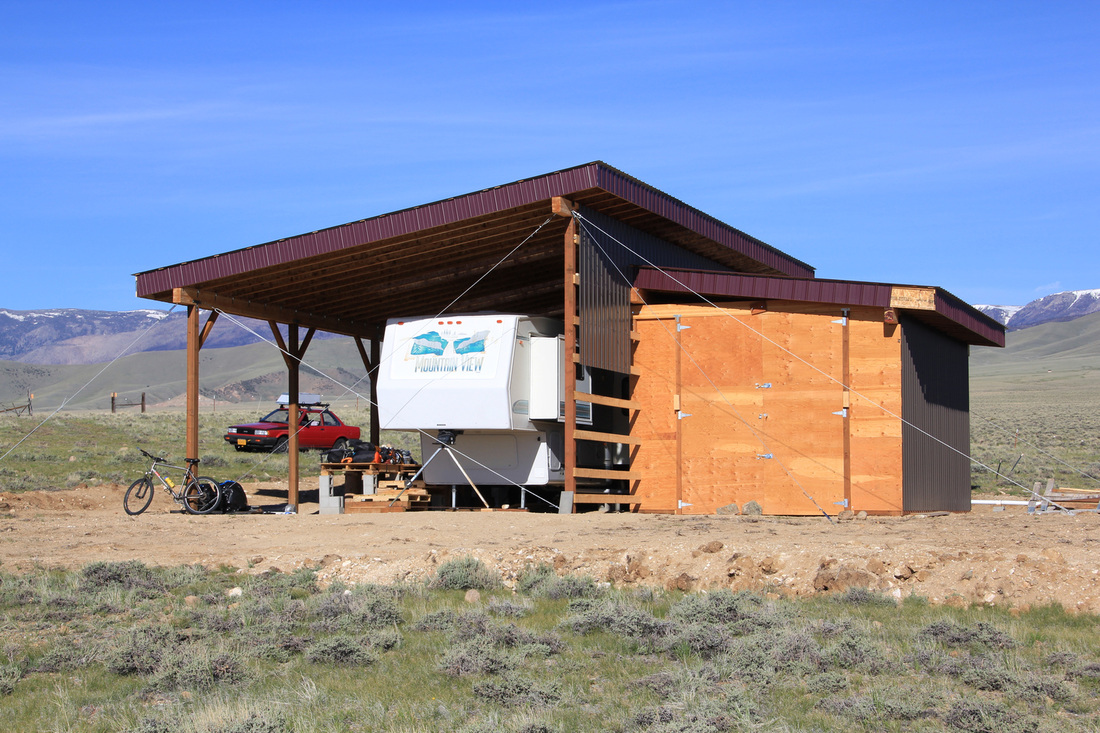
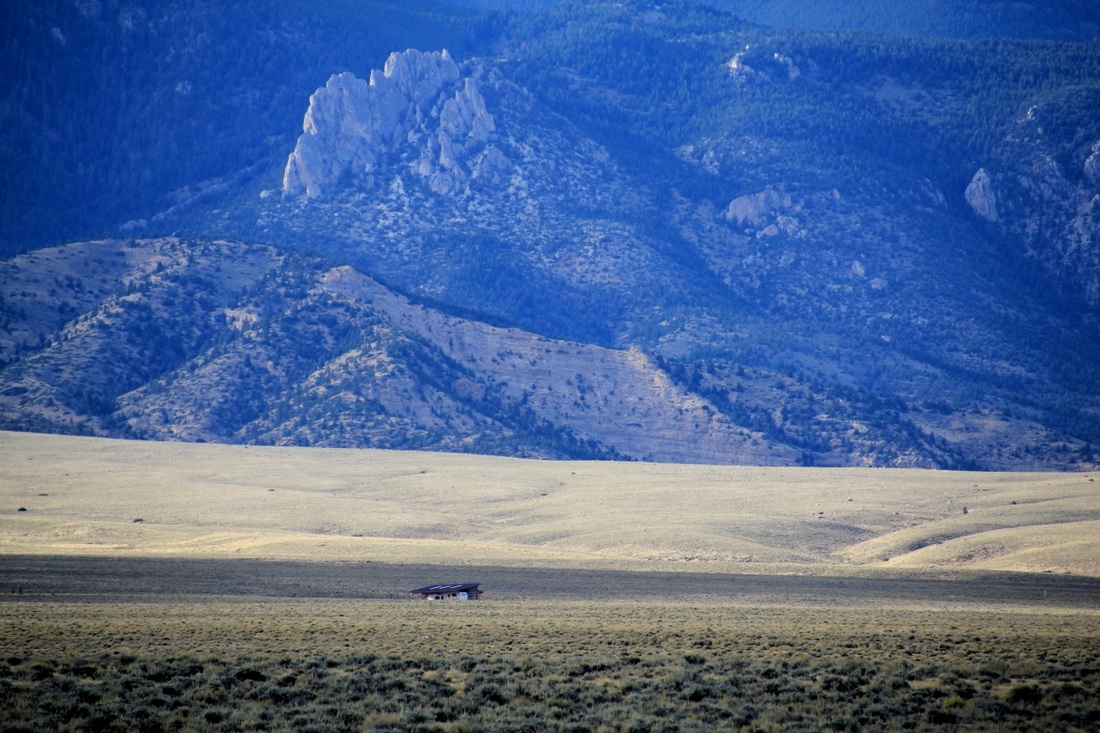
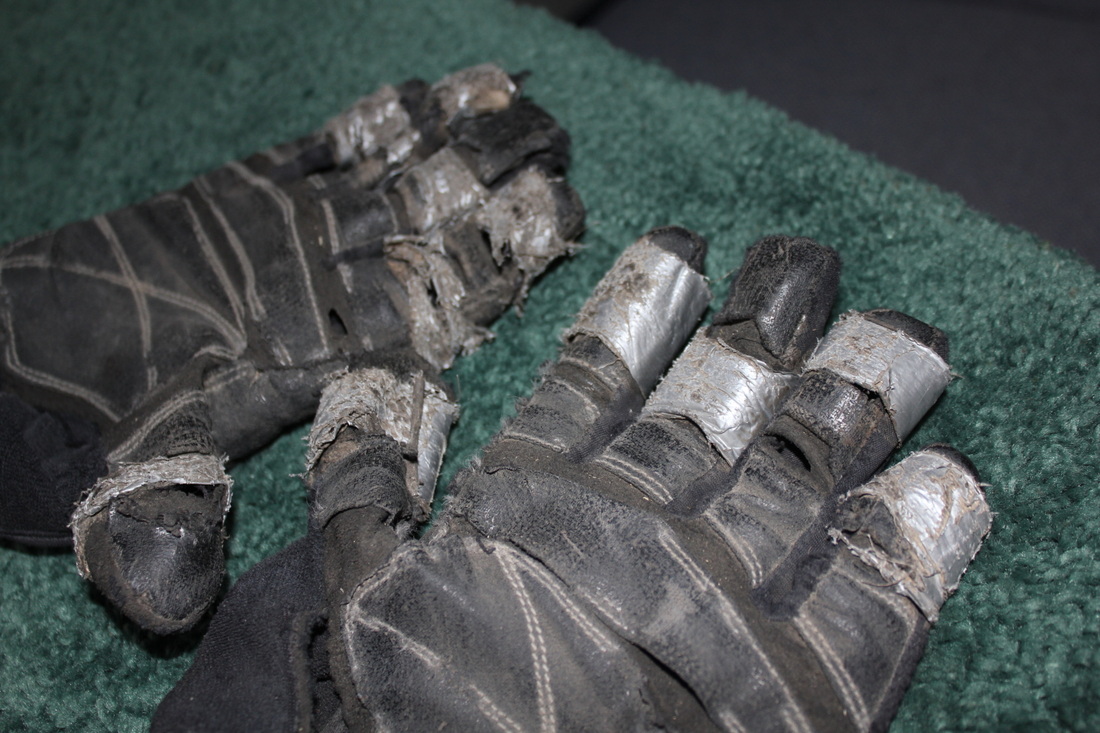
By the fall of 2013, I was once again living in Colorado, where a long day's drive could get me to the Homestead. As a result of the previous two trips and some 70 days spent on the property, I learned about the wind, which began to infiltrate every thought about the future of the Homestead. With rugged mountains like the Beartooths come rugged wind events when the barometric pressure changes quickly. Then the katabatic winds accelerate down the slopes and across the plain from high atop the Beartooth Plateau -- the largest region above 10,000 feet in the lower 48 states. It's not persistent enough to be a constant nuisance -- indeed, most of the time the weather is quite nice -- but when it does pick up for real, a lack of preparation could cause some real damage. That's why in the pictures above you'll see numerous cables tying the barn to concrete anchors buried 3 feet deep; I understood that the chances of getting 100 mile per hour winds at some point are fairly high, and 65 mph can basically be expected every few months anytime but summer.
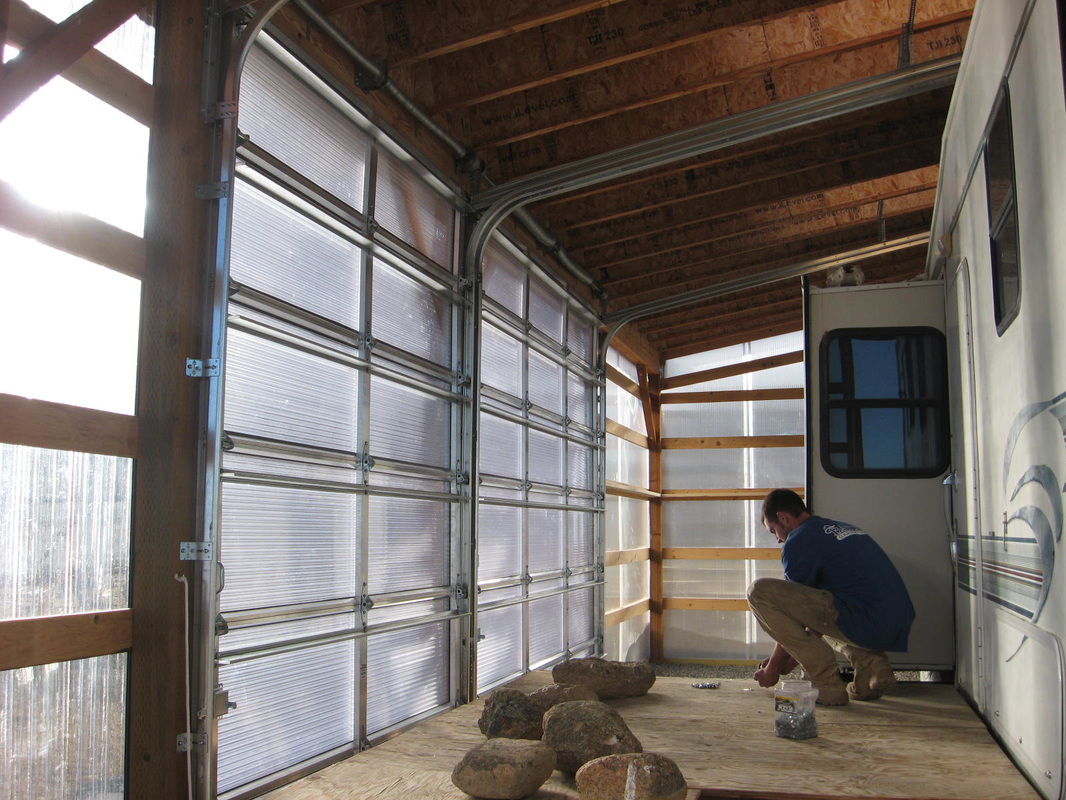
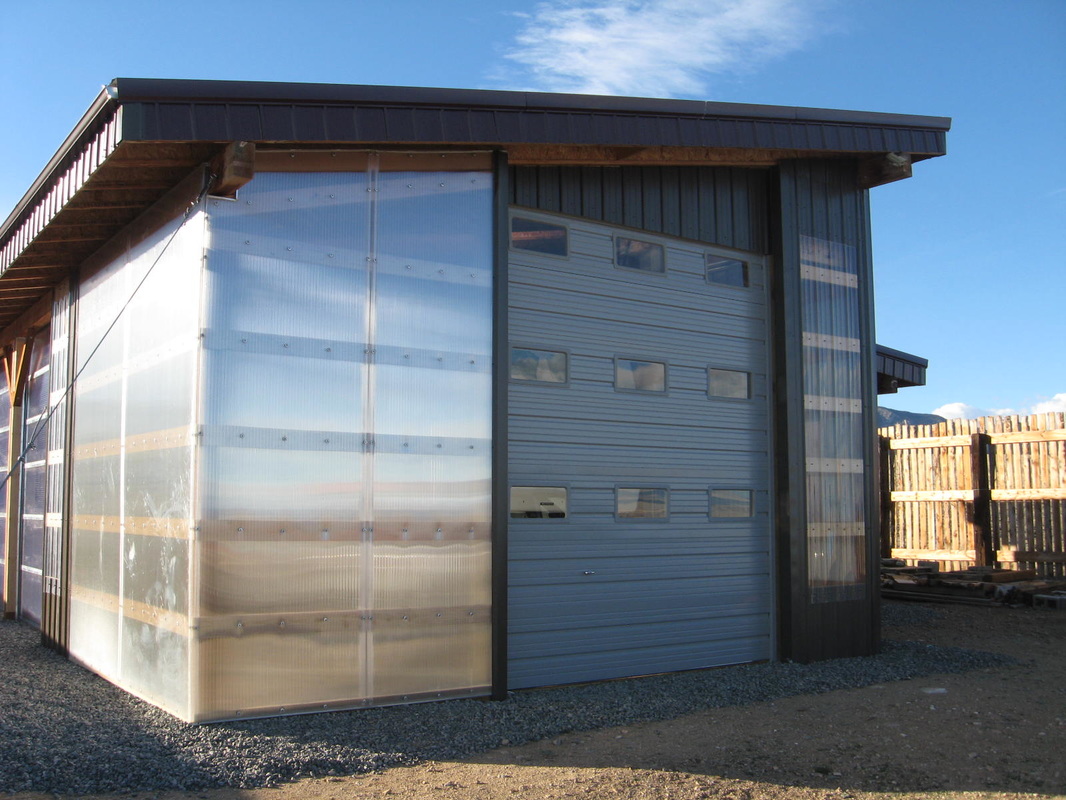
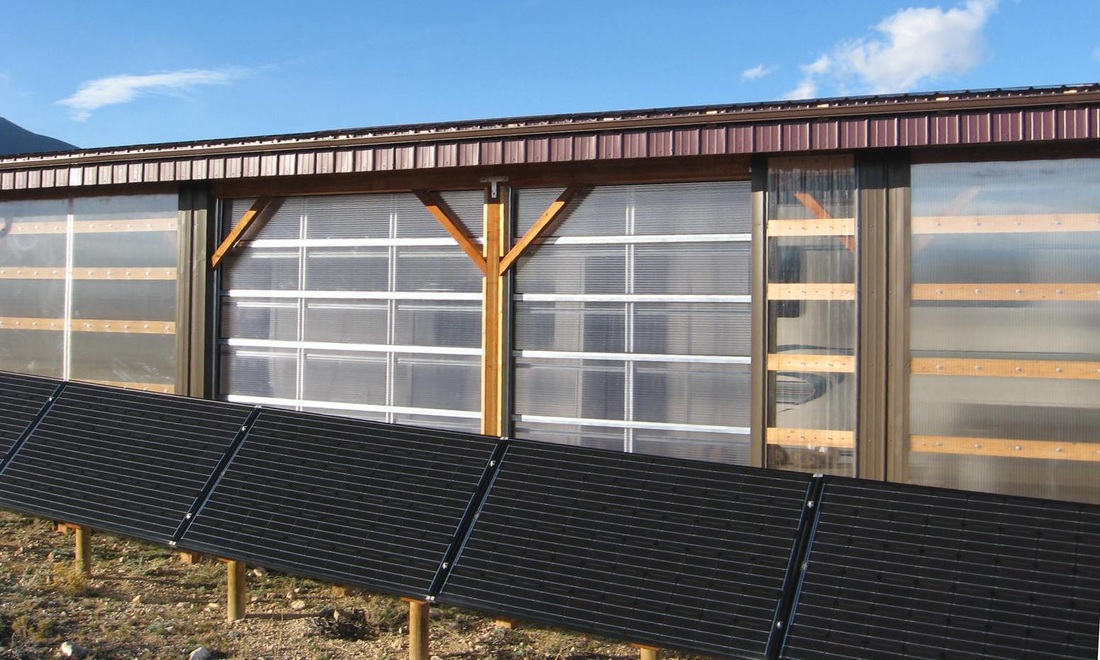
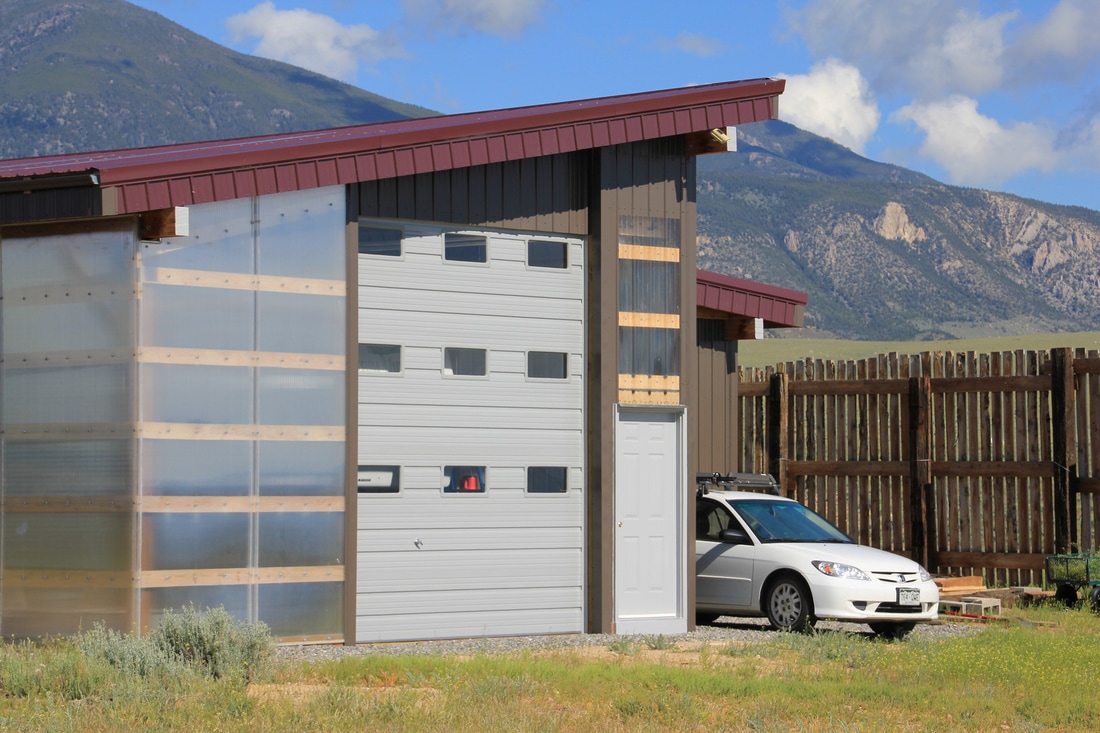
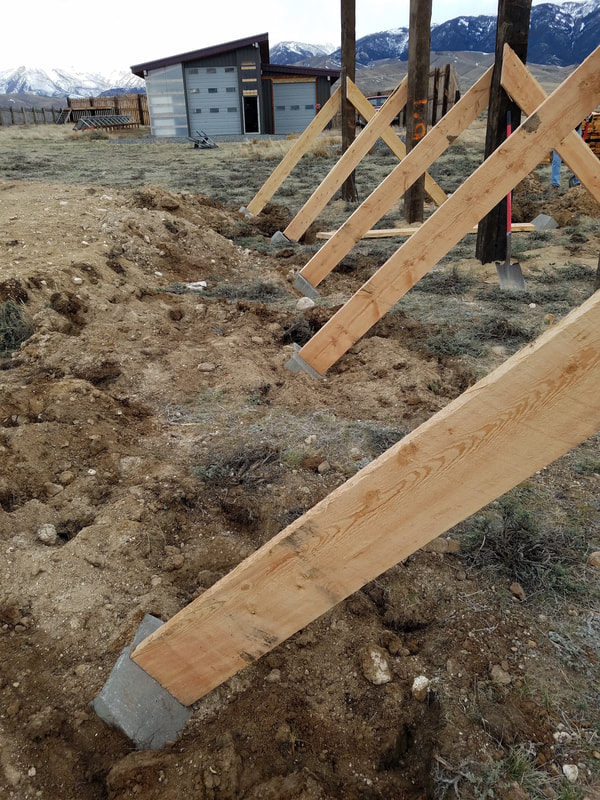
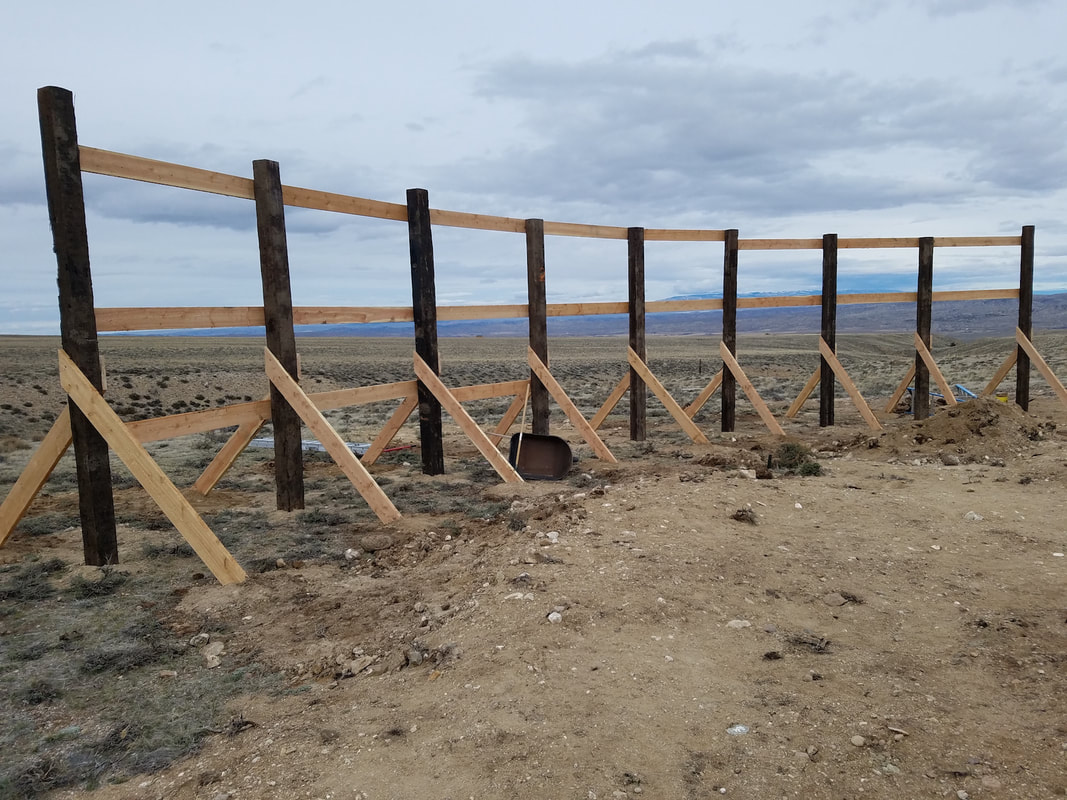
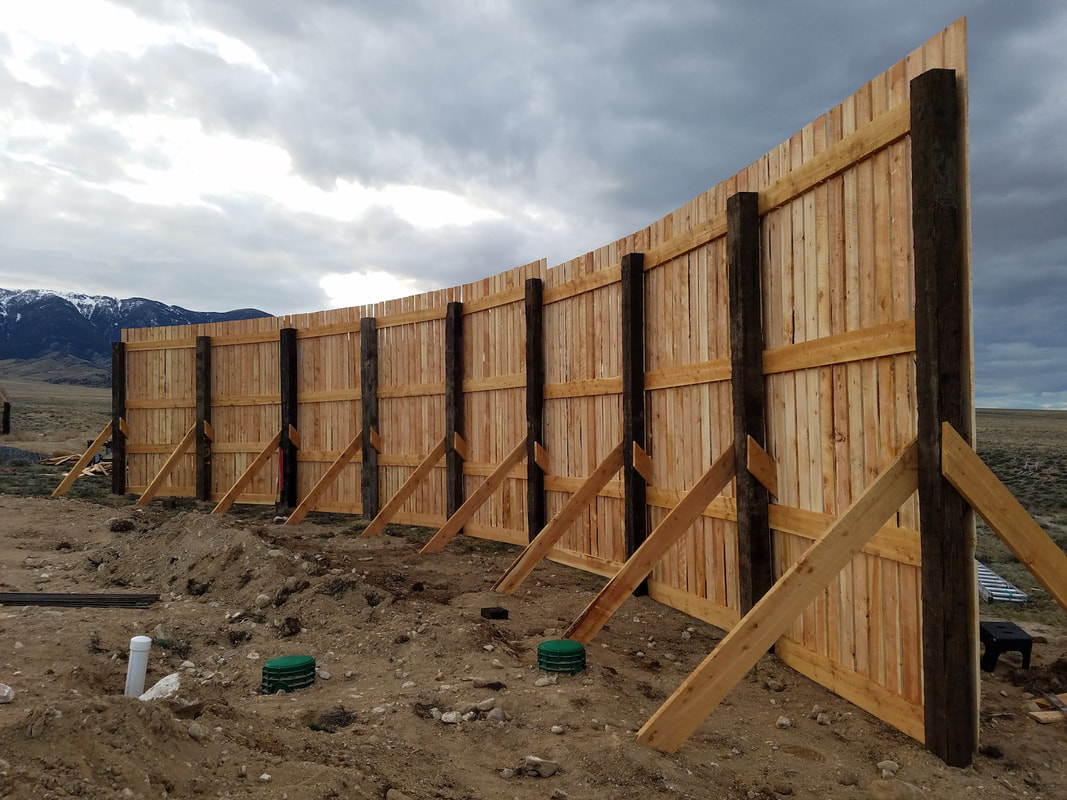
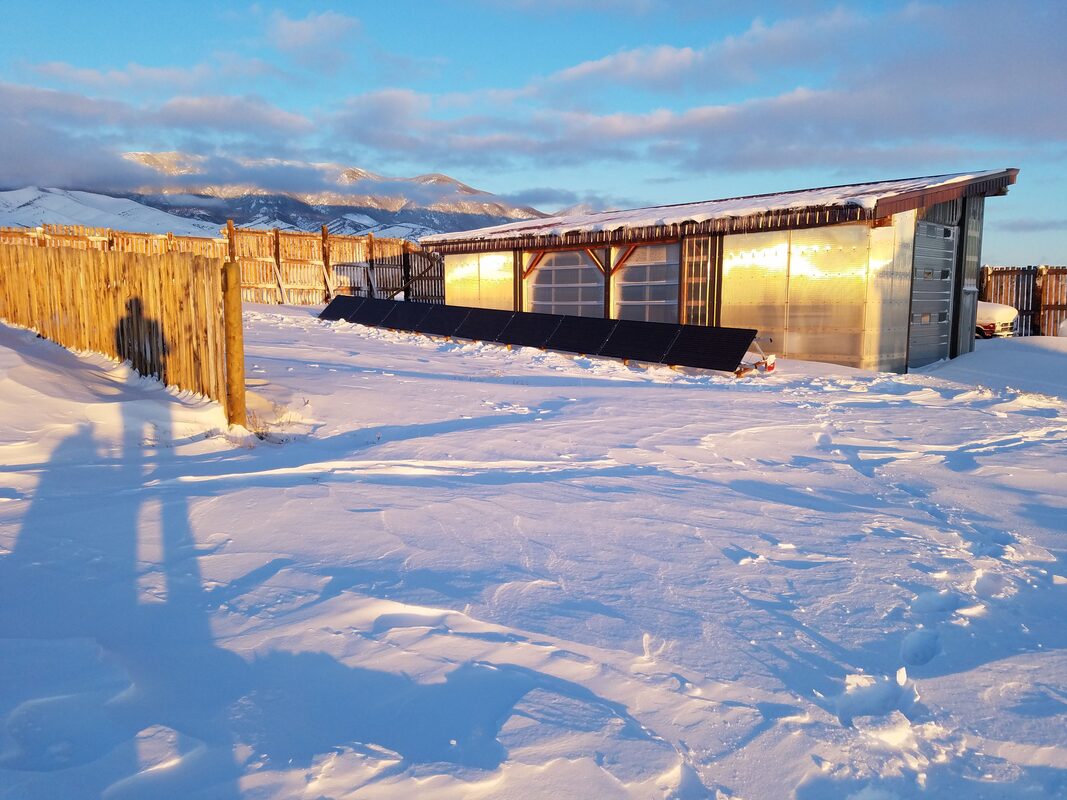
The wind had been the reason for adding the west and north walls. Not only would they block the wind, but they'd tie the building together and make the roof more stable. But I figured I'd eventually need to enclose the entire barn, so I bought enough storm-rated polycarbonate greenhouse paneling to make most of the south side and sections of the east and west side clear, which would enable the barn to eventually double as a passive solar greenhouse/barn hybrid, with a few garage doors to help ventilate when it's hot. But before I installed it all, I knew I needed to get the entire place out of the wind, and began plans to build a 300 foot long wind fence to protect the barn and what will be the main food-producing area of the Homestead.
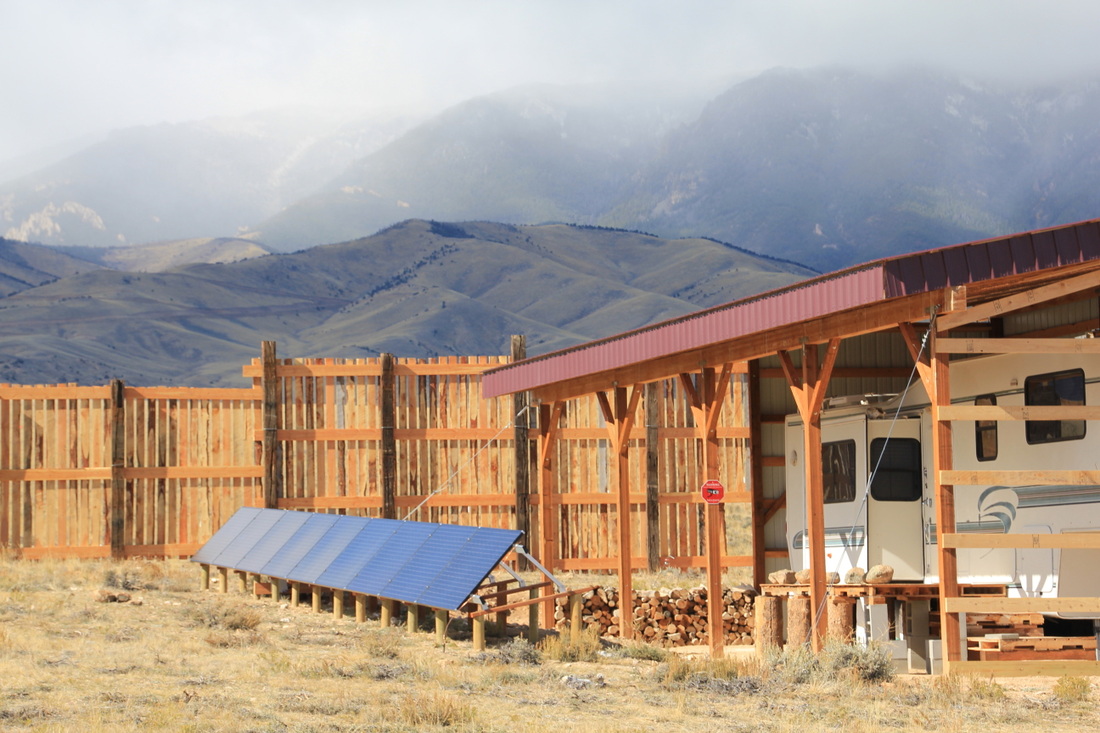
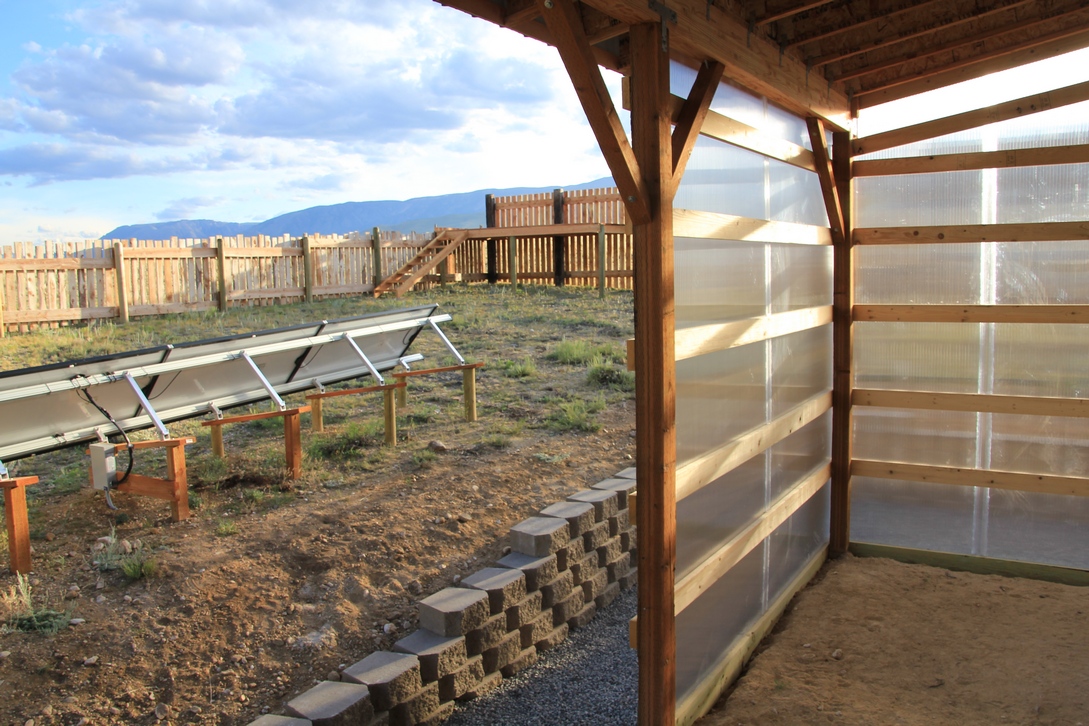
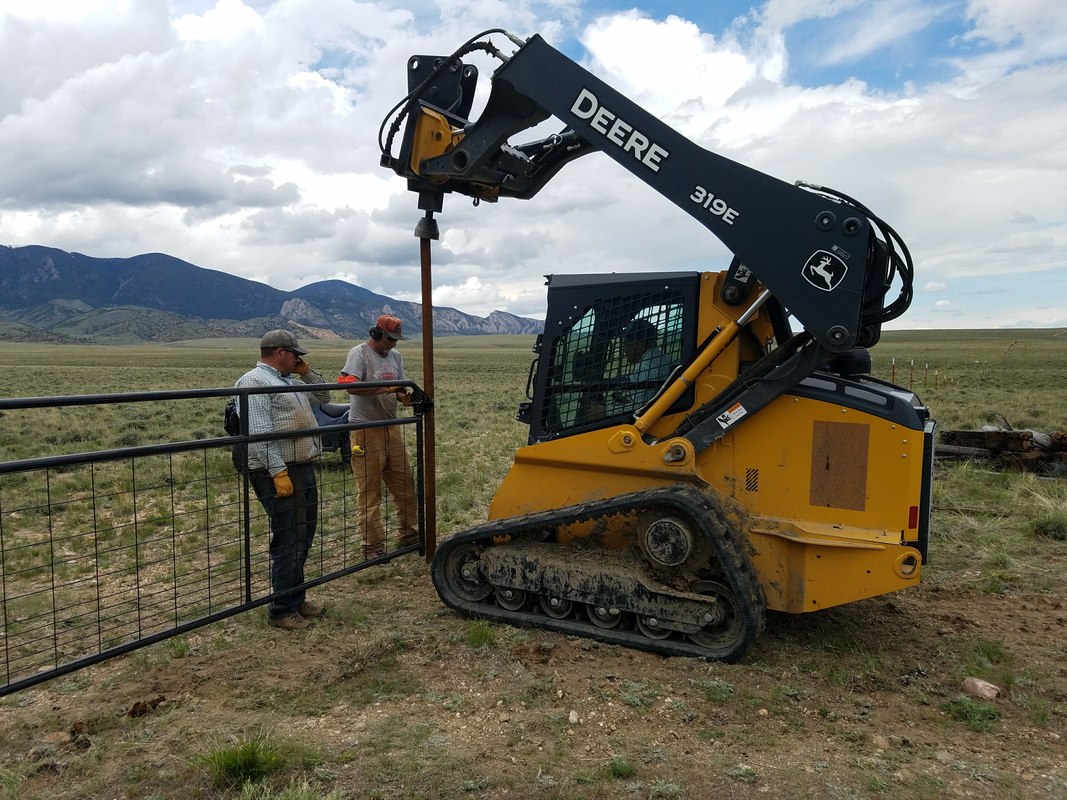
I had also been researching solar systems, and when I found out that the state of Montana would finance a complete system at very low interest, and that the federal government would pay for 30% of it, I jumped on it and ordered a complete 2.4 kilowatt system and 20 kilowatt hour battery bank from Wholesale Solar (now called Unbound Solar) for about $10k after the federal rebate. In the summer of 2014, I headed up to get the fence posts installed and haul the stringers and pickets up, in anticipation for the fall, when I would return to finish the fence and install the solar. Details are in the images below.
The wind had been the reason for adding the west and north walls. Not only would they block the wind, but they'd tie the building together and make the roof more stable. But I figured I'd eventually need to enclose the entire barn, so I bought enough storm-rated polycarbonate greenhouse paneling to make most of the south side and sections of the east and west side clear, which would enable the barn to eventually double as a passive solar greenhouse/barn hybrid, with a few garage doors to help ventilate when it's hot. But before I installed it all, I knew I needed to get the entire place out of the wind, and began plans to build a 300 foot long wind fence to protect the barn and what will be the main food-producing area of the Homestead.
I had also been researching solar systems, and when I found out that the state of Montana would finance a complete system at very low interest, and that the federal government would pay for 30% of it, I jumped on it and ordered a complete 2.4 kilowatt system and 20 kilowatt hour battery bank from Wholesale Solar (now called Unbound Solar) for about $10k after the federal rebate. In the summer of 2014, I headed up to get the fence posts installed and haul the stringers and pickets up, in anticipation for the fall, when I would return to finish the fence and install the solar. Details are in the images below.
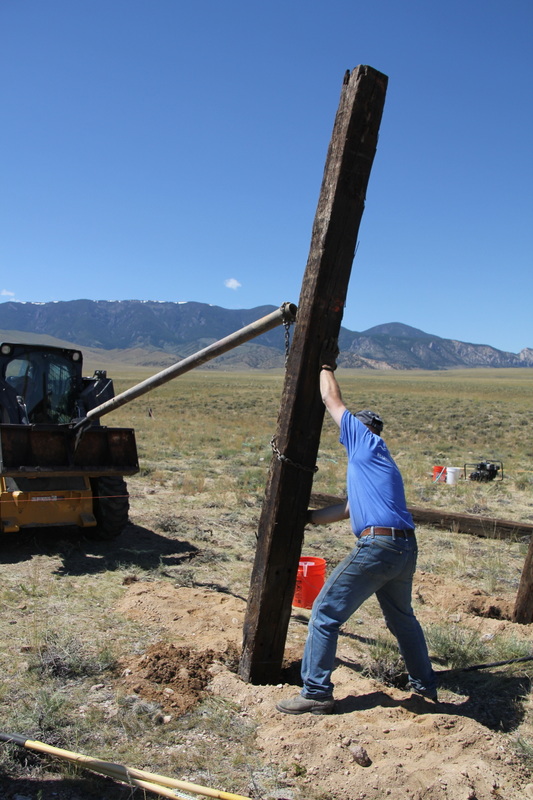
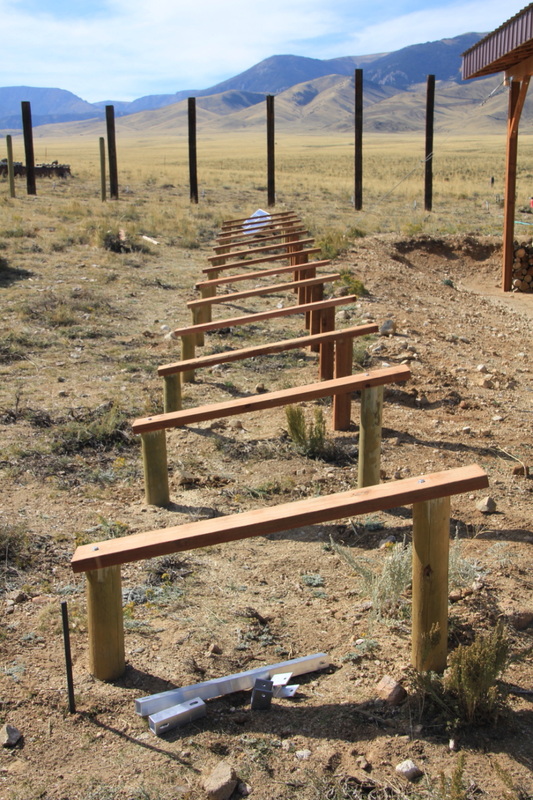
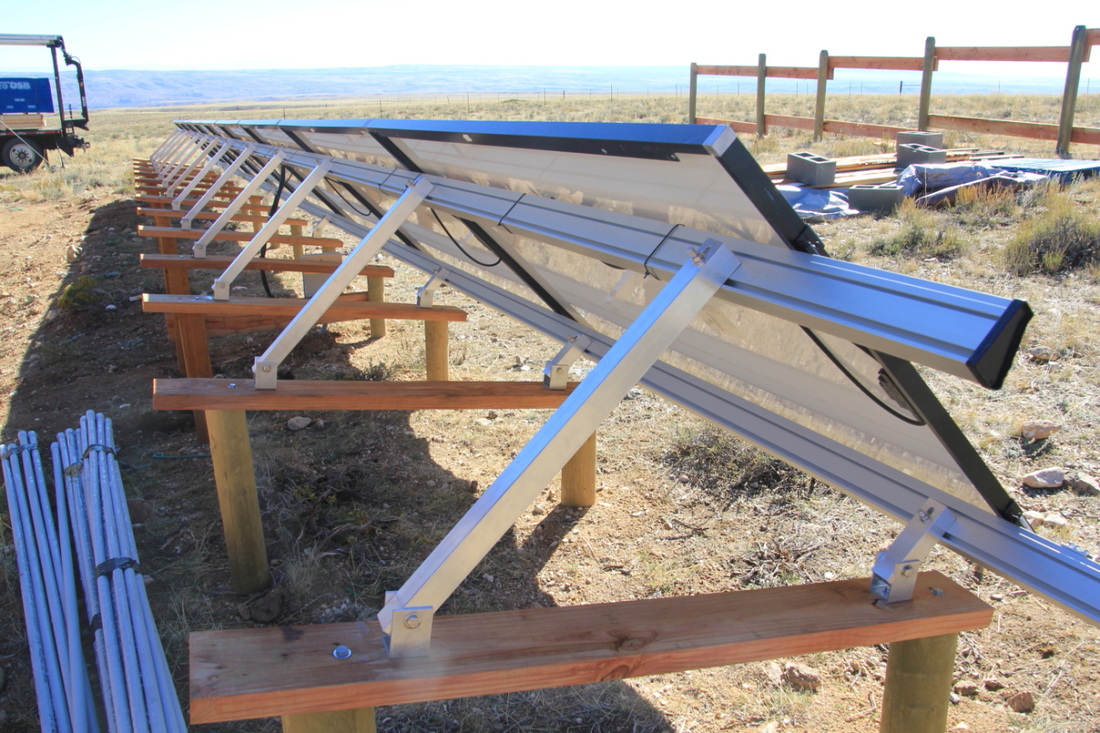

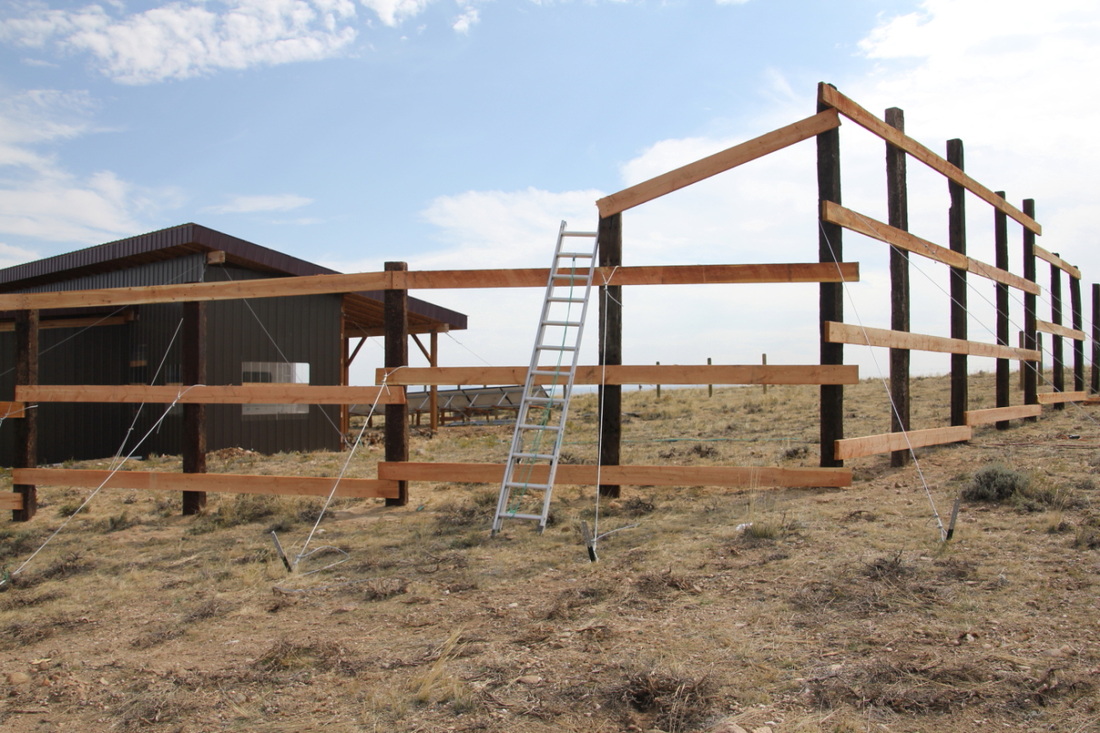
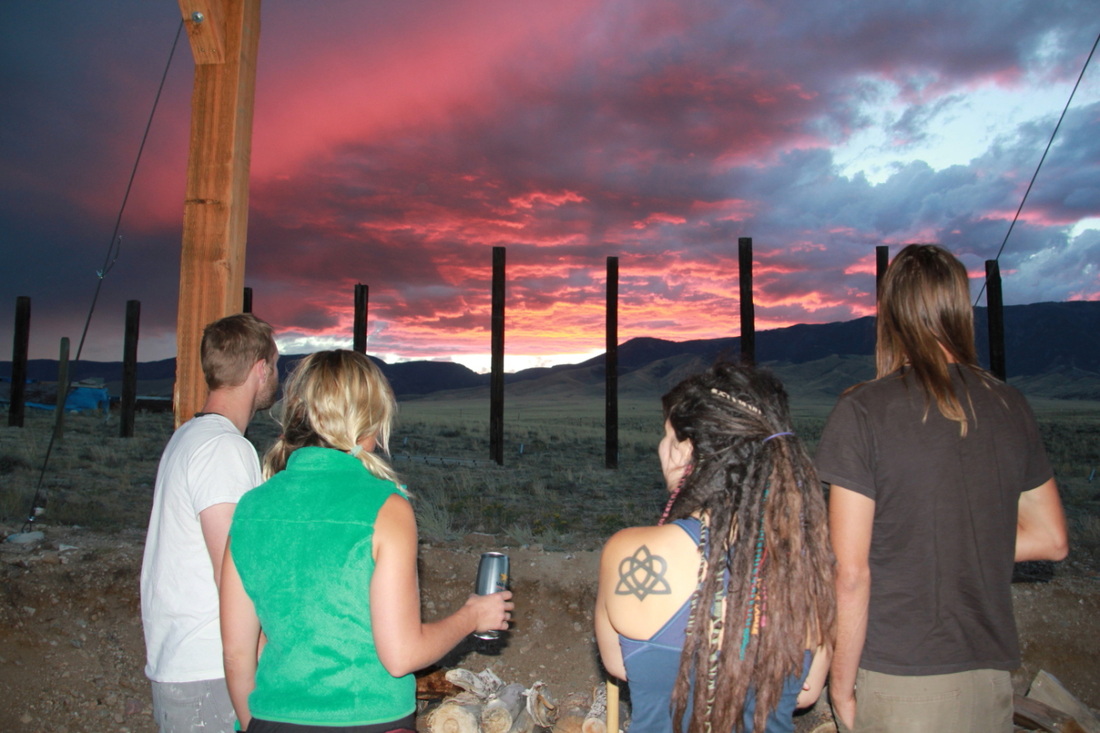

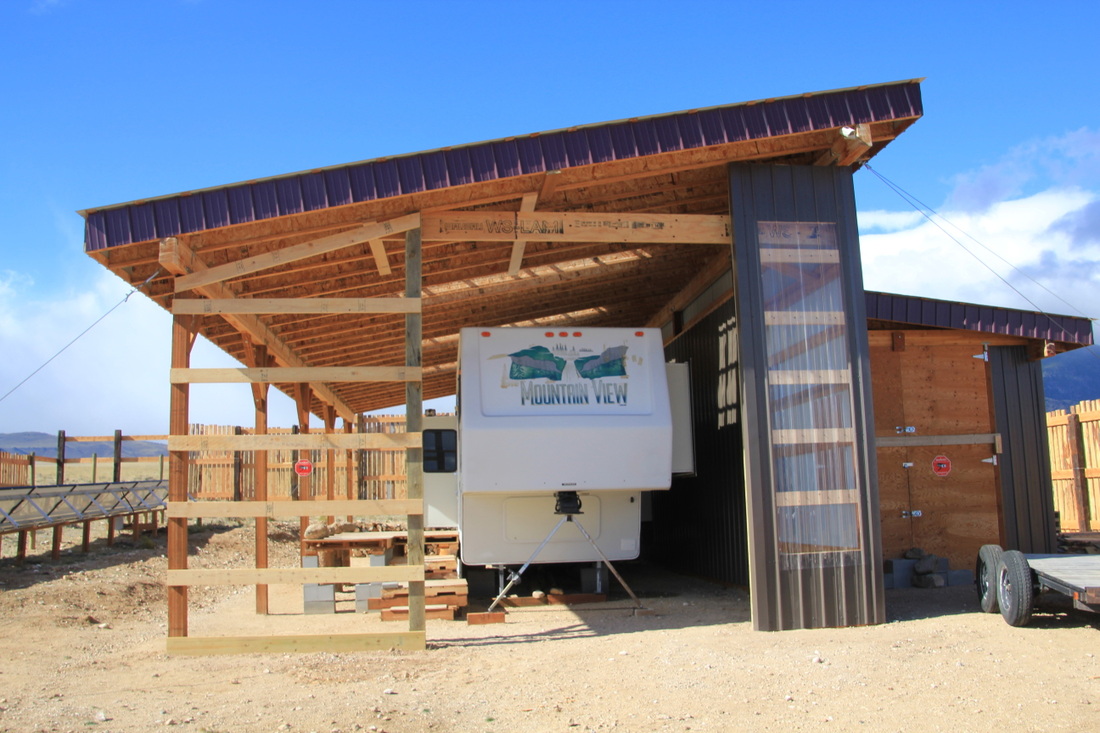
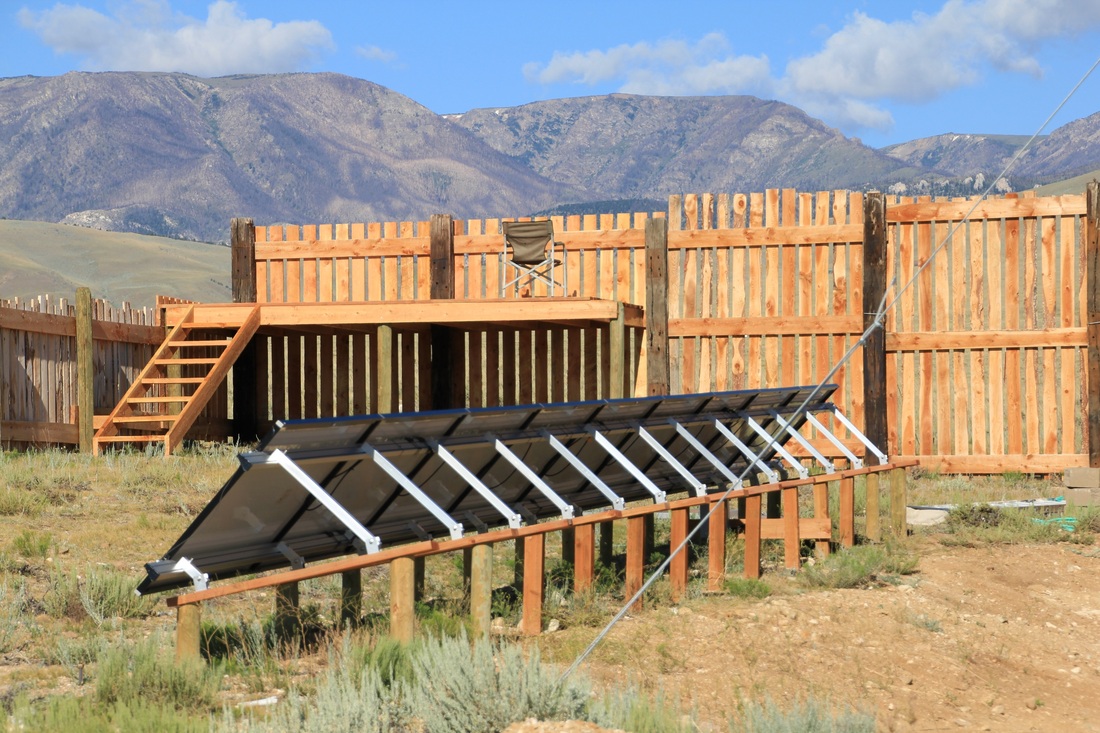
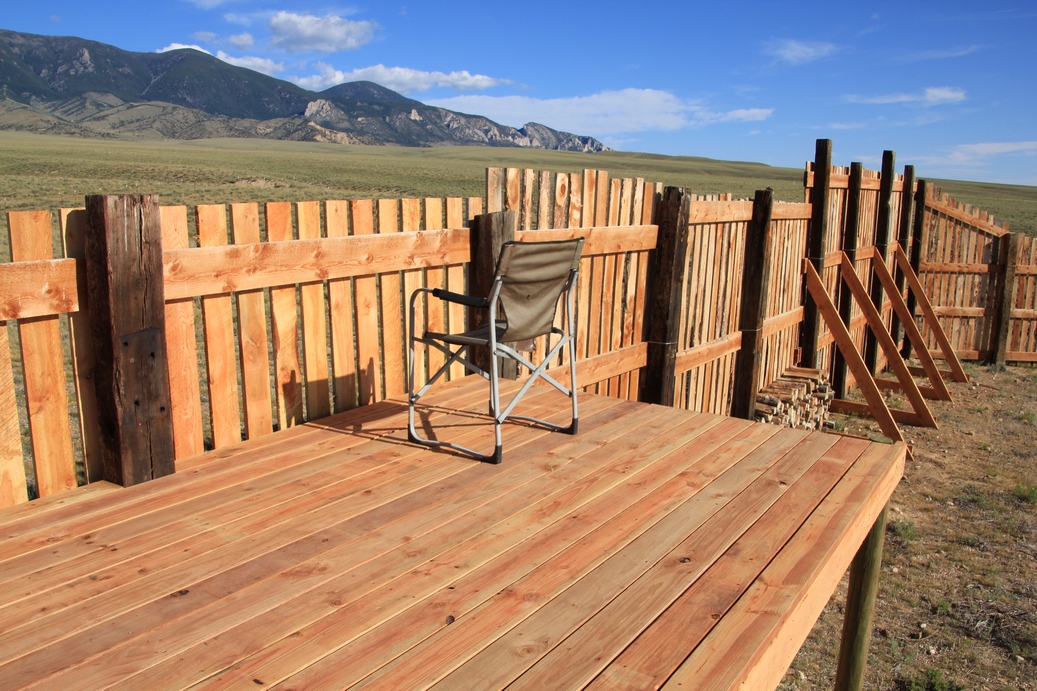
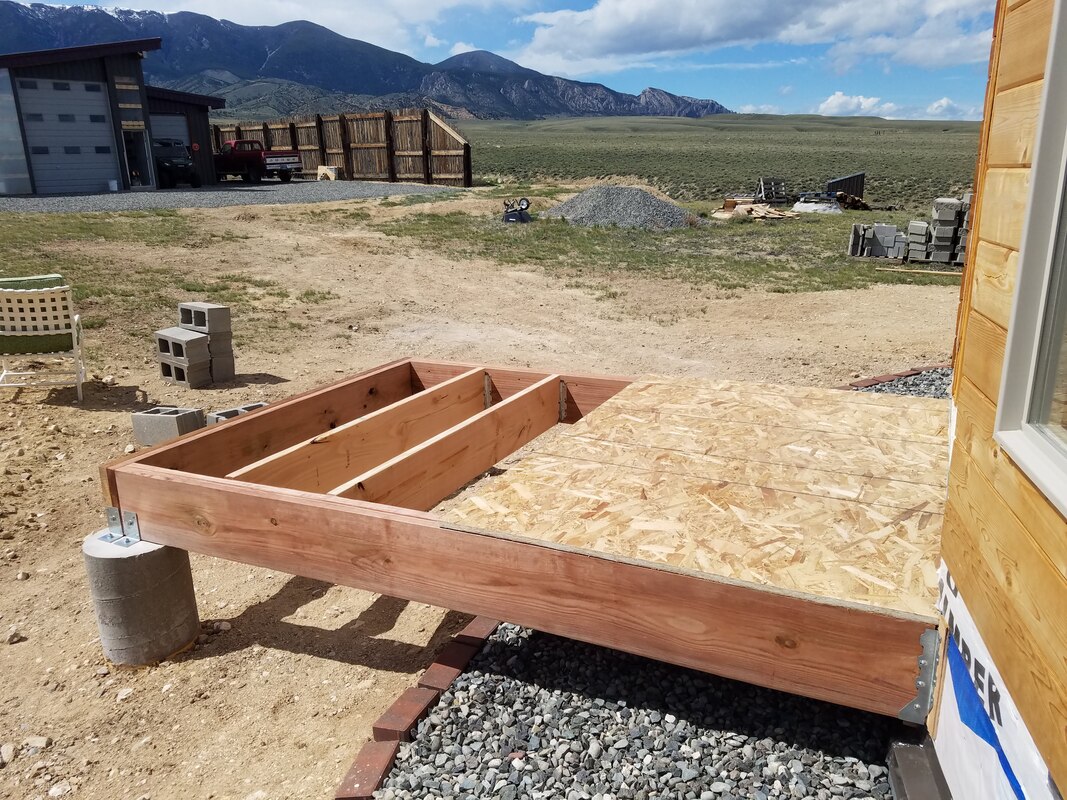
In June and July of 2015, I headed up to install the polycarbonate paneling that was sitting in the shop. I also took on another few projects; cleaning out the west end and building a retaining wall, installing south side rain gutters, finishing a few missing pieces of the wind fence, and building a deck overlooking my views to the west. It was another five super hard weeks of work, including working my regular job during the days to make for 13-16 hour days and often working construction into the night by headlamp. Details are in the images.
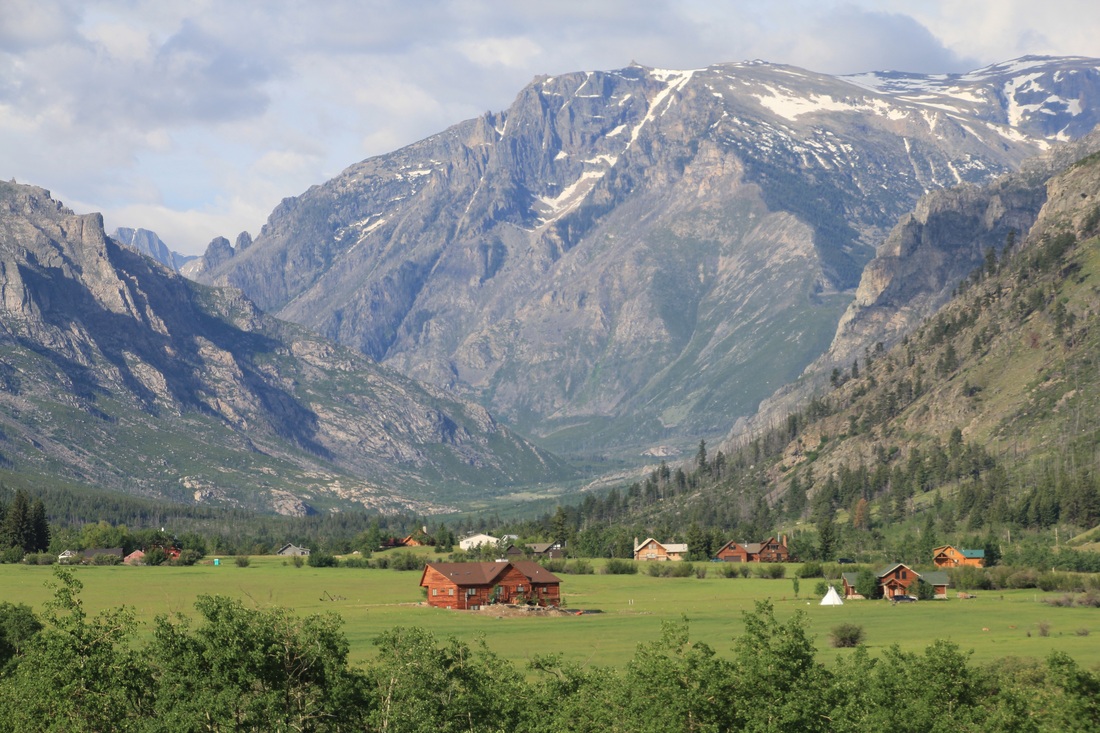
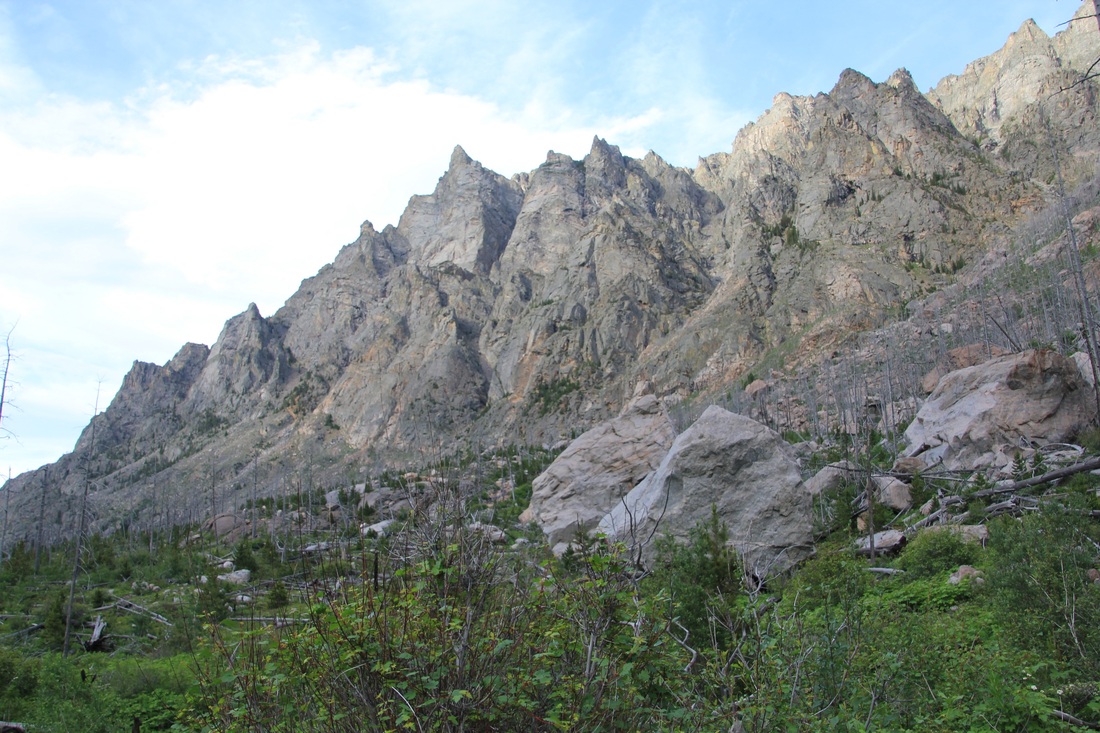



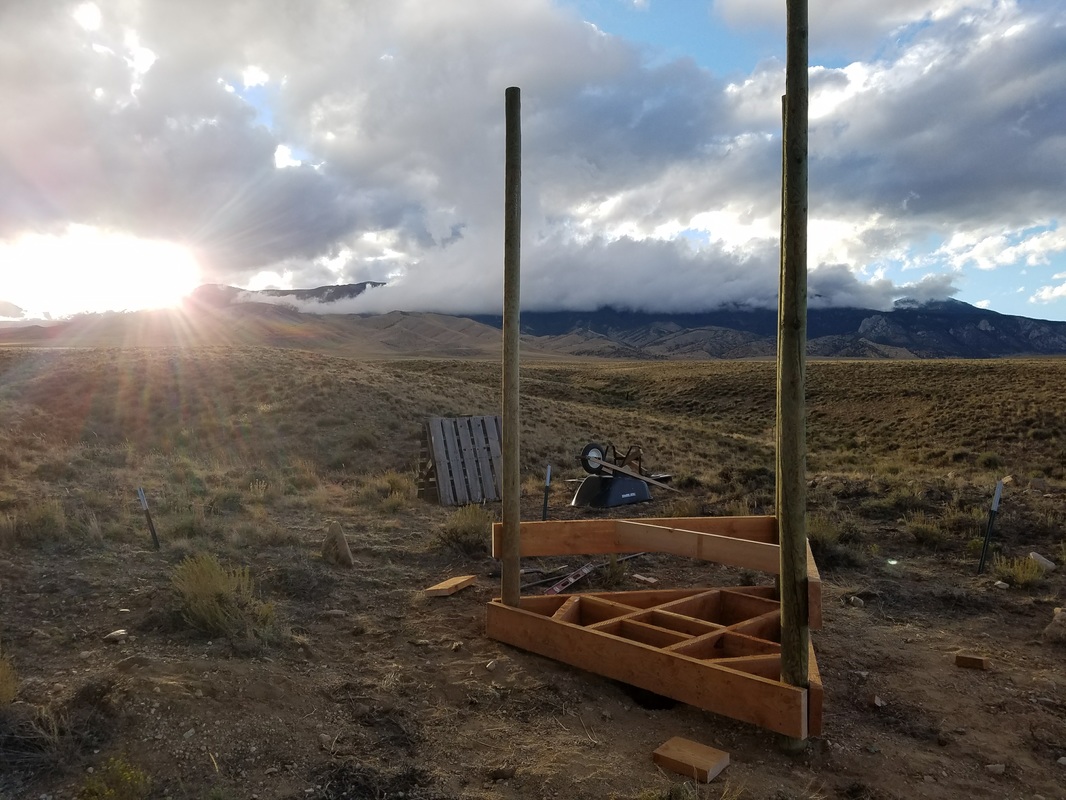
Six weeks spent in September and October of 2016 yielded substantial progress. I also gained new neighbors about 3/4 of a mile away -- pics below. I started with my grand outhouse plans: a triangular outhouse made of steel and rough cut 2 x 8 to withstand the winds and last a long time. Hand digging an 8 foot deep hole 4-5 feet wide was brutal, but the project was super fun! Next was rounding up my friend Blue to help prep and pour a concrete slab in the shop. This required moving everything out, including the battery bank, then deep cleaning everything from several years of rabbits and their predators which had fully inhabited the shop by digging under the walls to get inside. Much of the motivation to pour a slab was based on eliminating this heinous wildlife problem.
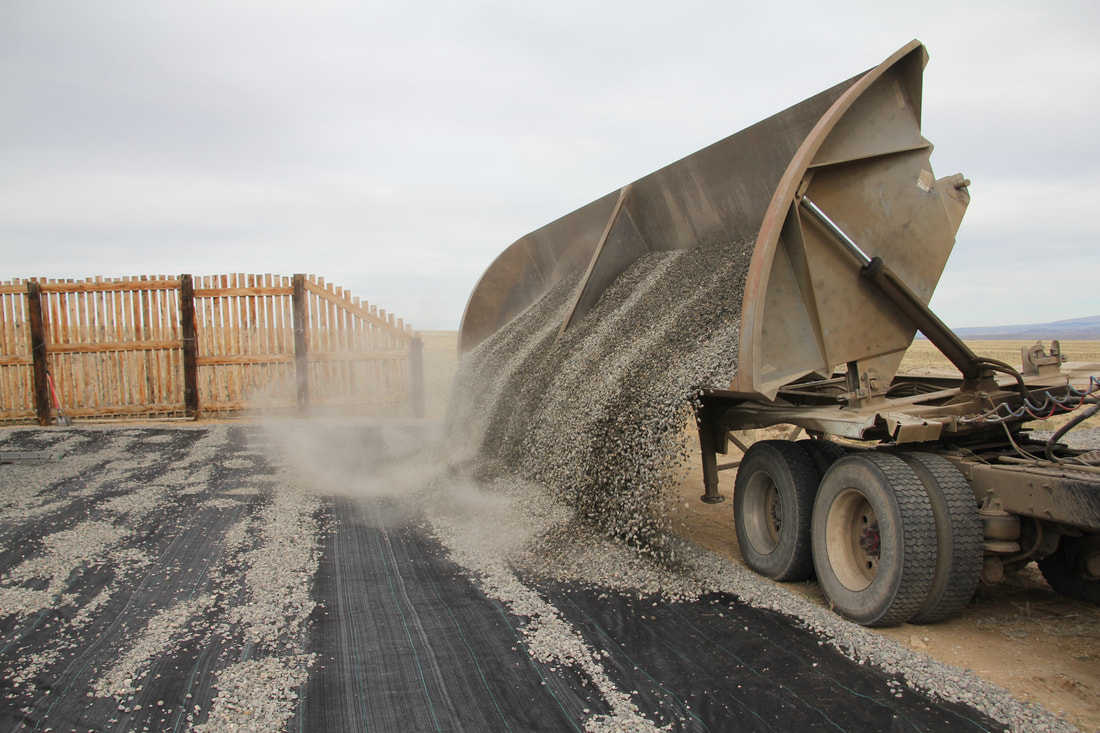
With that done and Blue gone, it was time to work on roof trim, framing in and putting steel on all remaining gaps in the building (tedious work), and prepping for the overhead doors. I also had the privilege of hand-shoving and wheelbarrowing about 20 tons of gravel into the barn and around its perimeter to clean things up and level everything out. With the exception of a few small remaining odds and ends, the infrastructure and main homestead building was more or less finished as intended.
With that done and Blue gone, it was time to work on roof trim, framing in and putting steel on all remaining gaps in the building (tedious work), and prepping for the overhead doors. I also had the privilege of hand-shoving and wheelbarrowing about 20 tons of gravel into the barn and around its perimeter to clean things up and level everything out. With the exception of a few small remaining odds and ends, the infrastructure and main homestead building was more or less finished as intended.

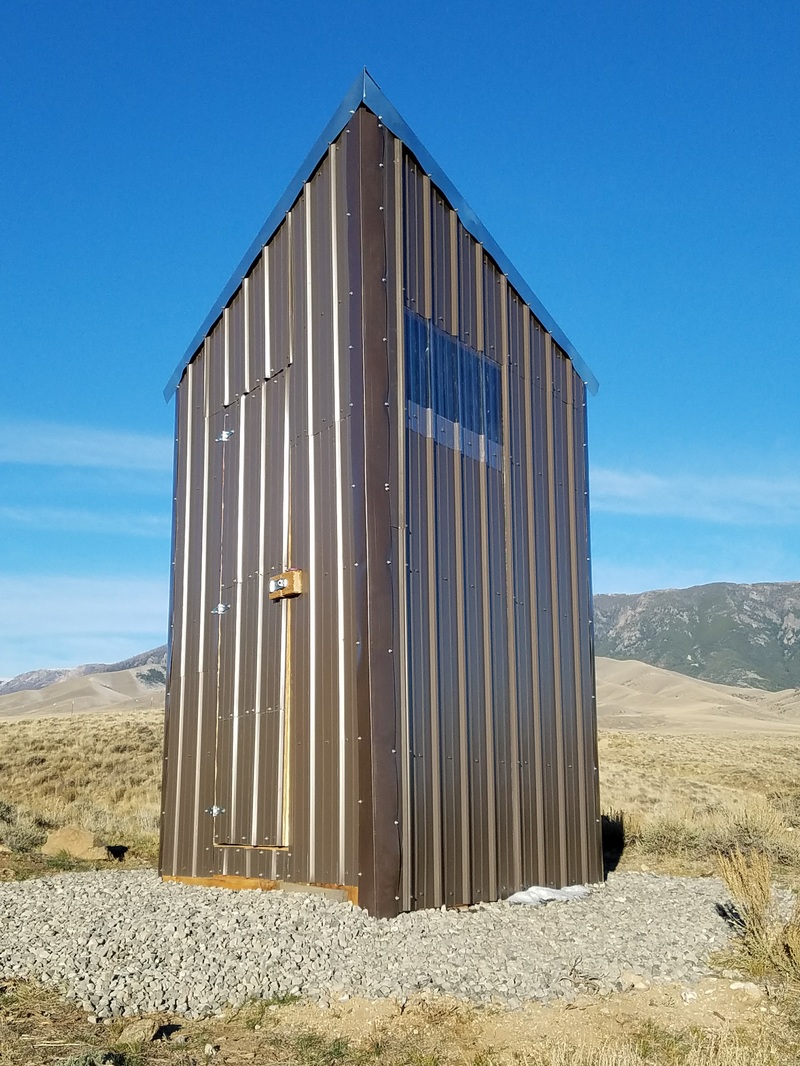
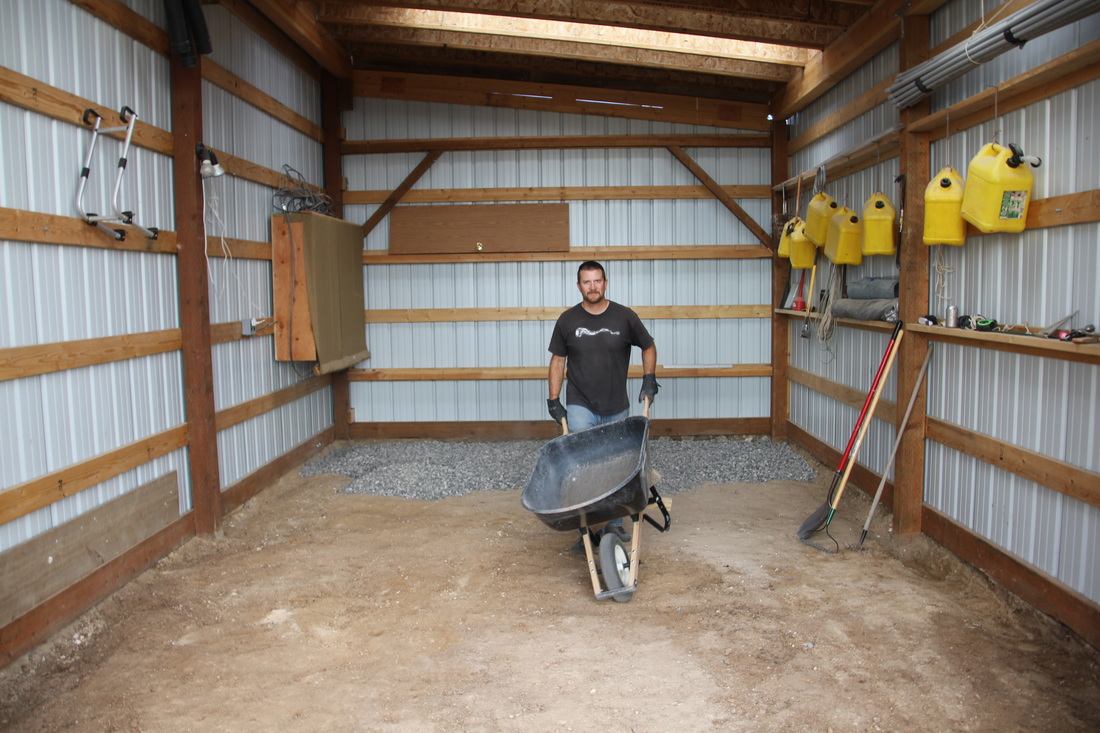
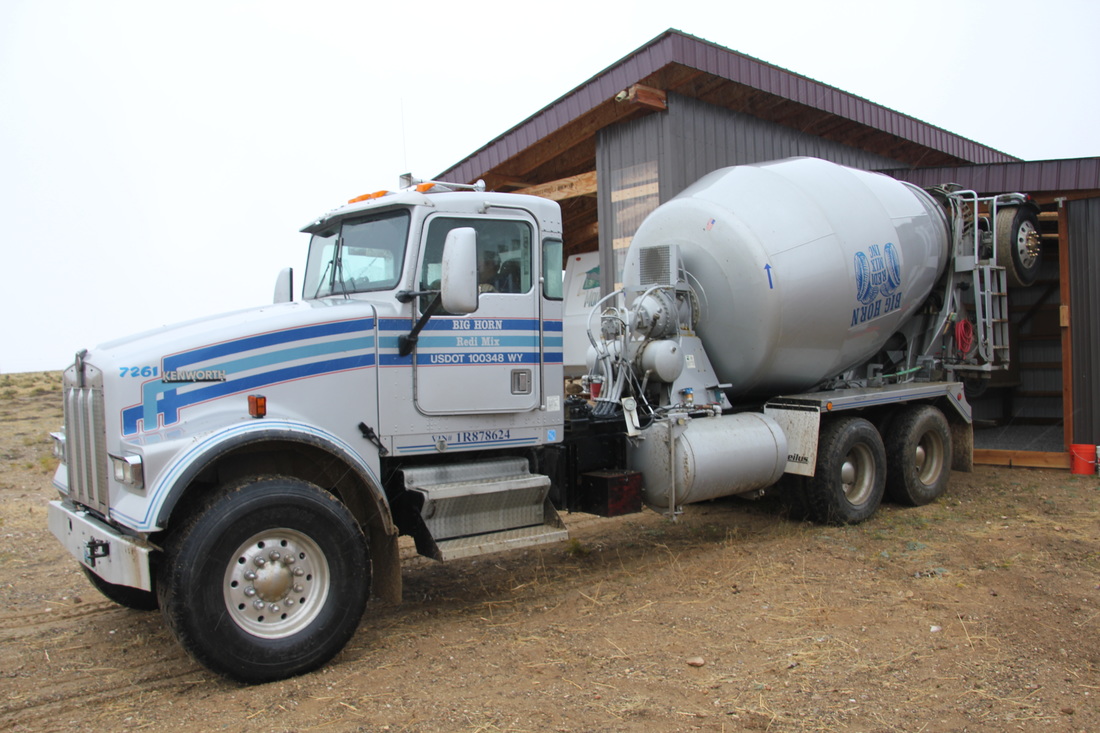

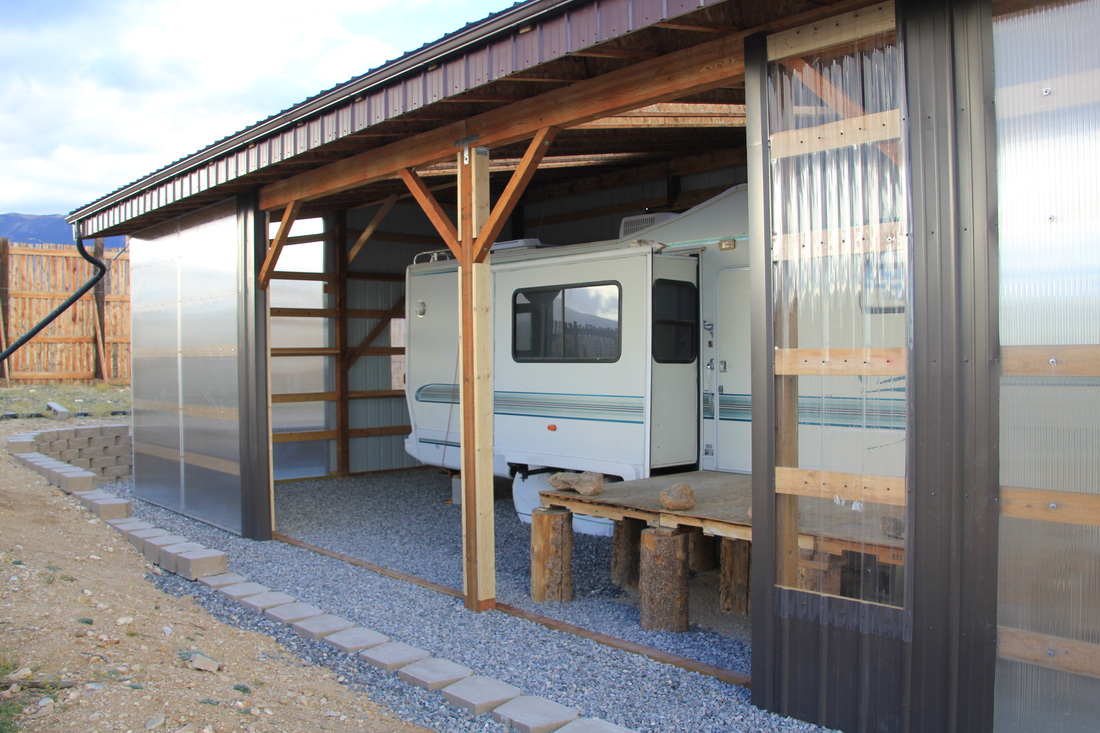
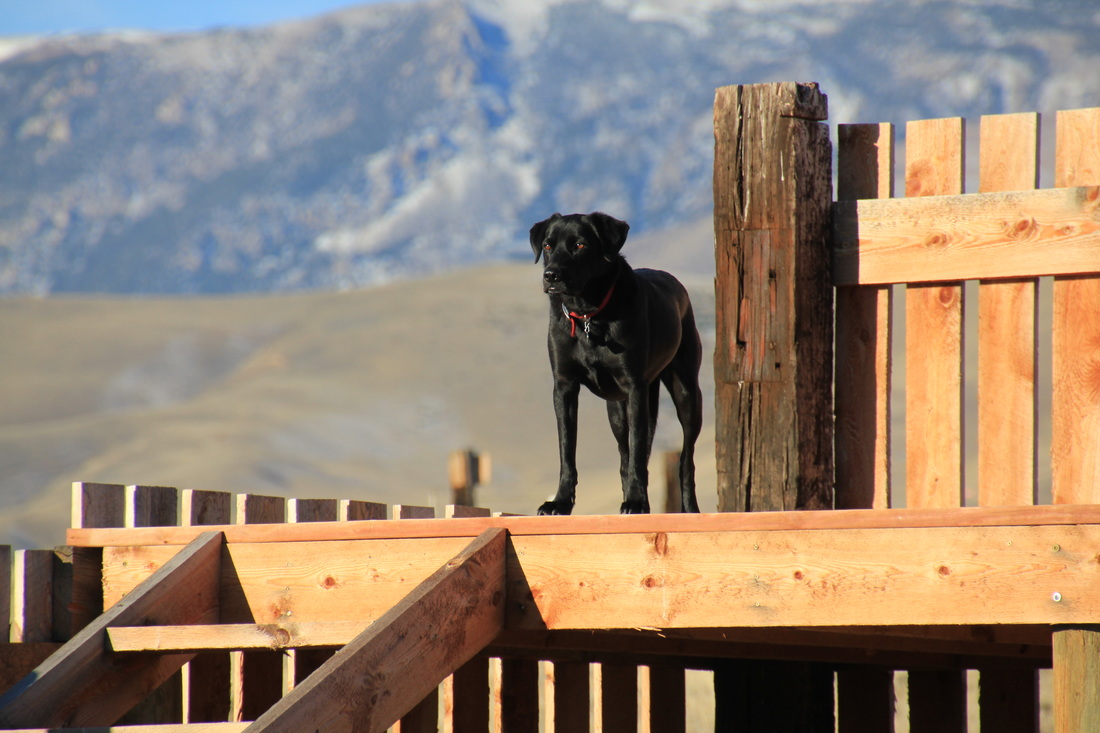
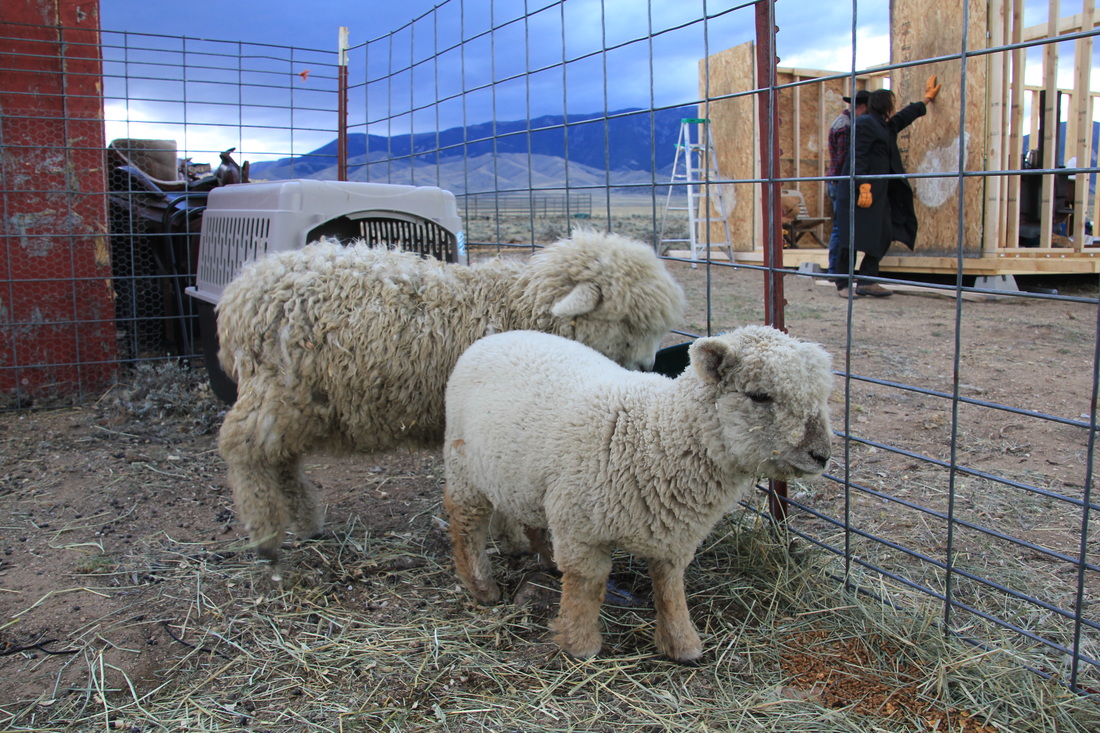
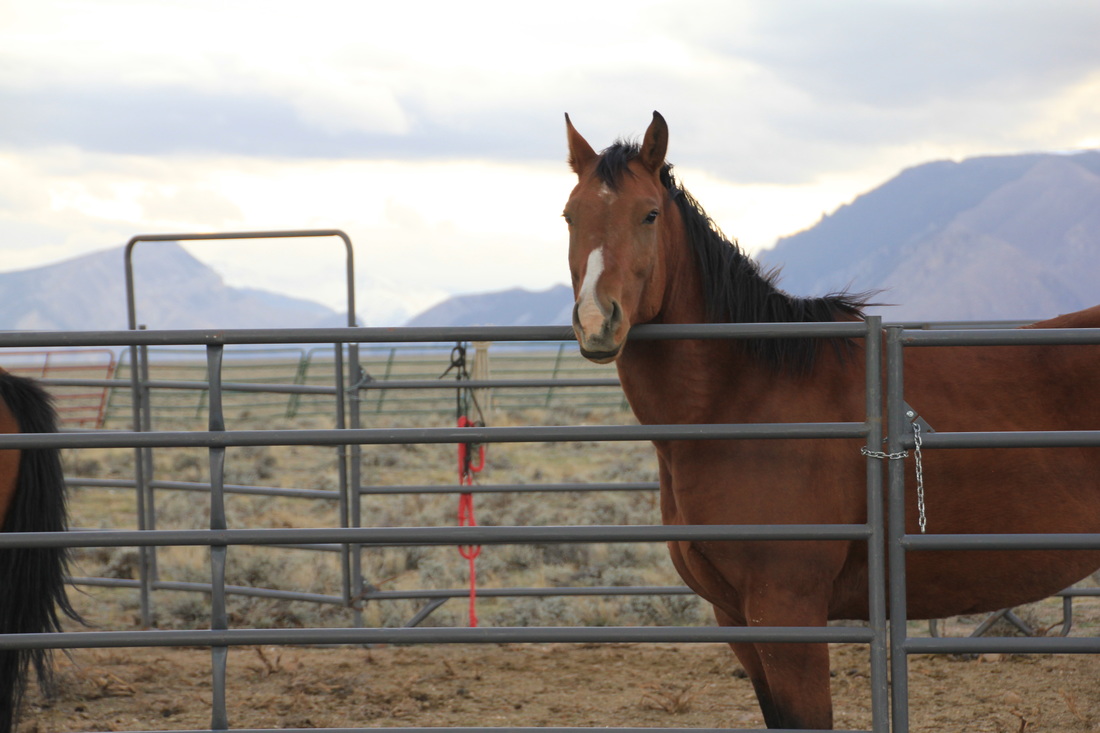
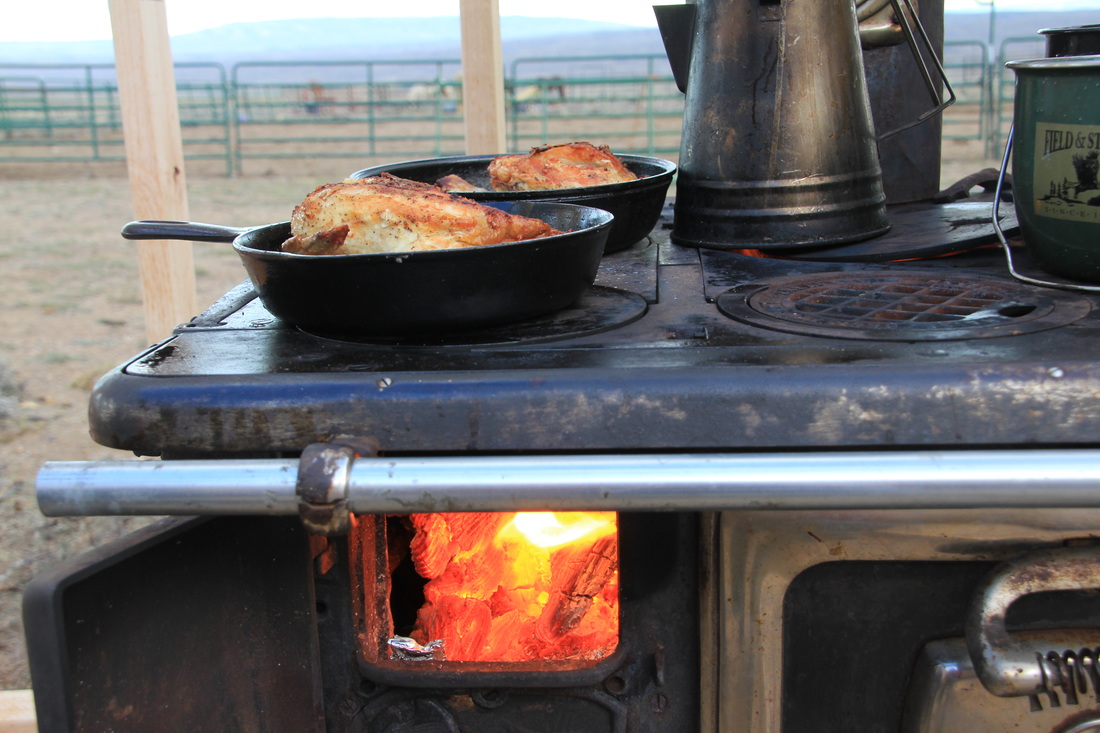
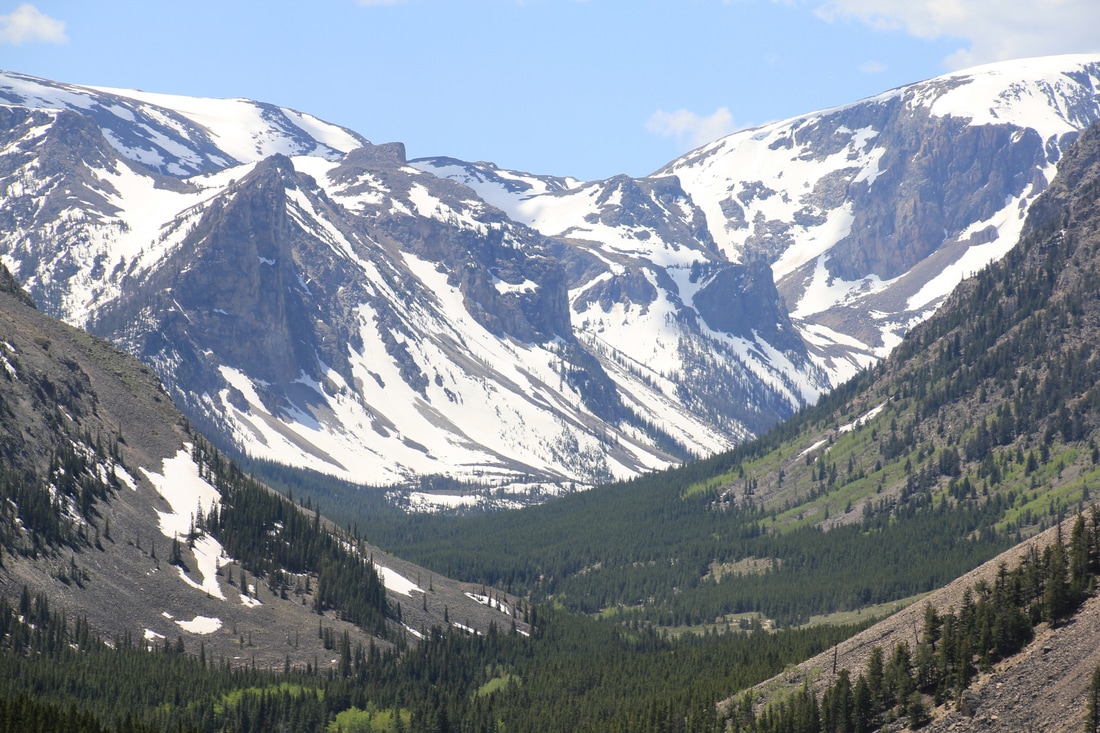
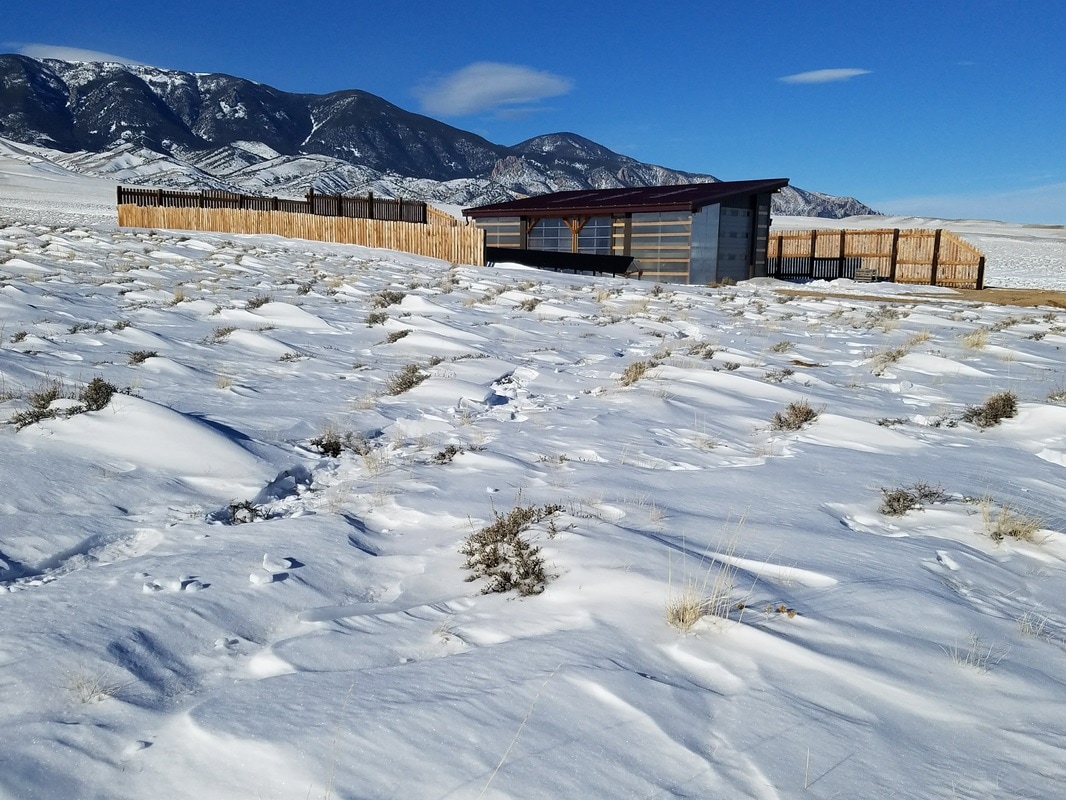
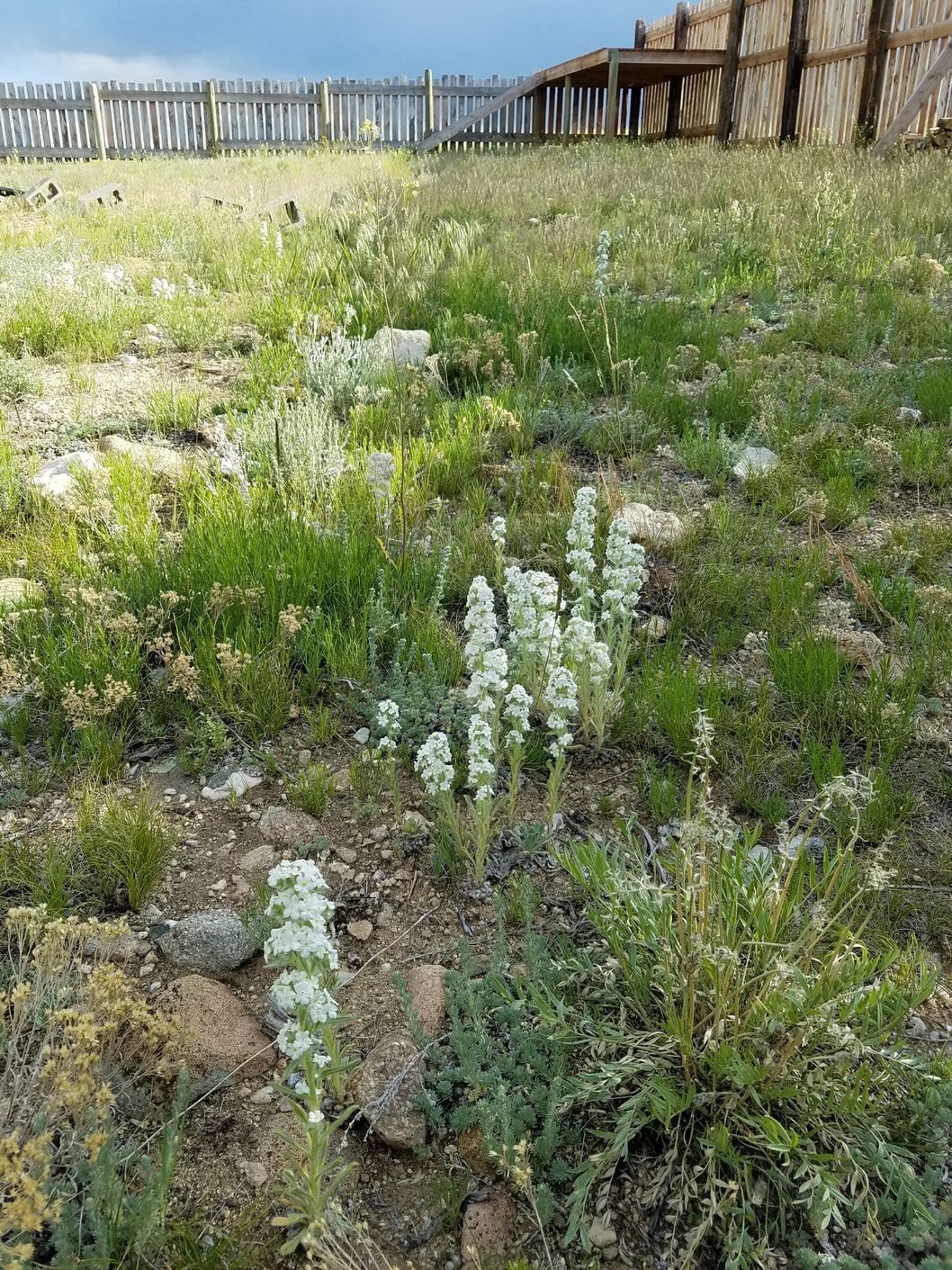
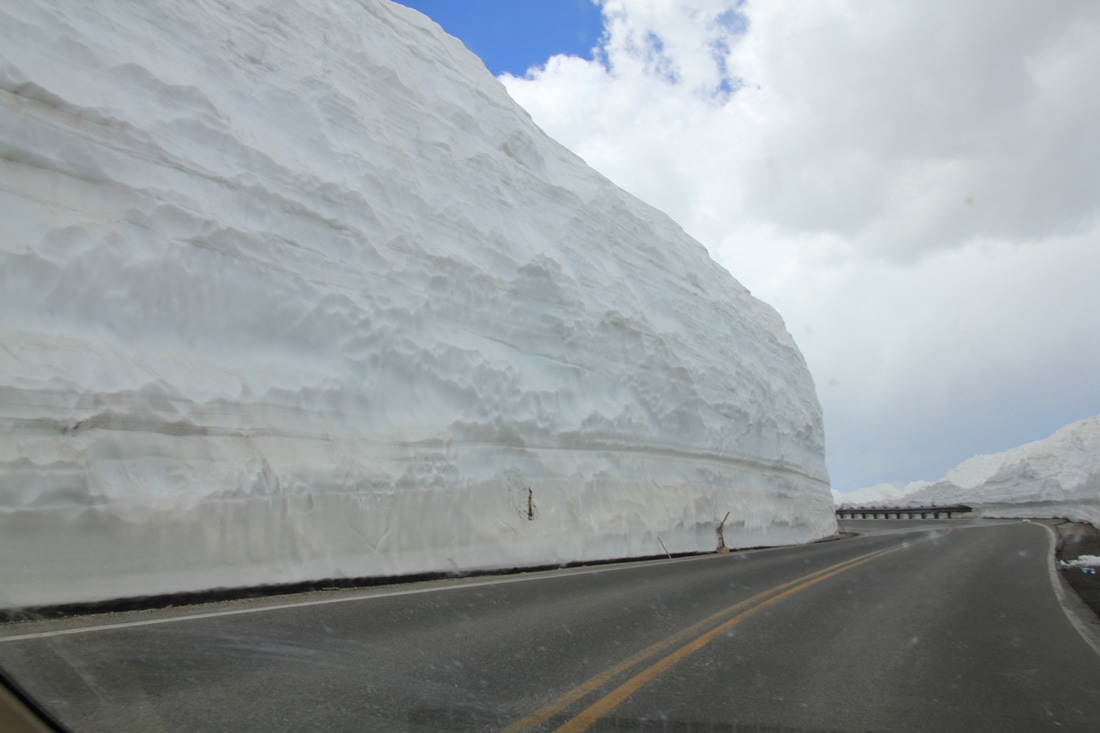
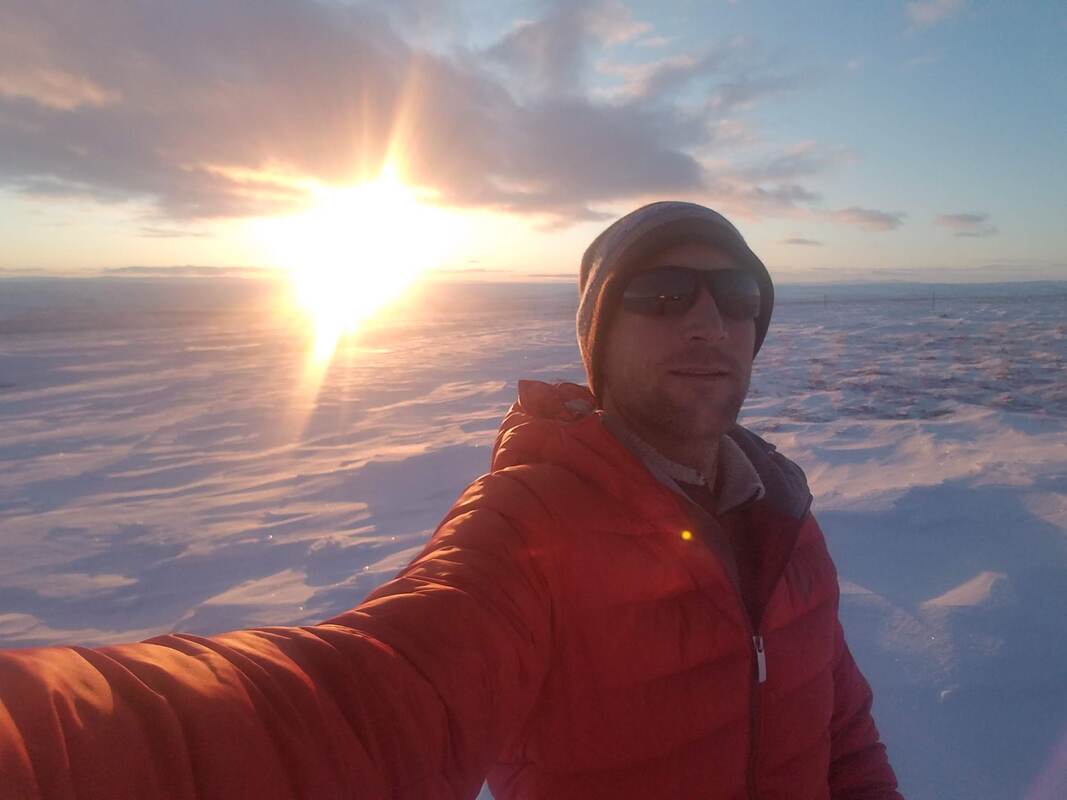
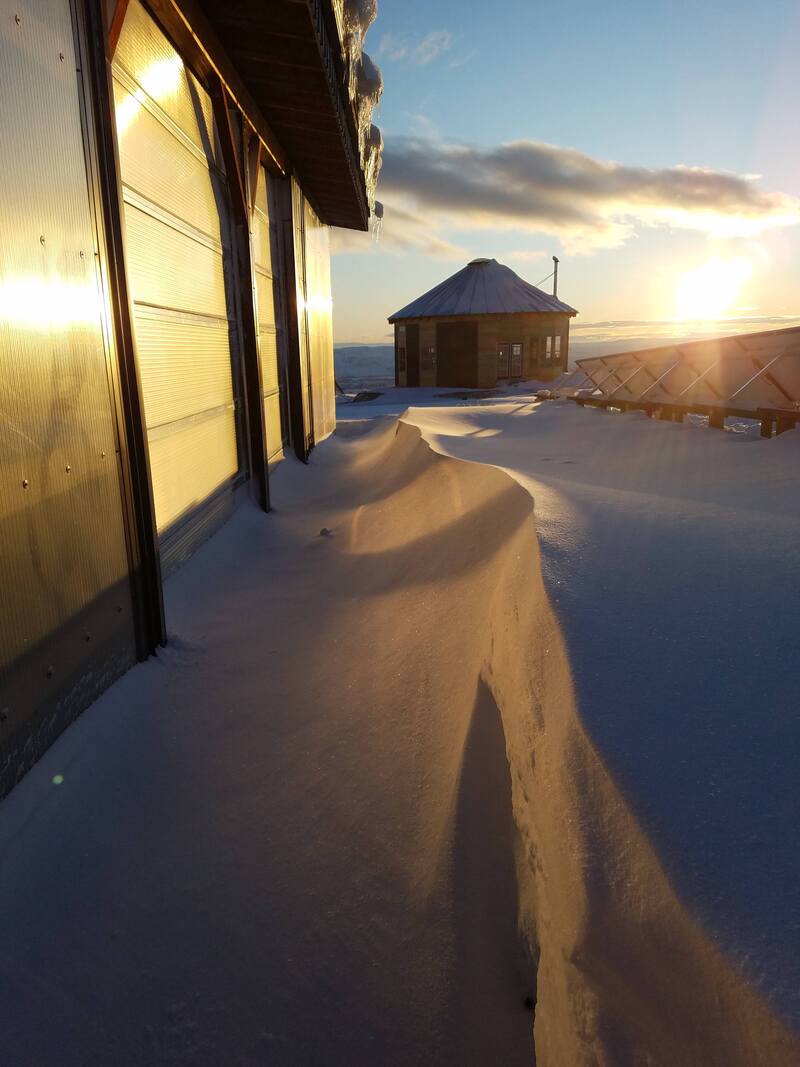
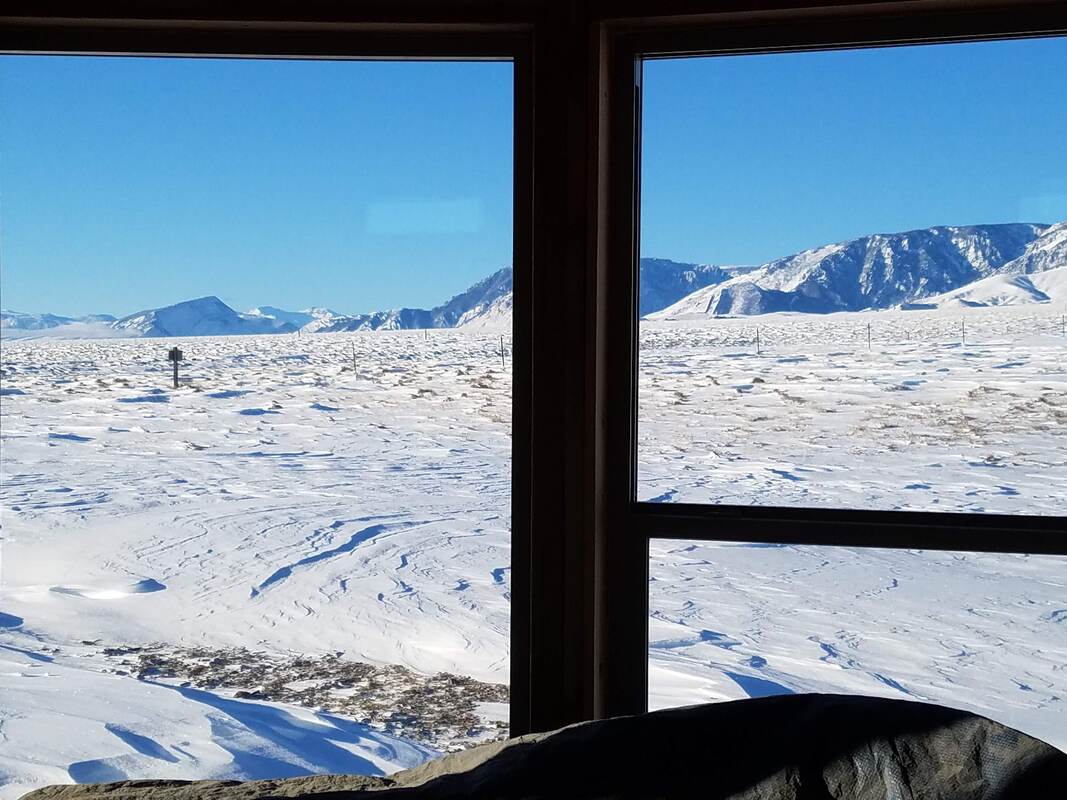
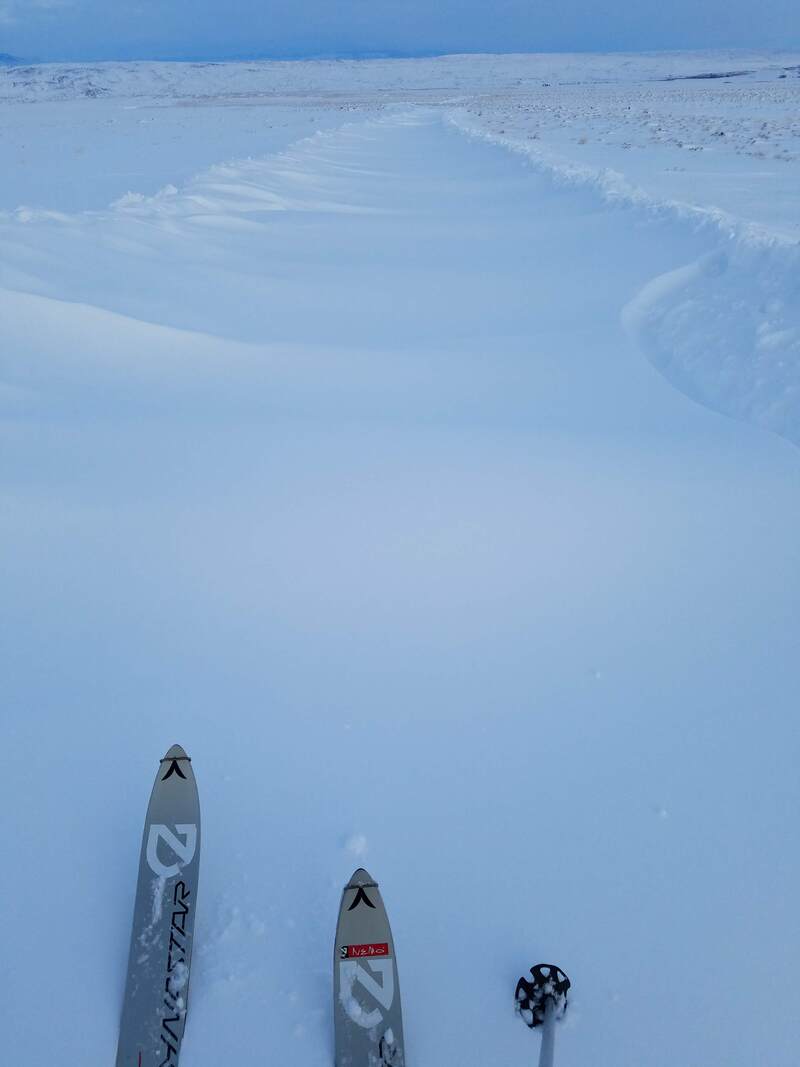
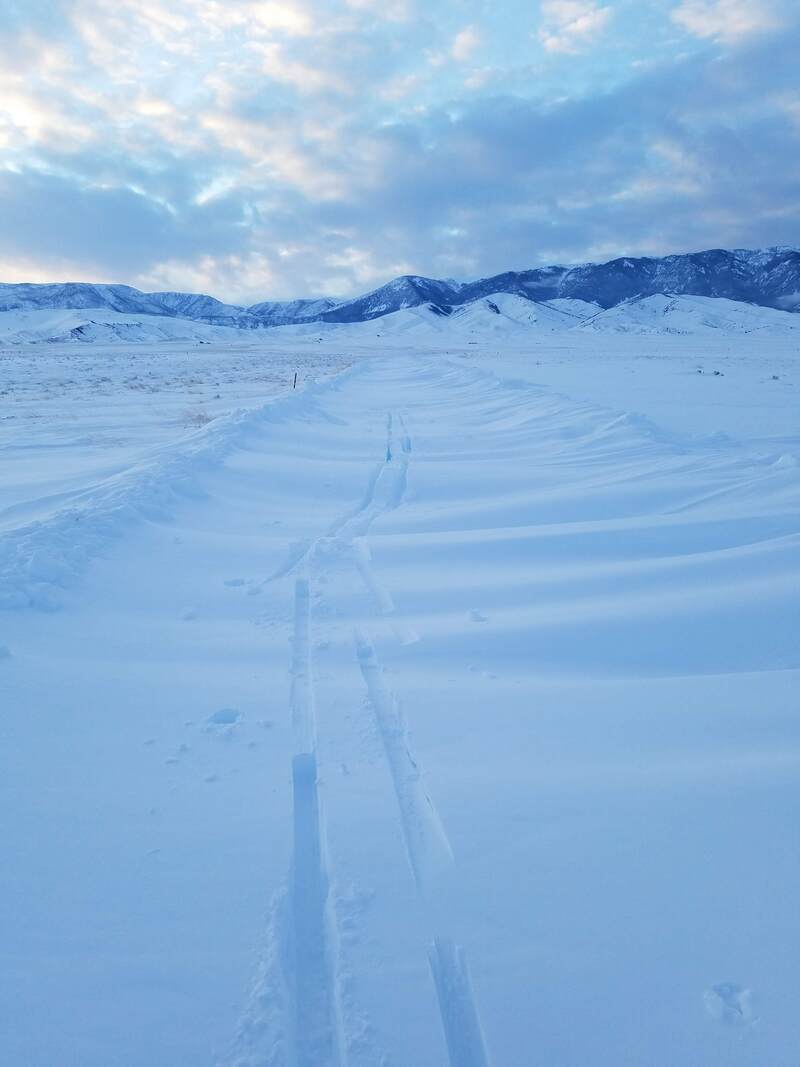
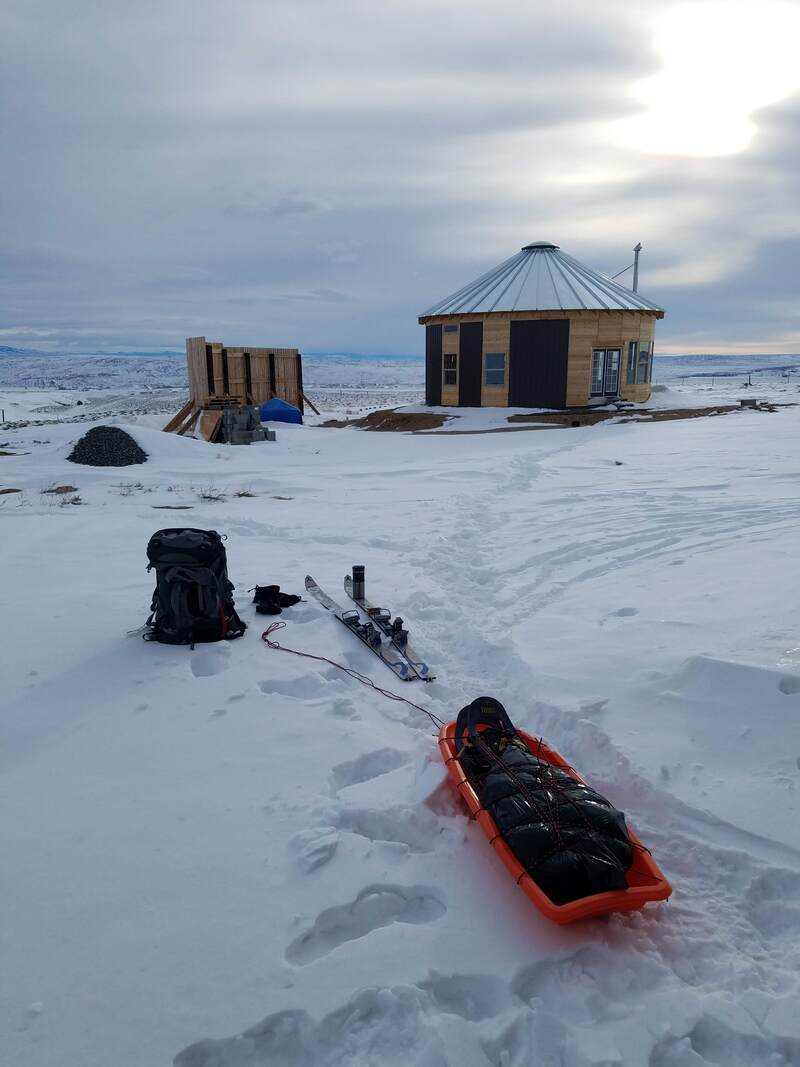
Below: I just had to go up during the dead of winter to see what things are like. Turns out the winter of 2016-2017 was one of the biggest winters in decades, which meant no vehicle access at all for almost 2 months. The neighbors, Matt and Trish, used horses to pack things in while I used snowshoes and a sled. The following spring things were wonderfully green and the snowpack on the Beartooth Highway was unbelievable!

2018: The Round House!
Since the beginning of the homestead project, I stewed over which construction method to ultimately pursue for a home, but one thing was always certain: it would be a high performance passive solar home. I had seriously considered a single story strawbale design on a concrete slab, but ultimately backed away from that choice because of the immense amount of labor per square foot and the chance -- albeit a slim one -- that an oversight in proper construction technique could eventually result in leaks and therefore, molding and poorly insulating bales. I began thinking of other options. I viewed hundreds of different passive solar, ultra-efficient designs online, including plans and kits, but was never really drawn to anything, plus the costs seemed to be too high. I also thought about wind resistance and wanting a basement, and by a turn of fate I came upon some round house kits. I grew up visiting my grandmother often, who lived in a two story round house with excellent views through a panoramic window array, so the idea already made sense. Plus, I figured with the right design I could have a loft and a wide open floor plan too -- the same design elements I was seeking in a rectangular house.
When I came across Smiling Woods Yurts, and looked at the kit prices (at that time, about $51,000 for a 35 foot yurt at 930 square feet with 11 foot high walls), I was sold. I got in touch with their ultra-helpful staff and began asking questions. They sell kits as a shell; you get the 2 x 6 stud framed walls (27 of them to be exact) with pre-installed windows and siding, plus the trusses (2 x 12), and roof and dome skylight. The customer is responsible for the foundation, floors system, insulation, electrical, the full interior floor plan and build out, plumbing, and so on. I figured that as a relative rookie in building houses, having a stand-alone engineered shell would be wise, and it would avoid much of the costs of a brand new design while still leaving me in the driver's seat to design the full interior and the determine the home's functionality and practicality. I would insulate it extremely well and add lots of south facing windows for passive solar gain and would use only wood heat, thereby having a carbon footprint so small it's practically inconsequential.
Since the beginning of the homestead project, I stewed over which construction method to ultimately pursue for a home, but one thing was always certain: it would be a high performance passive solar home. I had seriously considered a single story strawbale design on a concrete slab, but ultimately backed away from that choice because of the immense amount of labor per square foot and the chance -- albeit a slim one -- that an oversight in proper construction technique could eventually result in leaks and therefore, molding and poorly insulating bales. I began thinking of other options. I viewed hundreds of different passive solar, ultra-efficient designs online, including plans and kits, but was never really drawn to anything, plus the costs seemed to be too high. I also thought about wind resistance and wanting a basement, and by a turn of fate I came upon some round house kits. I grew up visiting my grandmother often, who lived in a two story round house with excellent views through a panoramic window array, so the idea already made sense. Plus, I figured with the right design I could have a loft and a wide open floor plan too -- the same design elements I was seeking in a rectangular house.
When I came across Smiling Woods Yurts, and looked at the kit prices (at that time, about $51,000 for a 35 foot yurt at 930 square feet with 11 foot high walls), I was sold. I got in touch with their ultra-helpful staff and began asking questions. They sell kits as a shell; you get the 2 x 6 stud framed walls (27 of them to be exact) with pre-installed windows and siding, plus the trusses (2 x 12), and roof and dome skylight. The customer is responsible for the foundation, floors system, insulation, electrical, the full interior floor plan and build out, plumbing, and so on. I figured that as a relative rookie in building houses, having a stand-alone engineered shell would be wise, and it would avoid much of the costs of a brand new design while still leaving me in the driver's seat to design the full interior and the determine the home's functionality and practicality. I would insulate it extremely well and add lots of south facing windows for passive solar gain and would use only wood heat, thereby having a carbon footprint so small it's practically inconsequential.
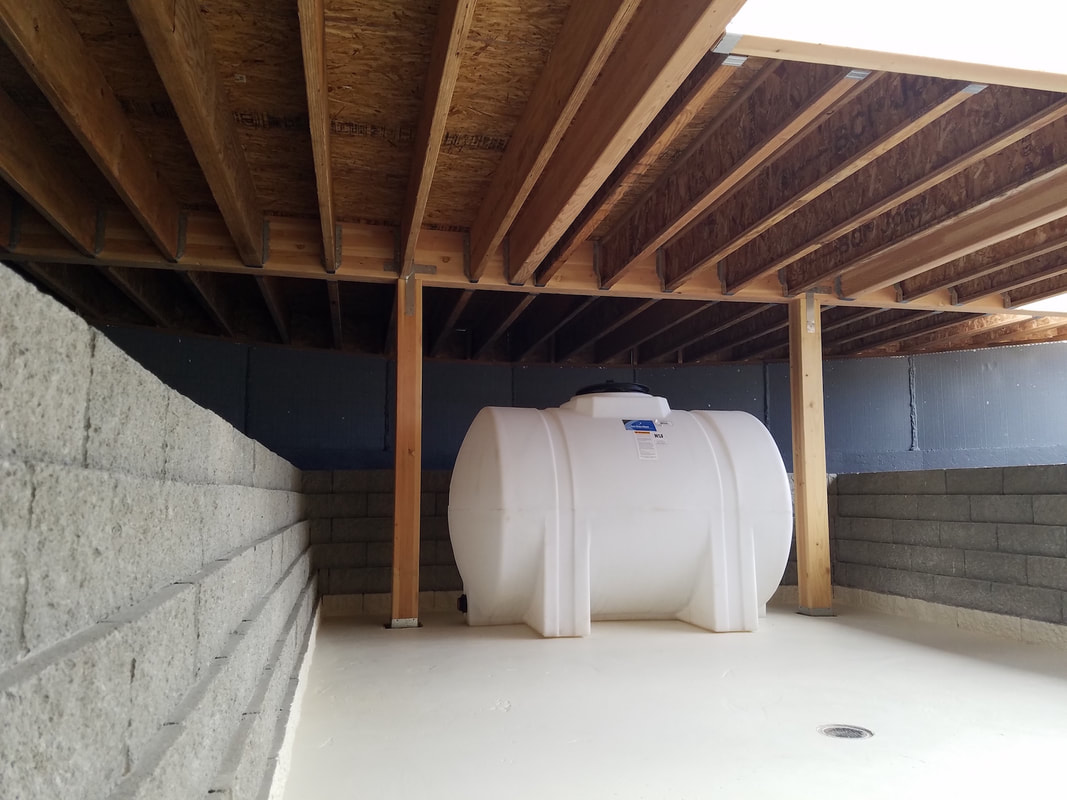
After a long and hefty internal debate, I decided against a concrete slab. I didn't want to commit to permanent plumbing and electrical systems and never have the chance to modify anything, and I wanted a basement space for utility infrastructure and additional storage space. 32 inch perimeter foundation walls (insulated concrete forms) would allow full versatility with the details of the interior design and infrastructure, and if I backfilled against them I'd have the benefit of earthen heat retention around the house and the likelihood that the basement would never freeze even if the house isn't heated in winter.
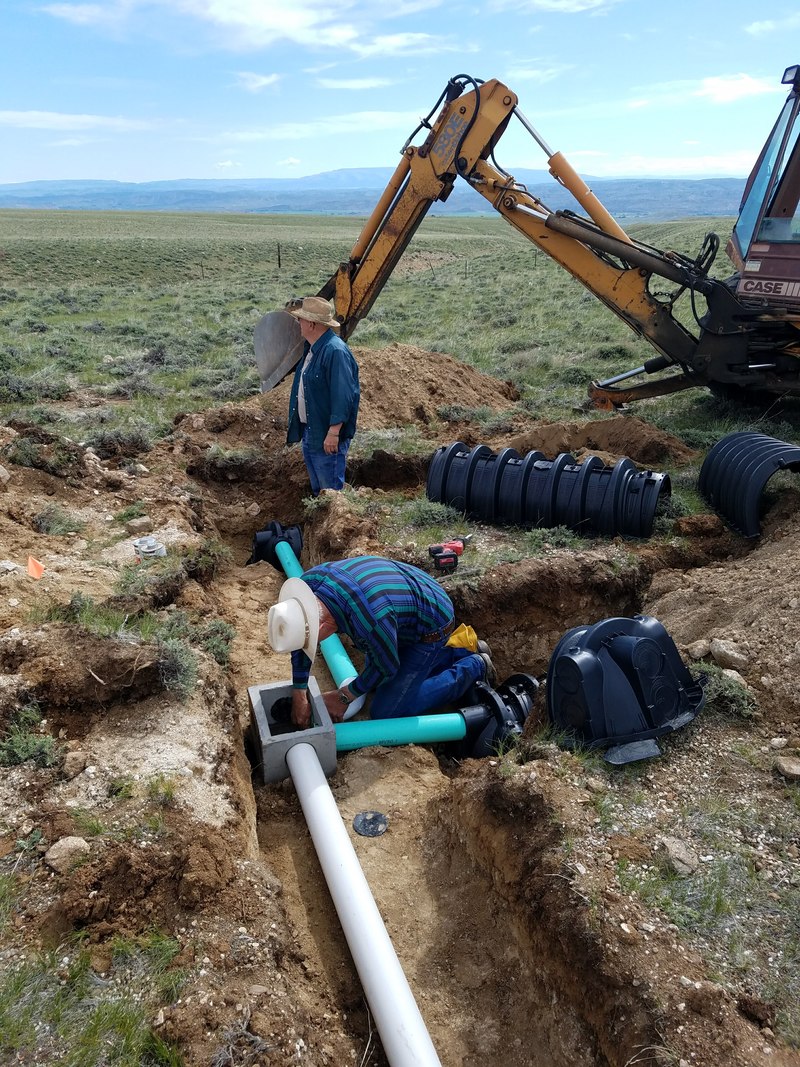
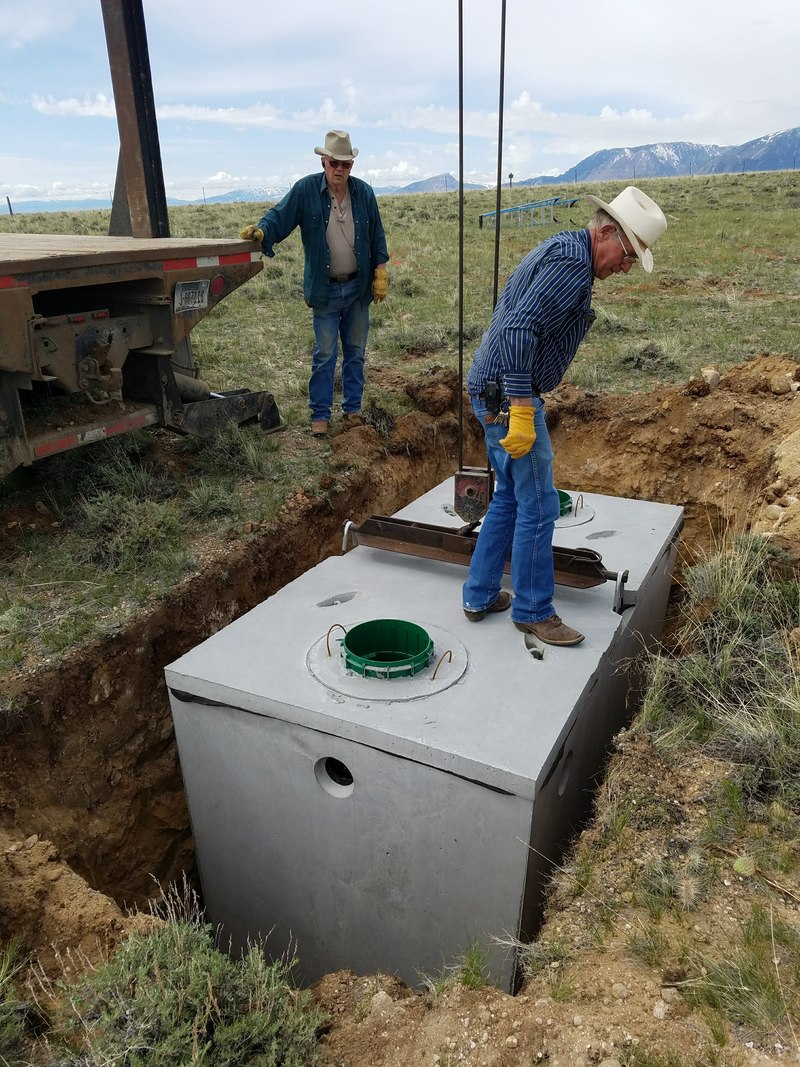
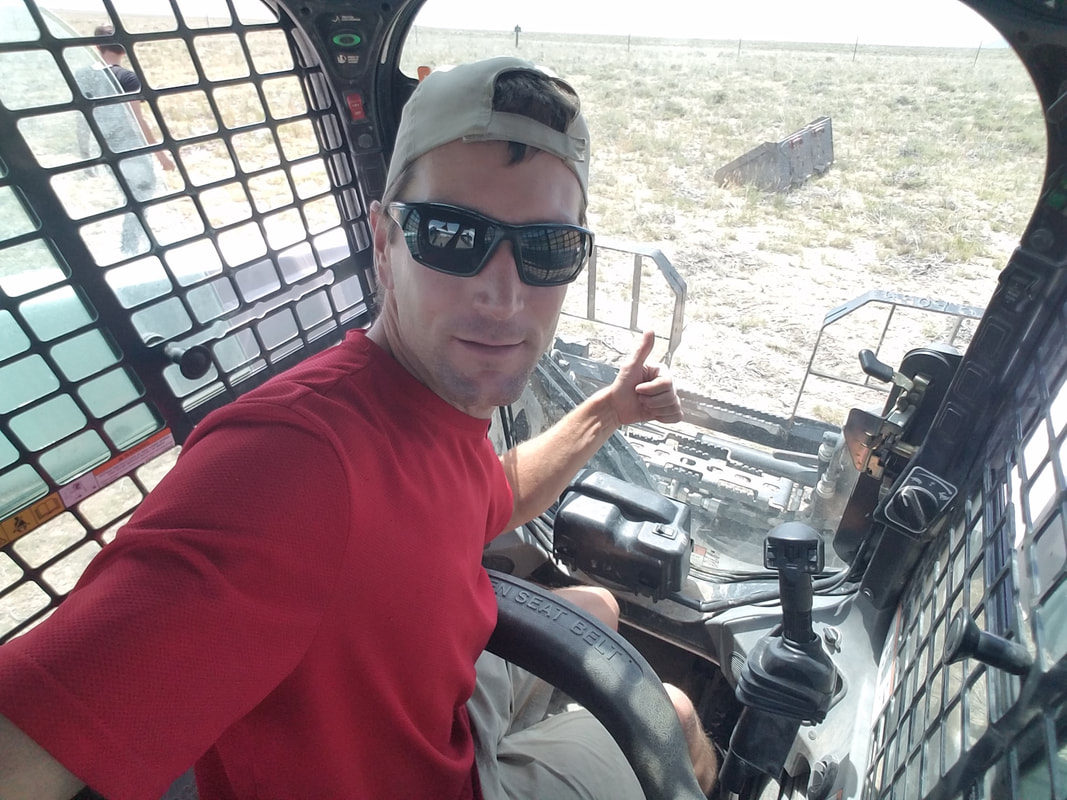
But first, I wanted to take care of the septic system, as it's required by law and needed to be in place before I started on the foundation. In May, I headed up with my septic permit in hand from the county (plus an actual address and a new mailbox to go with it!), met the installers, and within a week the septic system and two 100 foot leach lines were in place and the the rough foundation excavation was done. Thanks to Brandon over at Beartooth Fencing, I also expanded the fencing to accommodate the house, and installed two 16 foot, lockable gates on the entrance and exit of the property (photo above). No more wrangling with rotting timbers and a 50 year old tangled mess of barbed wire to get in!
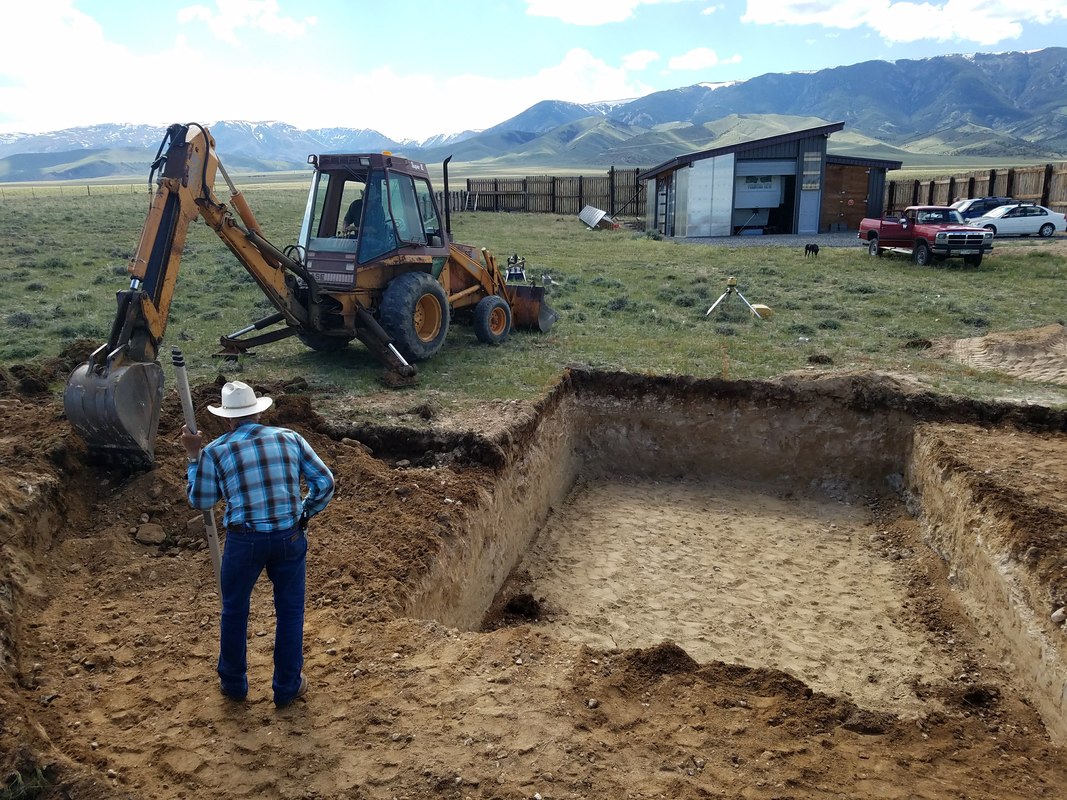
I began fine tuning the basement hole in July to prepare it for retaining wall block and finished the basement and footer preparation after another trip in September. I also installed the rebar seats and got the first course of rebar bent and seated.
But first, I wanted to take care of the septic system, as it's required by law and needed to be in place before I started on the foundation. In May, I headed up with my septic permit in hand from the county (plus an actual address and a new mailbox to go with it!), met the installers, and within a week the septic system and two 100 foot leach lines were in place and the the rough foundation excavation was done. Thanks to Brandon over at Beartooth Fencing, I also expanded the fencing to accommodate the house, and installed two 16 foot, lockable gates on the entrance and exit of the property (photo above). No more wrangling with rotting timbers and a 50 year old tangled mess of barbed wire to get in!
I began fine tuning the basement hole in July to prepare it for retaining wall block and finished the basement and footer preparation after another trip in September. I also installed the rebar seats and got the first course of rebar bent and seated.

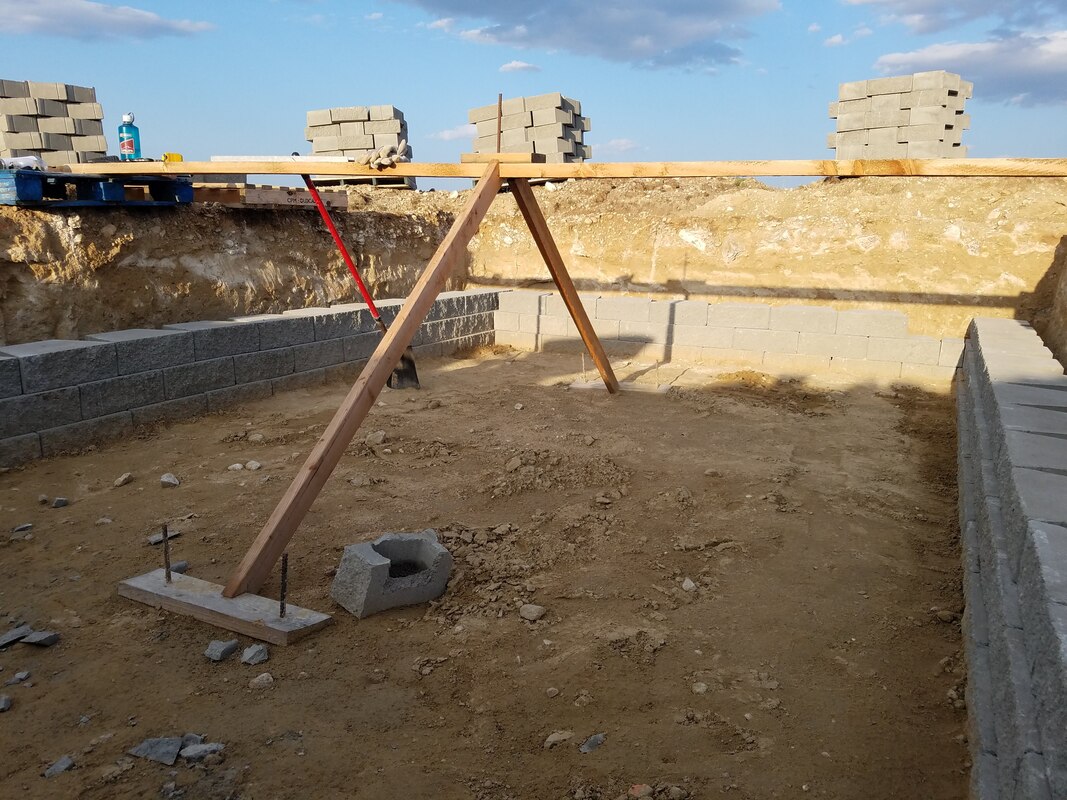

In the fall of 2018, I permanently vacated Ridgway, CO, where I had been living for three years, and moved everything I owned to the Homestead. After spending the winter in the Finger Lakes and Adirondack areas of upstate New York and in Lake Willoughby, VT (awesome ice climbing!), I returned on April 1 to live full time at the Homestead and begin building the house. Design work was complete and the foundation materials were on site. The next stage was to pour the footer, followed by the insulated concrete form perimeter walls. I also started on another wind fence to protect the house from the north winds, similar to the existing design but stabilizing it better and making it look a bit nicer, and replaced my home-made hinged plywood garage doors with an insulated overhead door to match the barn door.
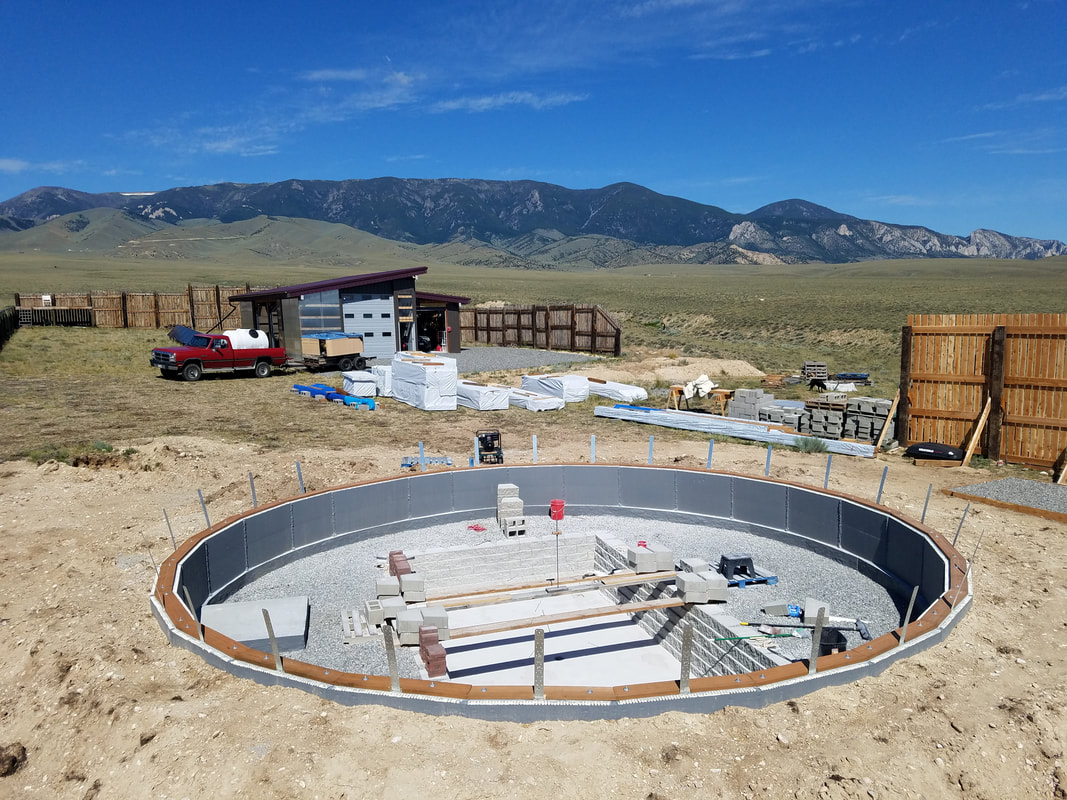
One of the biggest challenges with my design -- and radial construction generally -- was keeping an absolutely perfect center point during all stages of construction. If the center point ever moved, the result would literally be a house that didn't fit on its foundation, and the tolerances were minimal (1/4 inch). In the images below you can see the creative ways I built a center marker for both the footer and the perimeter foundation walls and sill plates. There are 27 sections of perimeter foundation walls, each has to be exactly the same width as the walls panels, and the corners have to be exactly the same distance from the center point. Details are in the images
One of the biggest challenges with my design -- and radial construction generally -- was keeping an absolutely perfect center point during all stages of construction. If the center point ever moved, the result would literally be a house that didn't fit on its foundation, and the tolerances were minimal (1/4 inch). In the images below you can see the creative ways I built a center marker for both the footer and the perimeter foundation walls and sill plates. There are 27 sections of perimeter foundation walls, each has to be exactly the same width as the walls panels, and the corners have to be exactly the same distance from the center point. Details are in the images
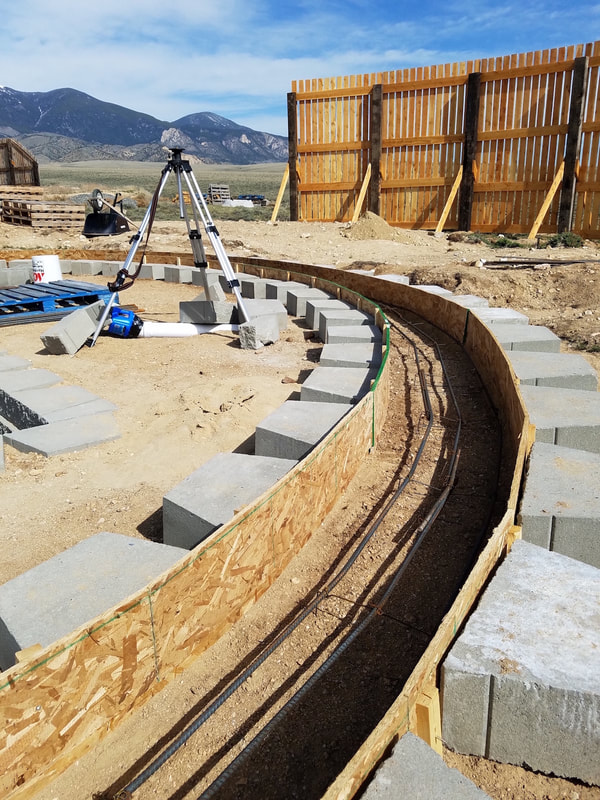
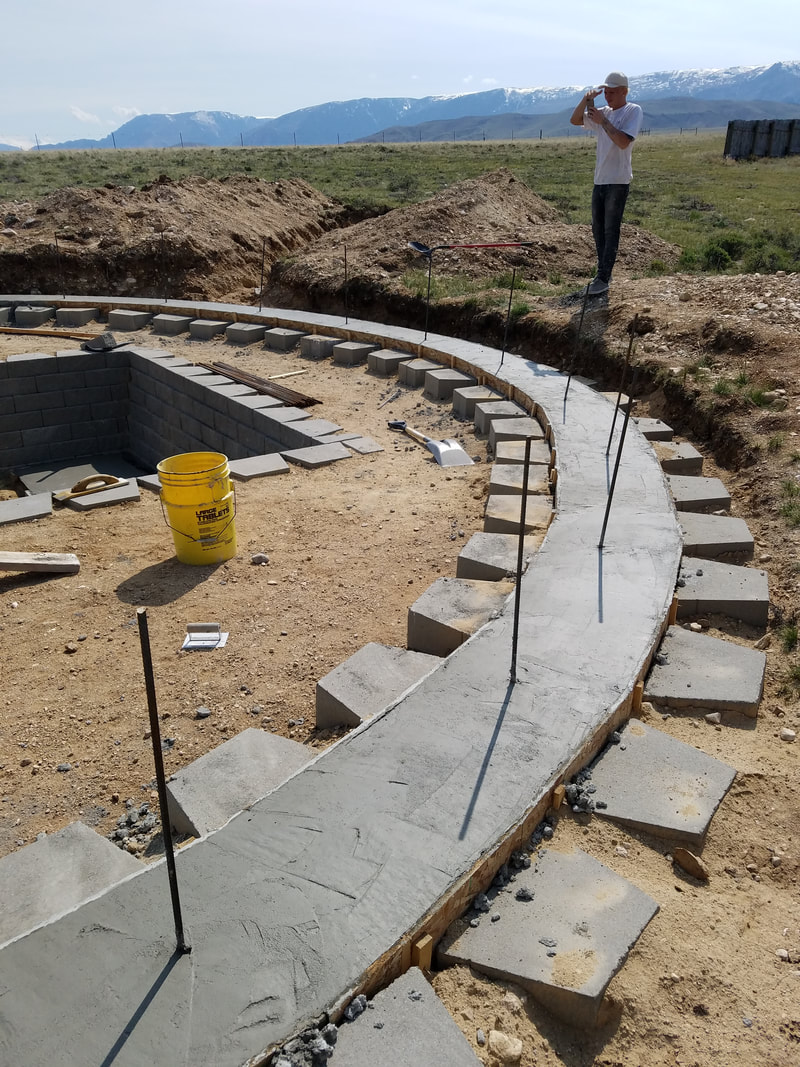
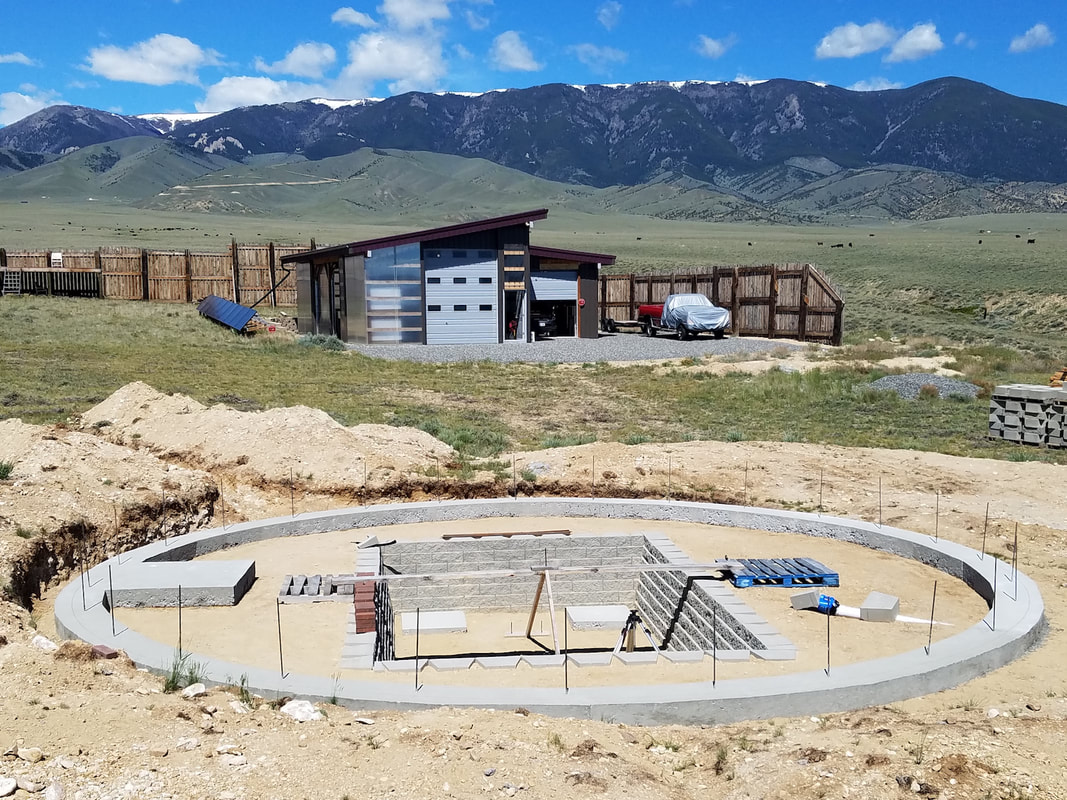
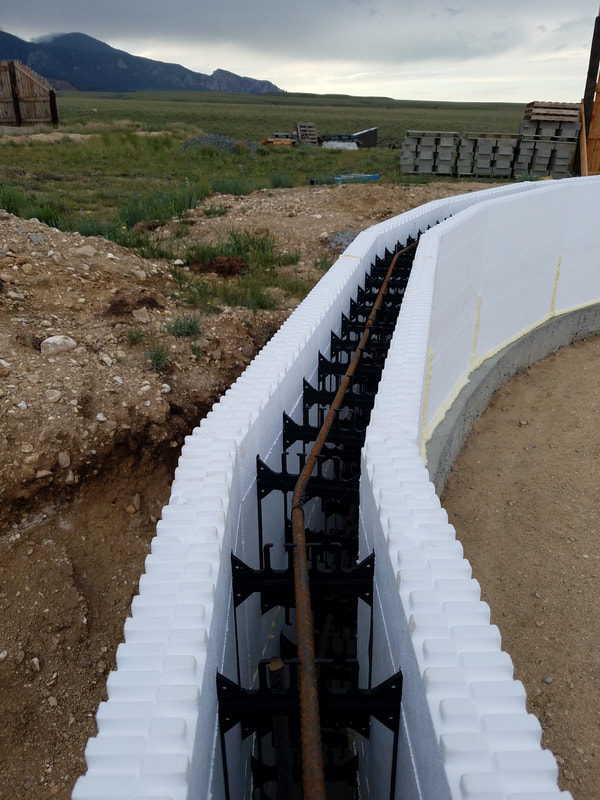
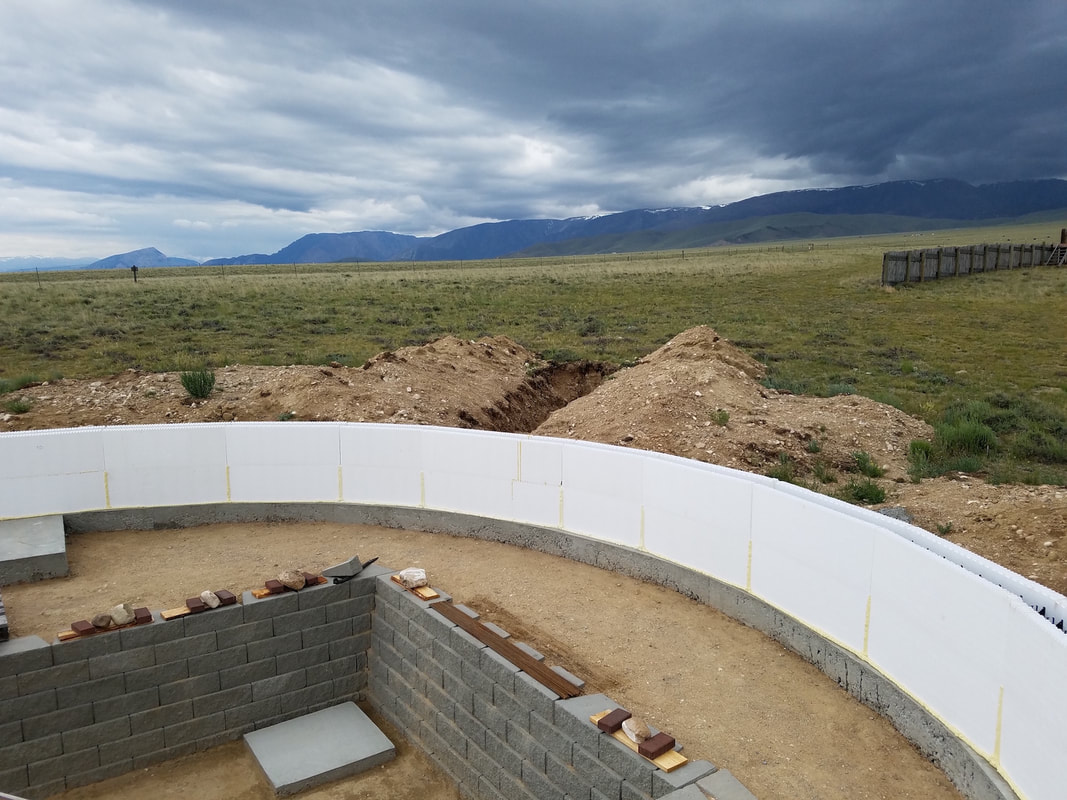
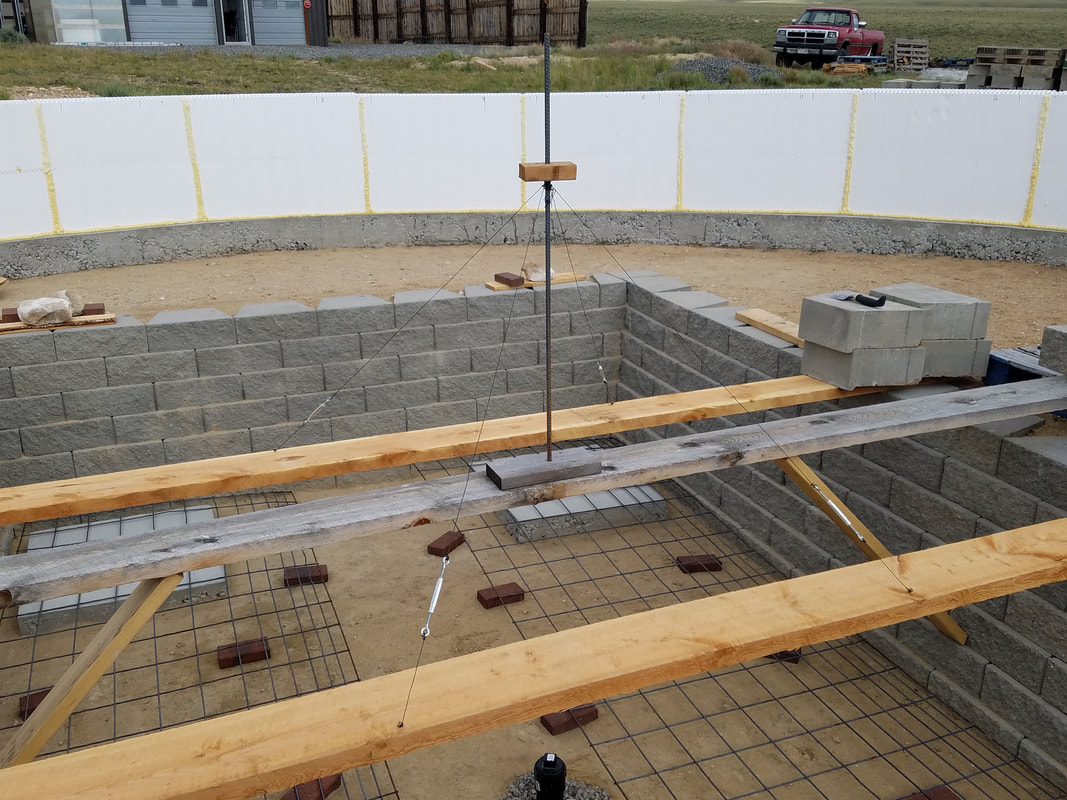
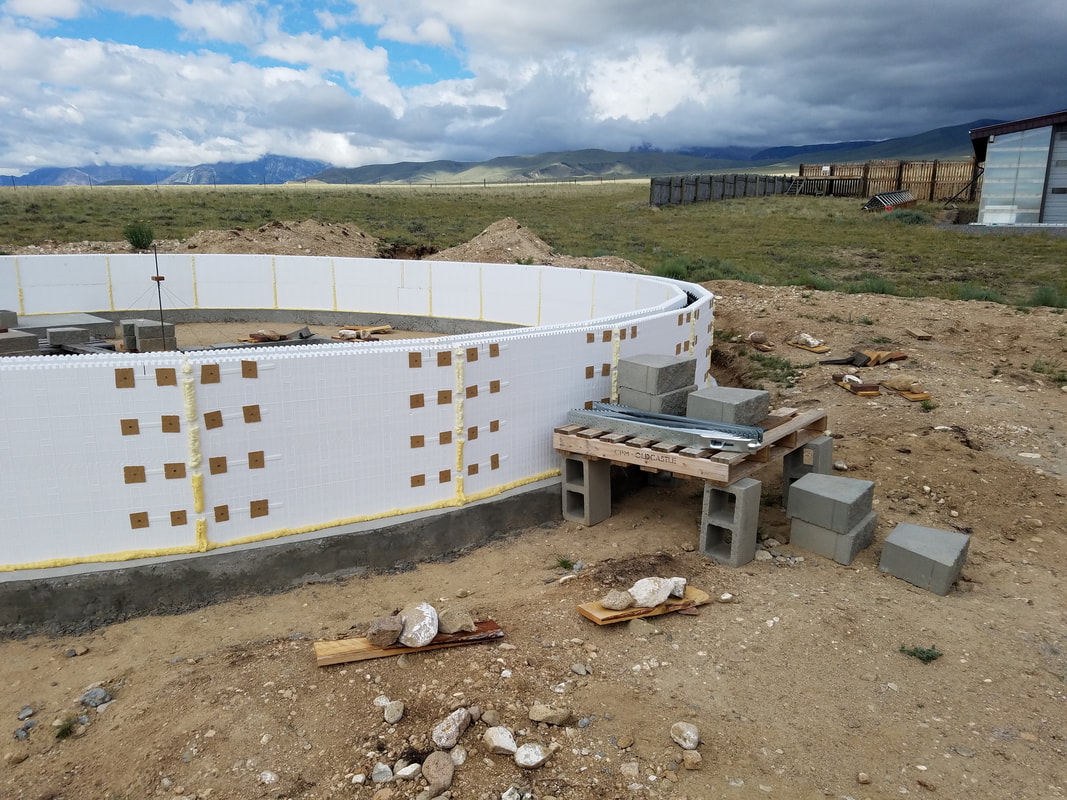
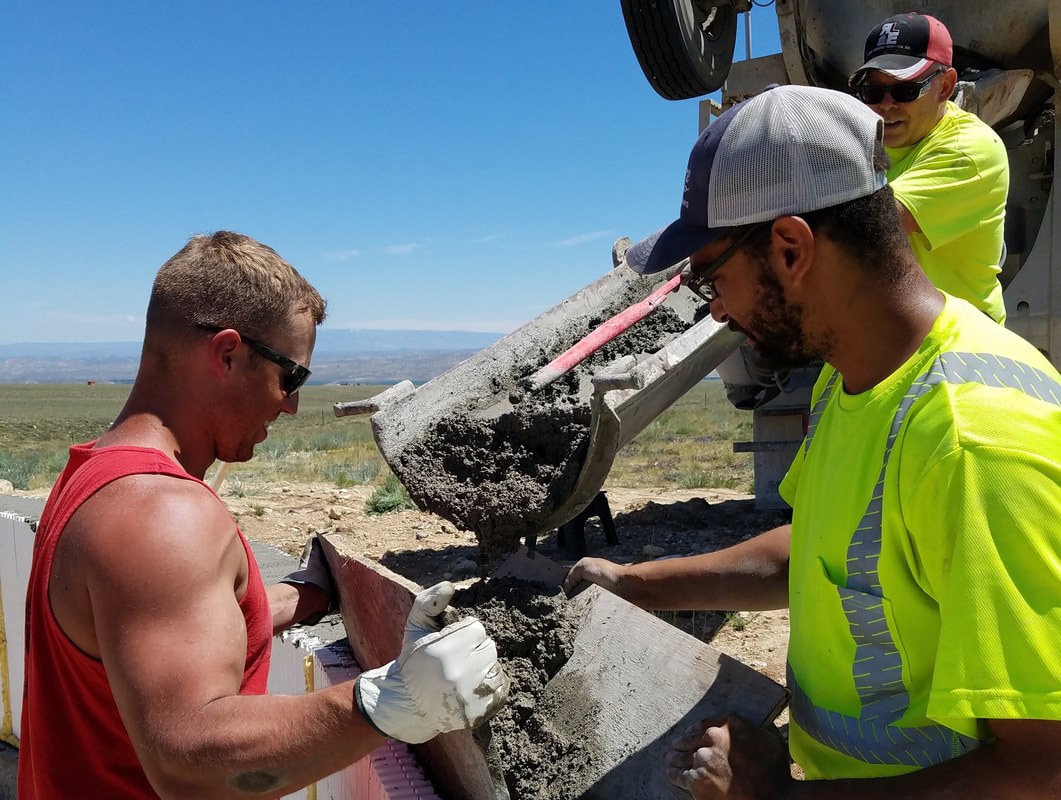
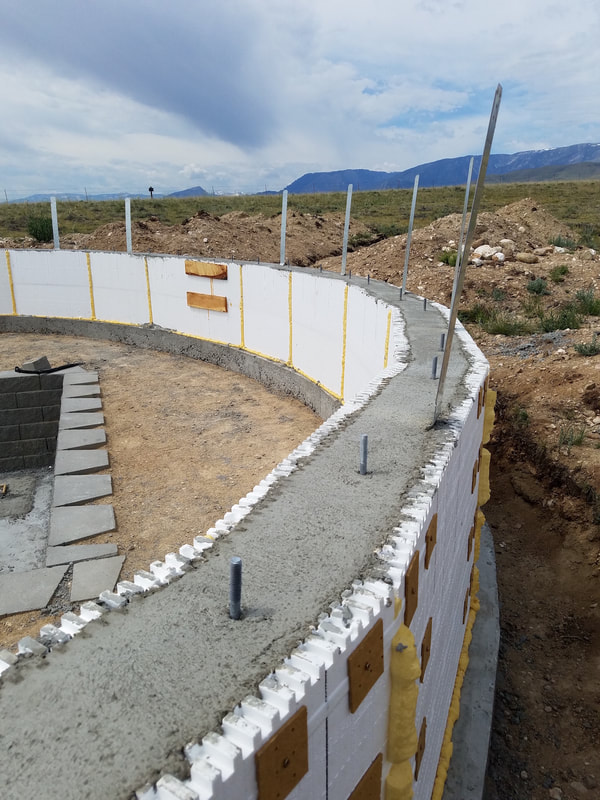
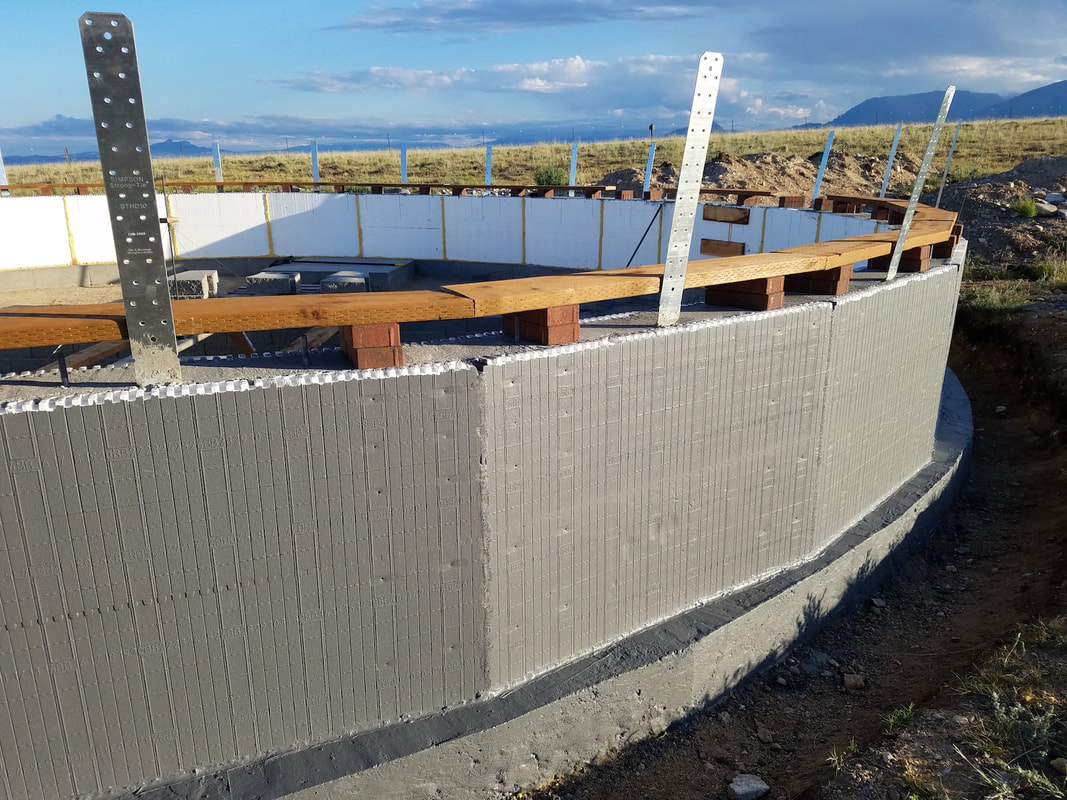
The next step: installation of sill plates, painting the walls with special protective paint prior to backfilling, and backfilling the foundation. Note the steel strap anchors embedded directly into the concrete which fasten each wall panel directly to the foundation, in addition to screws through the floor joists into the sill plate and J bolts.
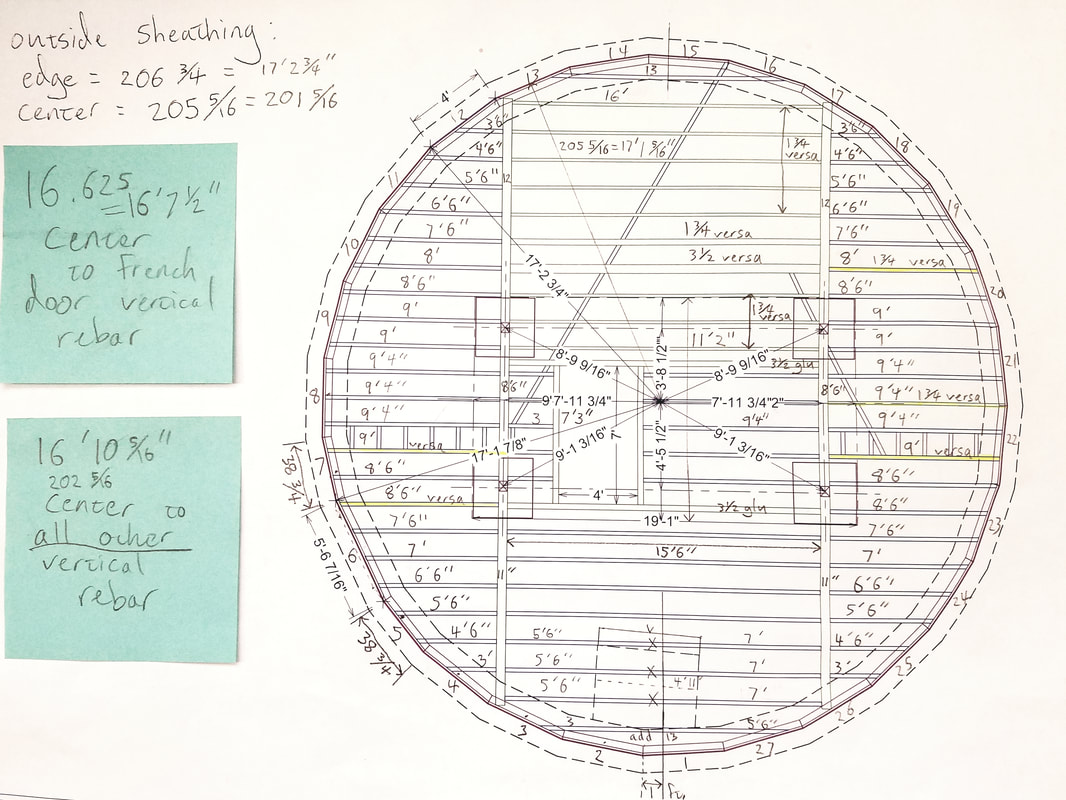
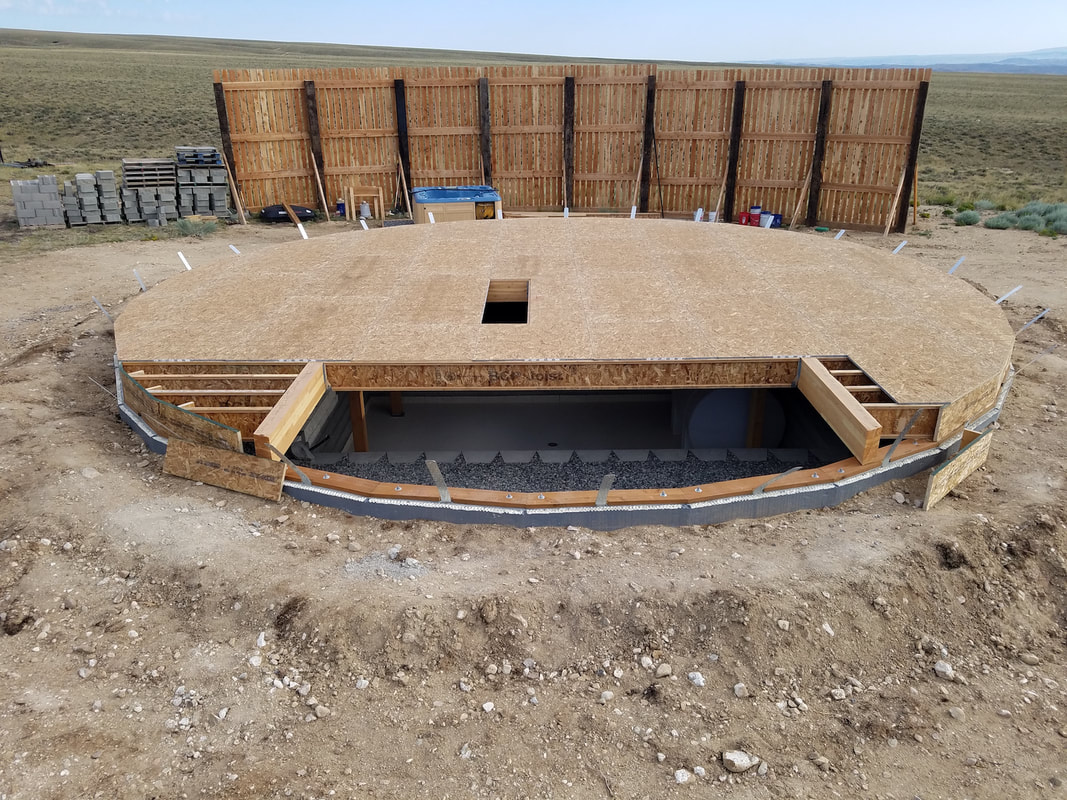
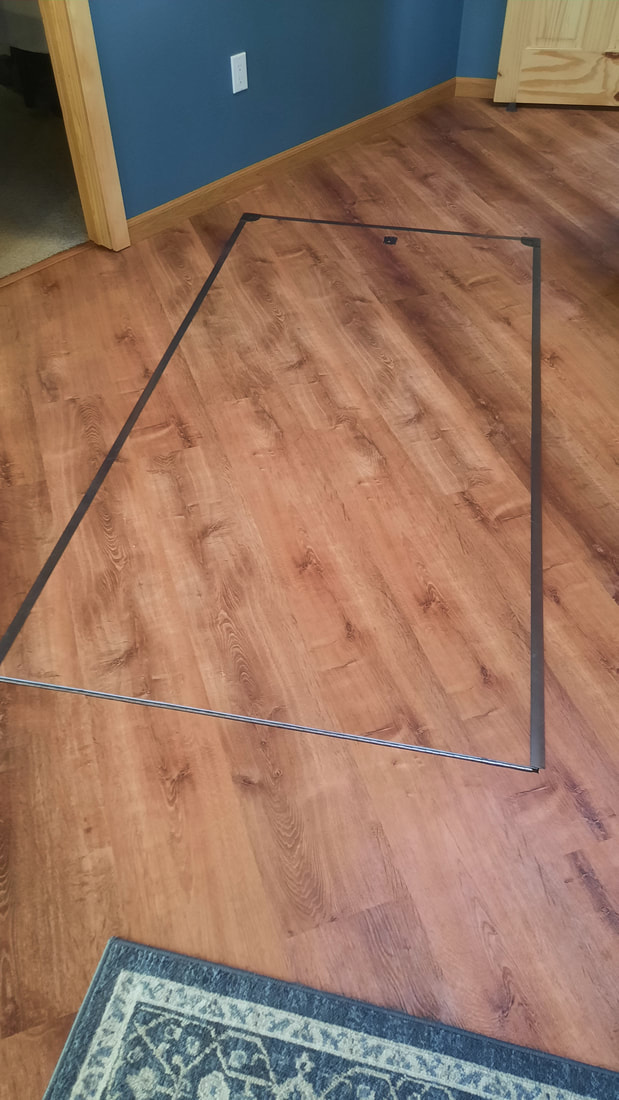
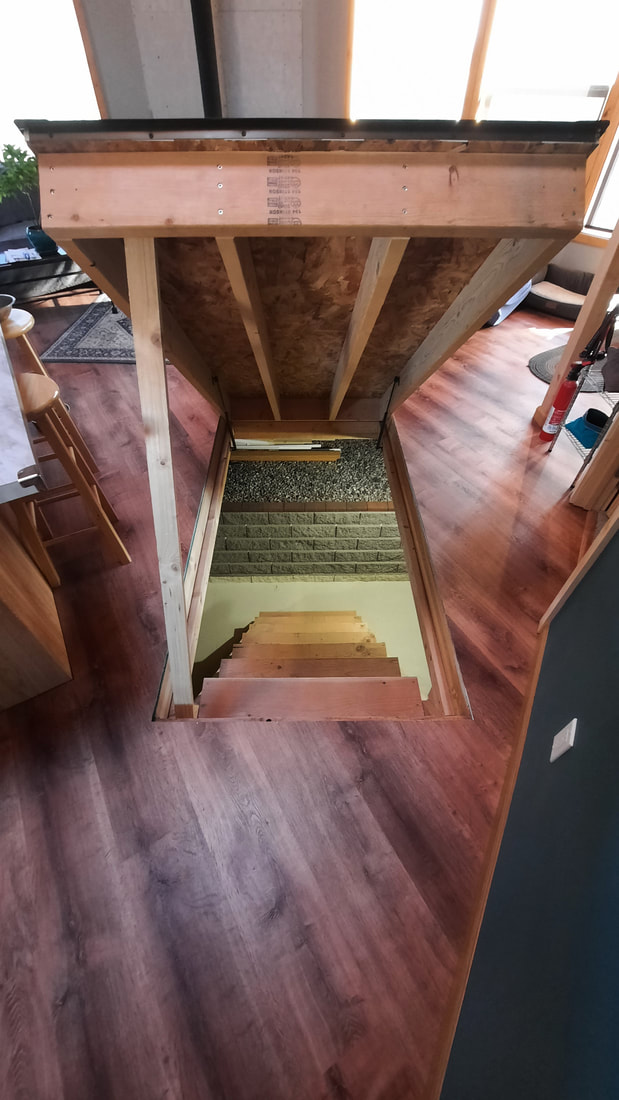
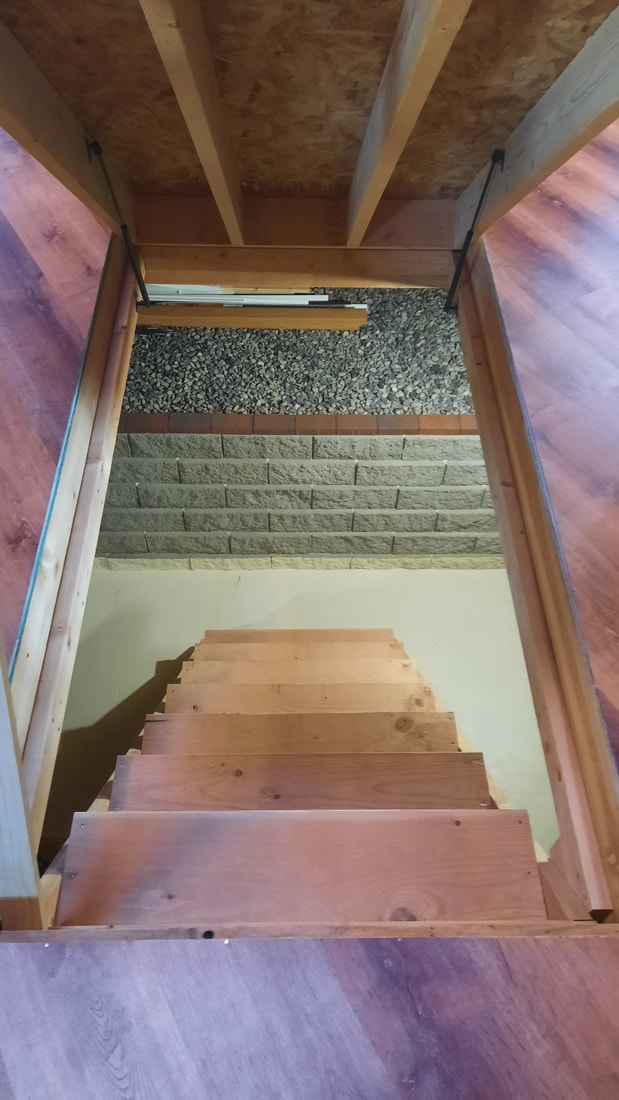
Next up: the floor system, made extraordinarily complex by parallel joists on a round structure. The design process was pretty intense, partly due to the fact that load bearing joists were needed in key locations and had to align with the bearing points of the interior walls that support the loft. Also, the floor hatch to the basement needed its own structural system. Because I purchased the flooring system from Boise Cascade in Billings, their in-house engineer fine tuned my initial plans to make sure I was using the correct materials in the right places, all at no extra charge.
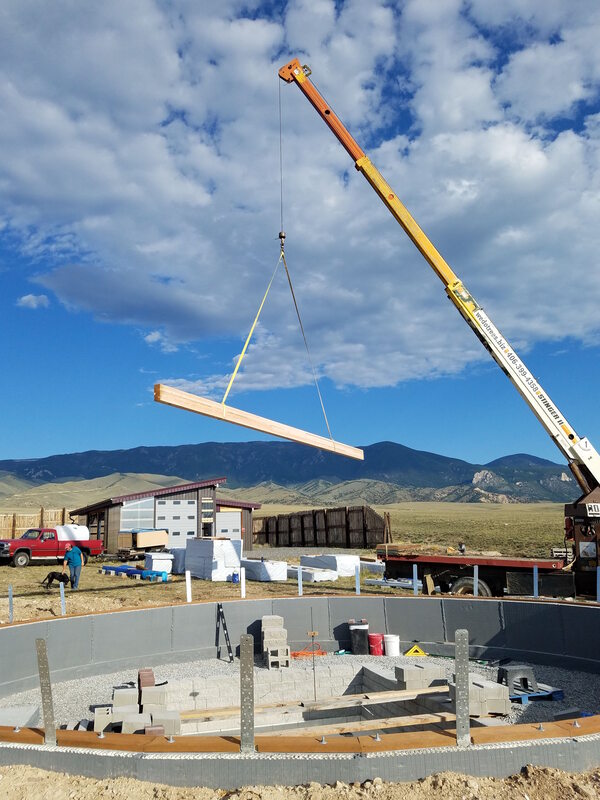
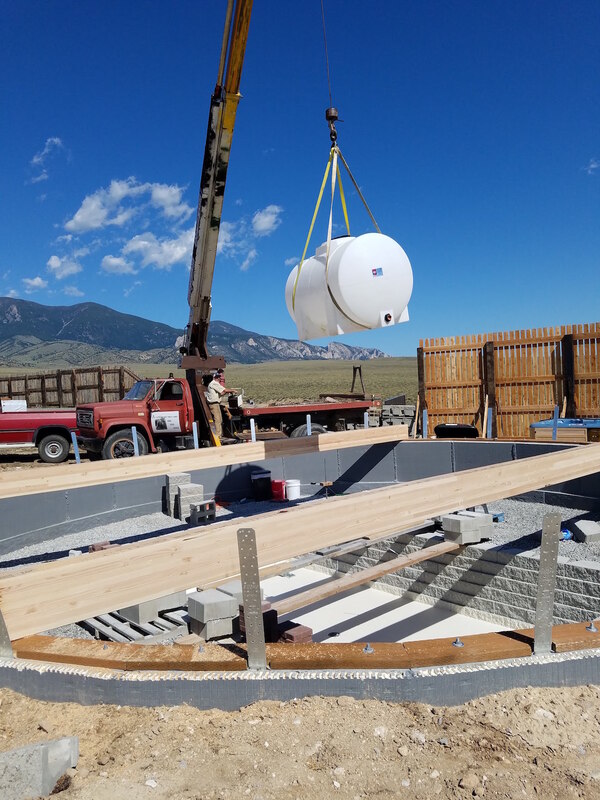
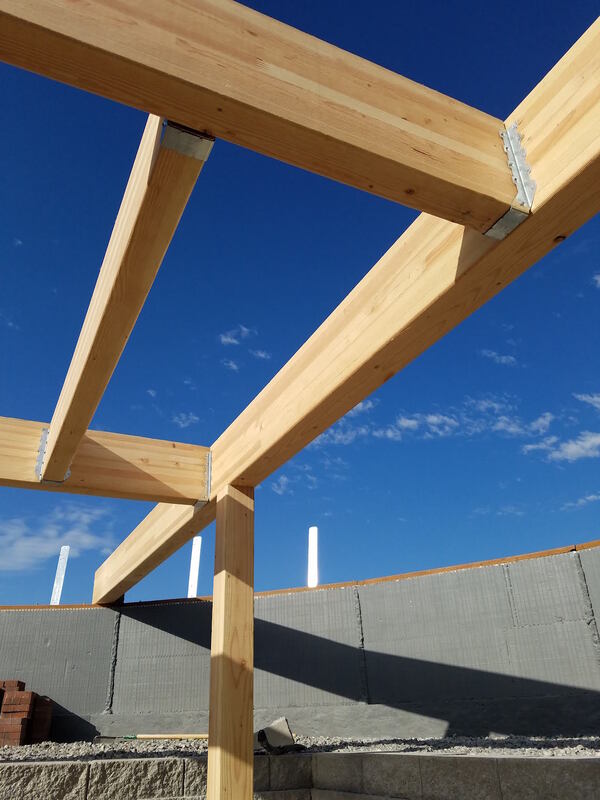
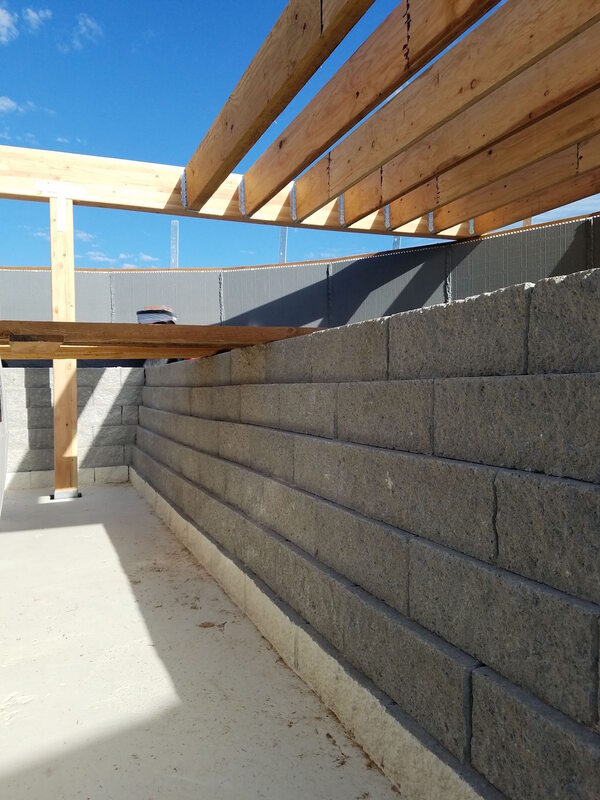
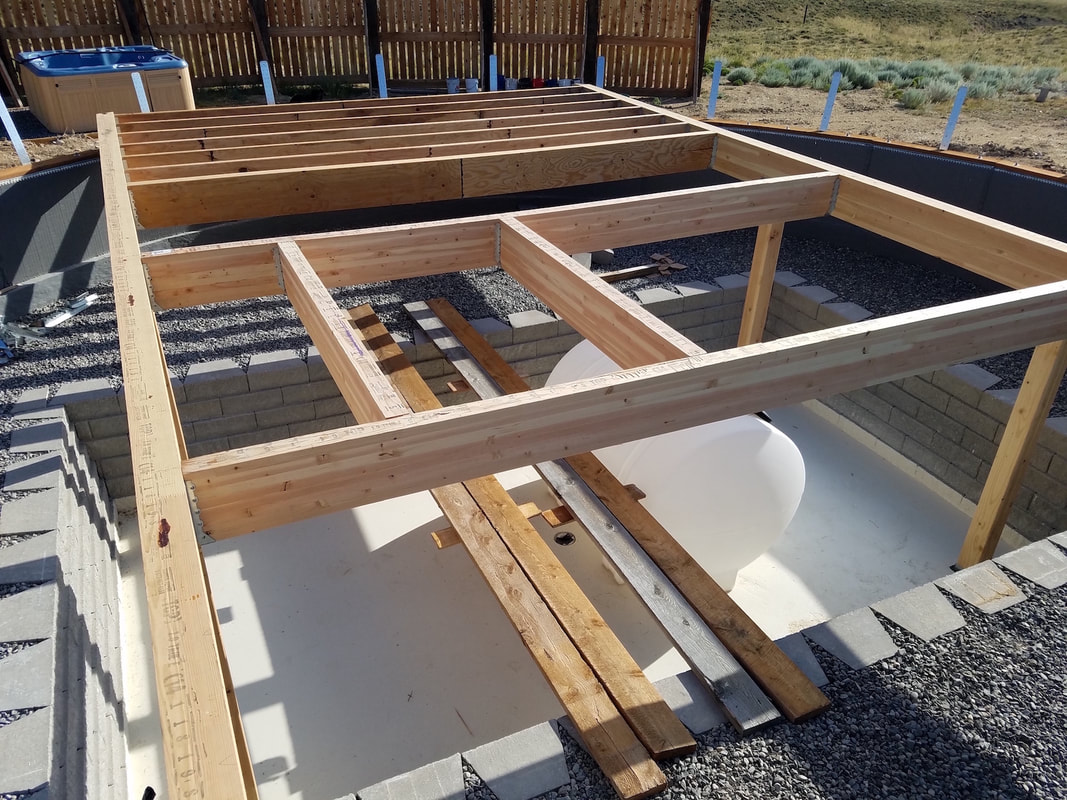
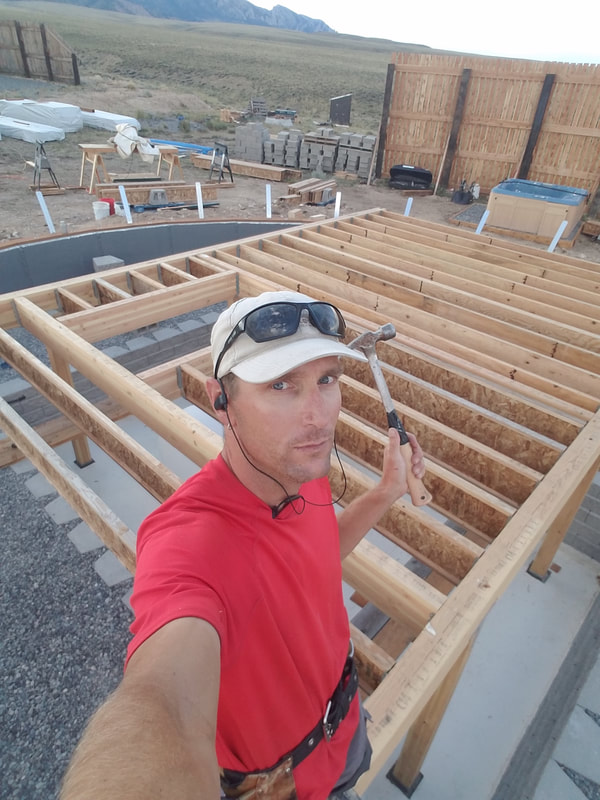
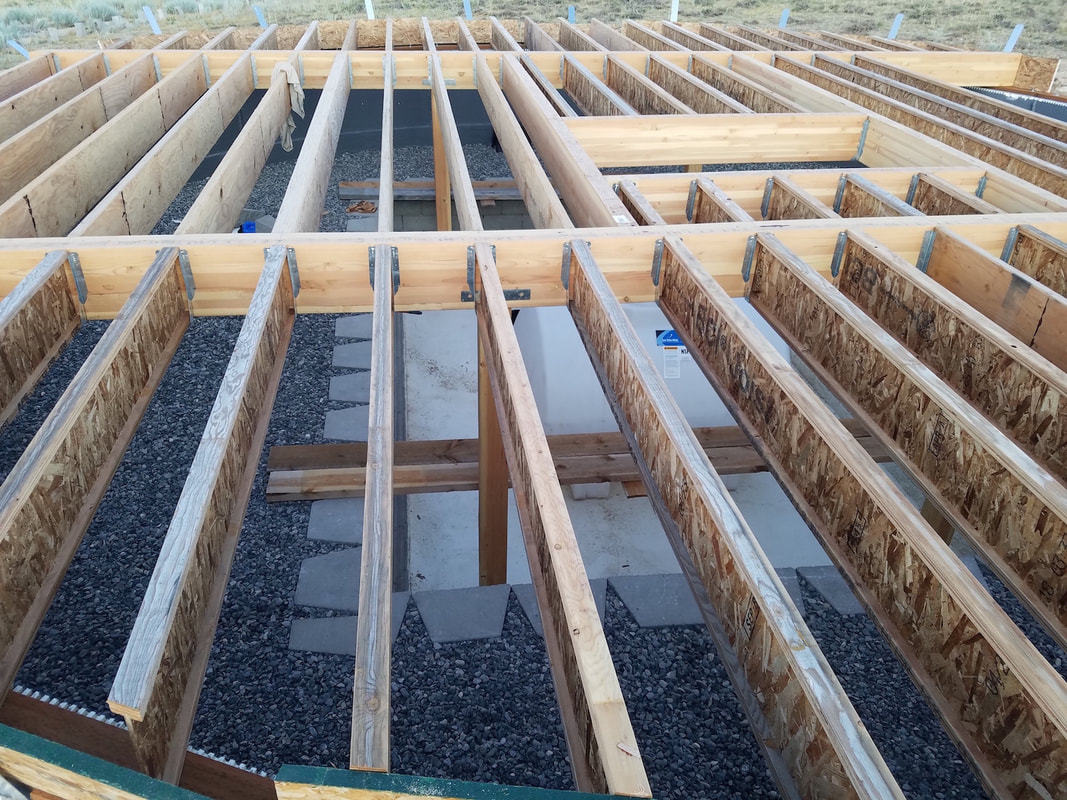
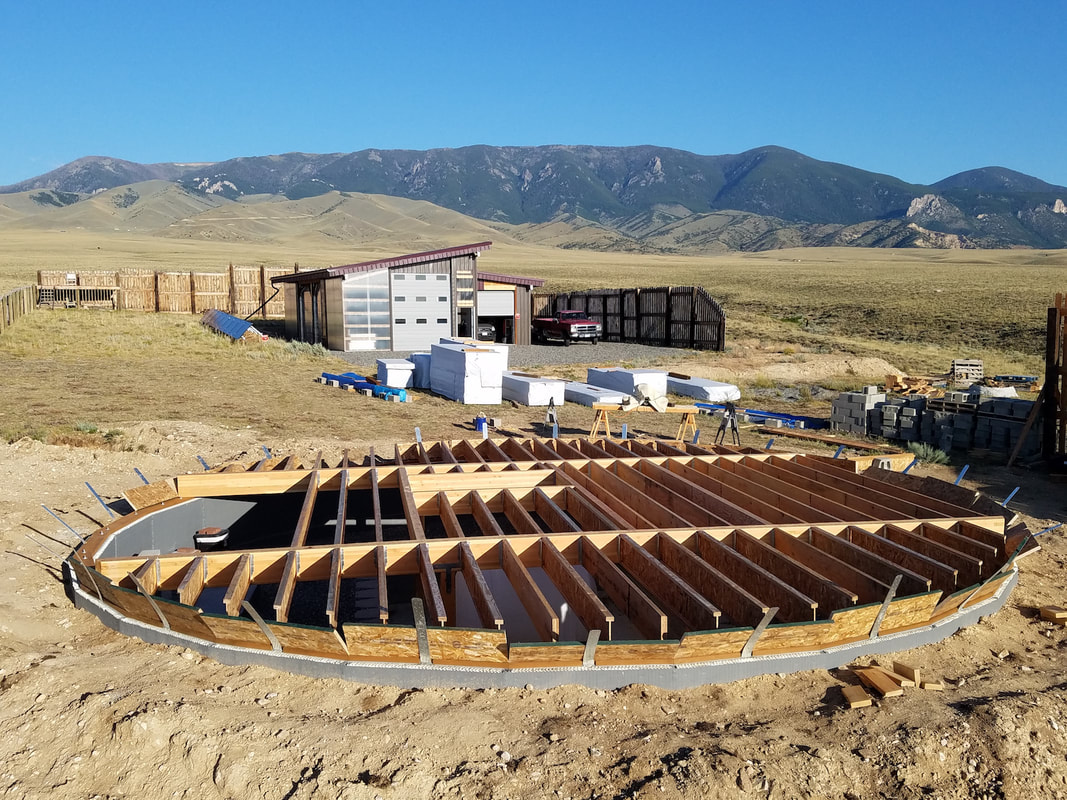
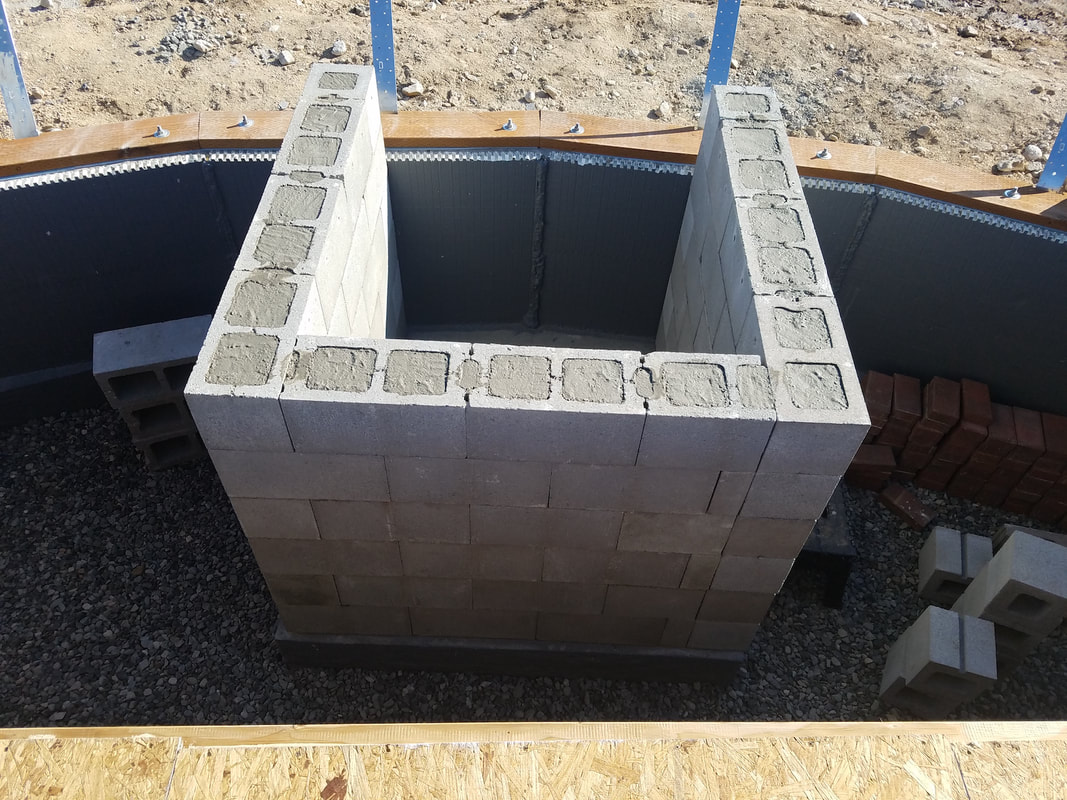
Next up: building up the hearth slab to floor level, and installing the floor sheathing. Because of the weight of the hearth with all the stone slabs and masonry, I didn't want that weight on the floor joists, so it's an independent platform. The block structure was filled with dirt and compacted, rebar mesh laid on top, and then a slab poured flush with the future floor. I must admit: I hired two carpenters for a day to sheath the floor -- something I had never overseen nor done solo myself and didn't want to take a chance botching the tight alignment of it all.
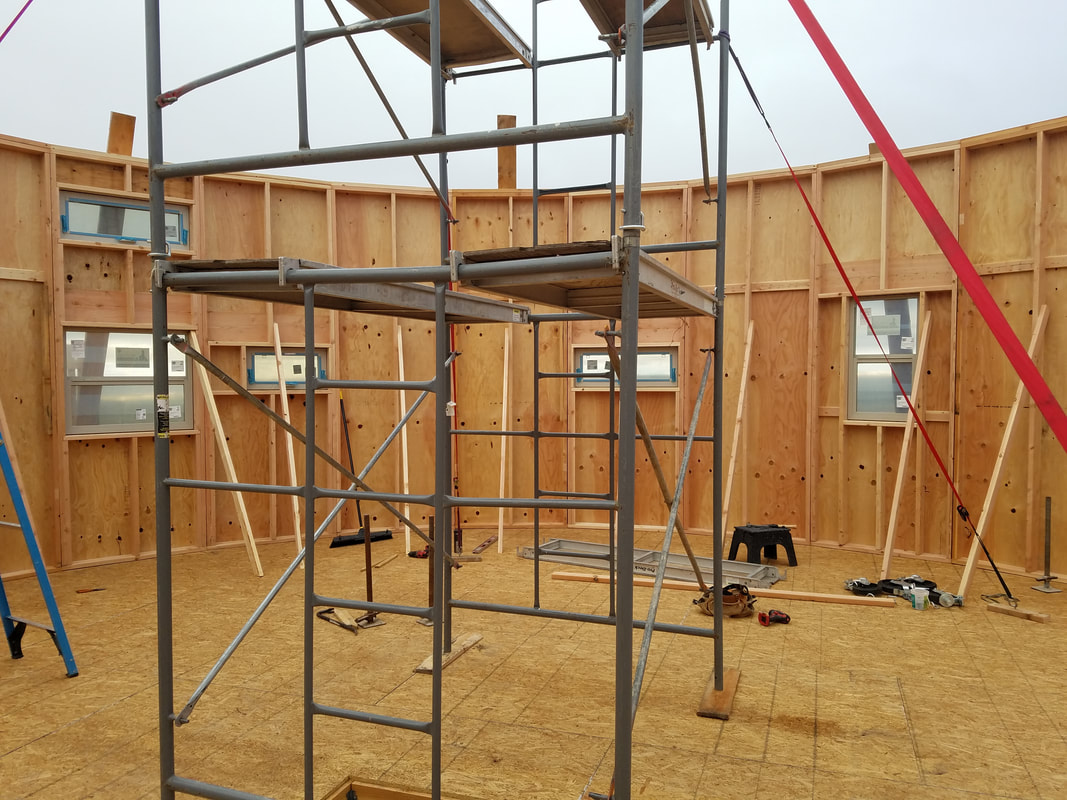
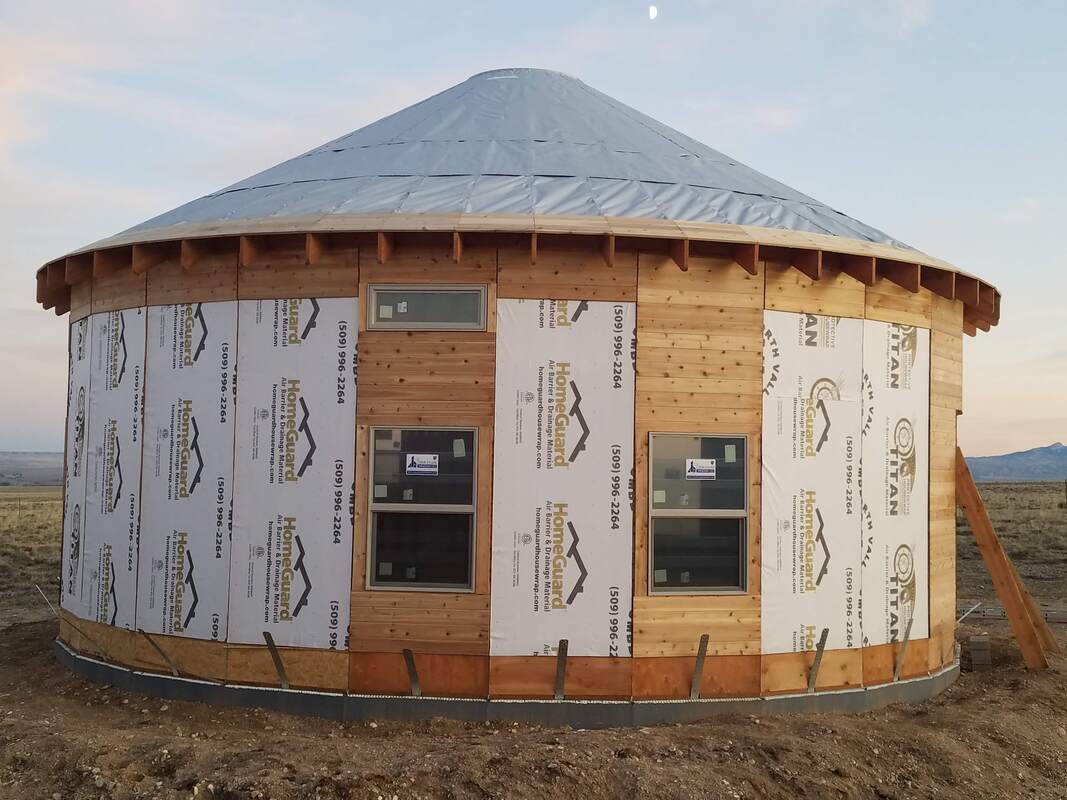
With the subfloor sheathing and hearth platform done, it was time to start raising the walls and putting up the roof rafters. Raising the walls took a day and a half, and was extremely stressful with the prospect -- as is always the case here -- for extreme winds to rip the walls right off the subfloor and send them crashing to the ground, windows be dammed. I braced it as best as I could and hoped for the best. Pictured below are my dear neighbors Bill and Bill, who helped me during critical times handling things that one person simply cannot do.
I used my climbing gear to rig a hauling system to raise the 200+ pound dome ring up the scaffolding. It was actually two separate systems: one to haul it up the scaffolding and another to get it over the lip and onto the top deck. The dome ring was placed on a raised lumber platform to prevent the rafters from interfering with the scaffolding, and I used car jacks to fine tune its position. From there, it was pure trial and error to get the dome ring at precisely the right height and orientation so that all rafter ends would contact it perfectly flush. Two timberlok lag screws connect each of the 56 rafters to the dome ring.
I used my climbing gear to rig a hauling system to raise the 200+ pound dome ring up the scaffolding. It was actually two separate systems: one to haul it up the scaffolding and another to get it over the lip and onto the top deck. The dome ring was placed on a raised lumber platform to prevent the rafters from interfering with the scaffolding, and I used car jacks to fine tune its position. From there, it was pure trial and error to get the dome ring at precisely the right height and orientation so that all rafter ends would contact it perfectly flush. Two timberlok lag screws connect each of the 56 rafters to the dome ring.
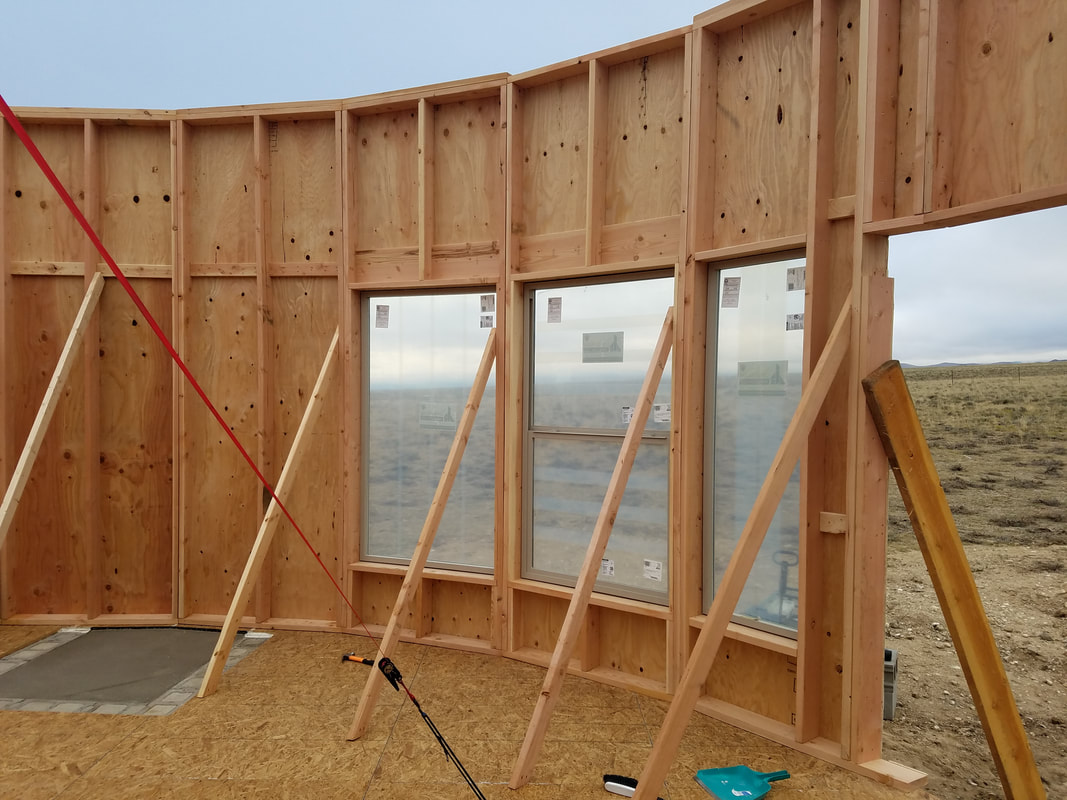
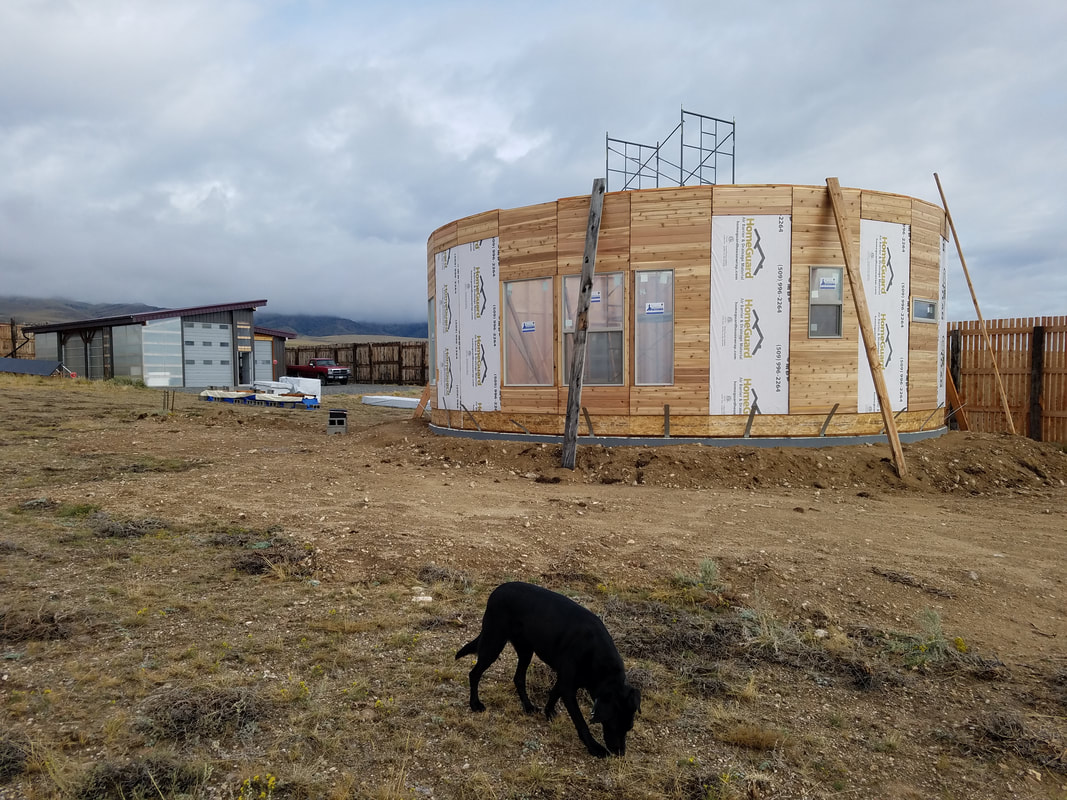
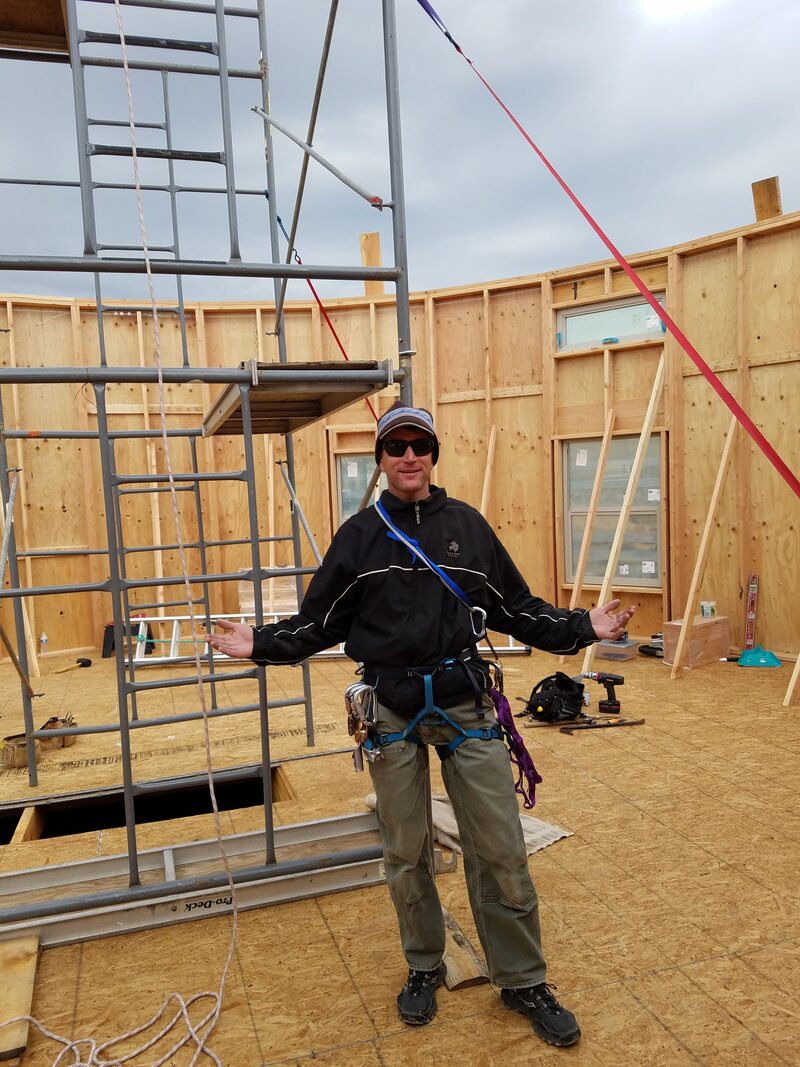
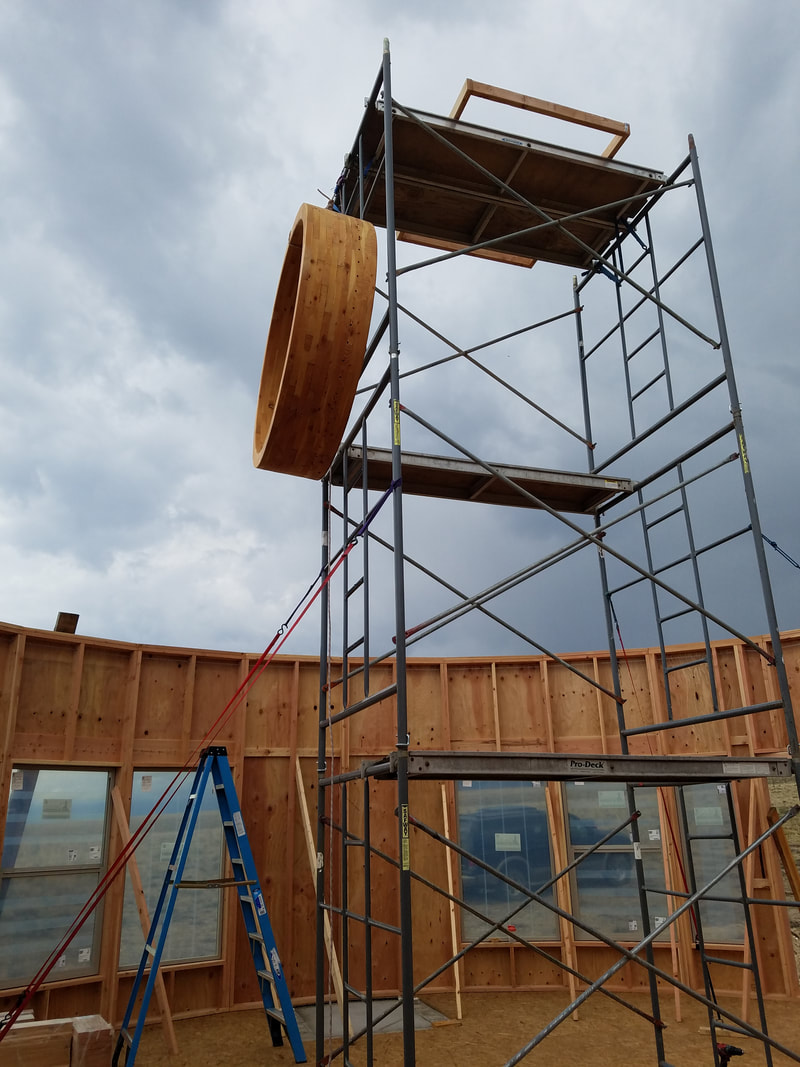
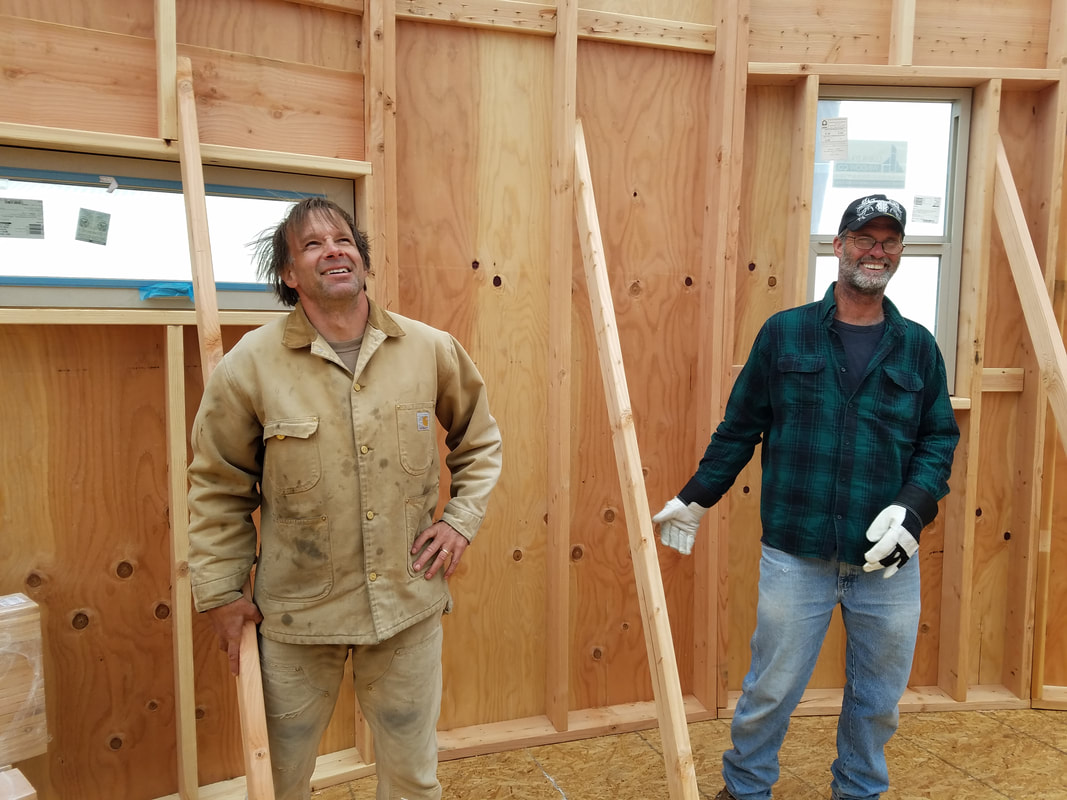
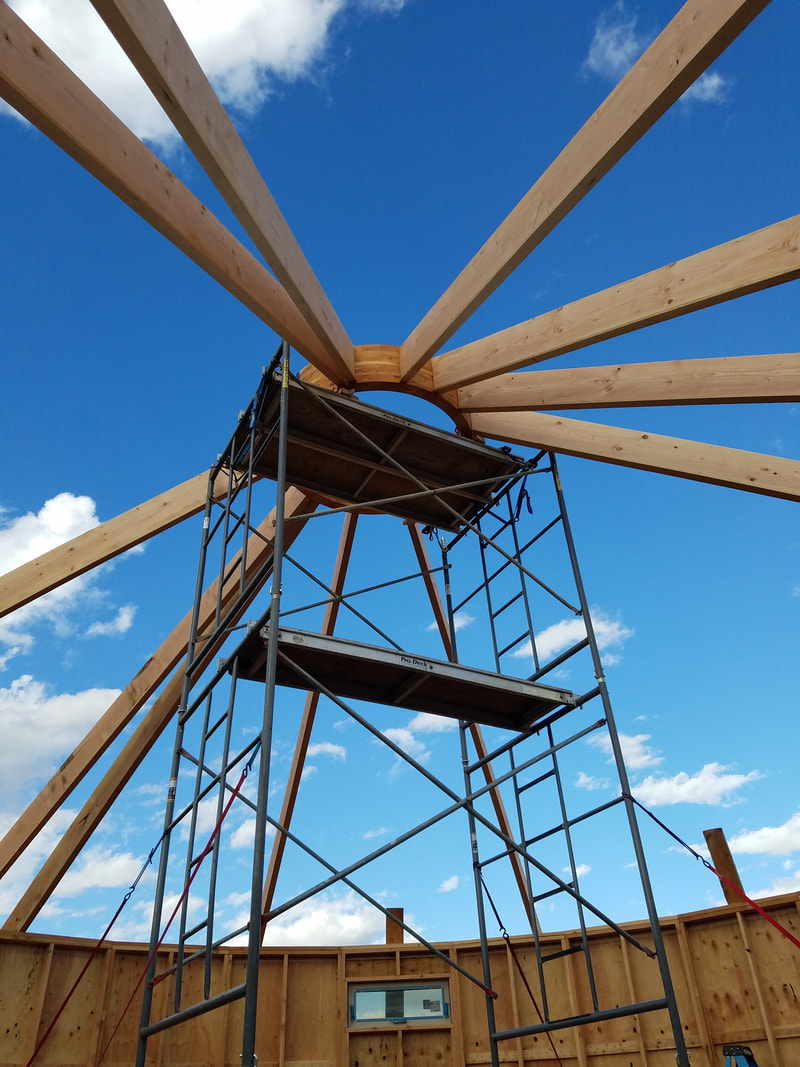
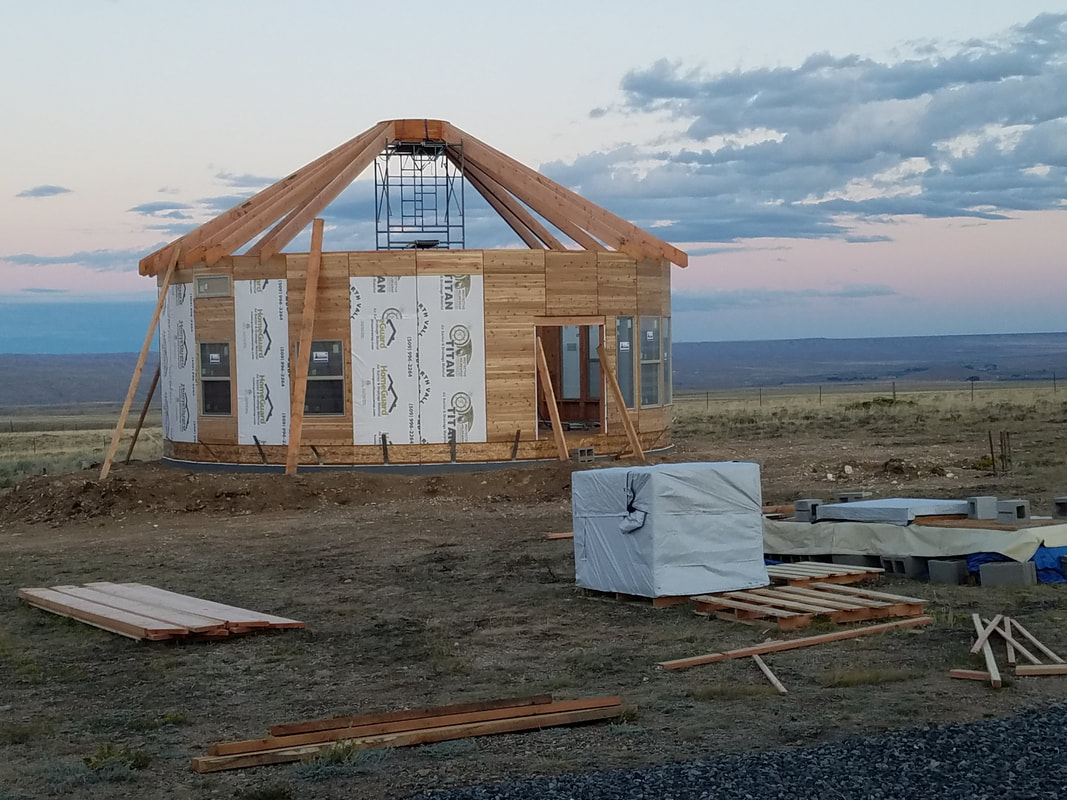
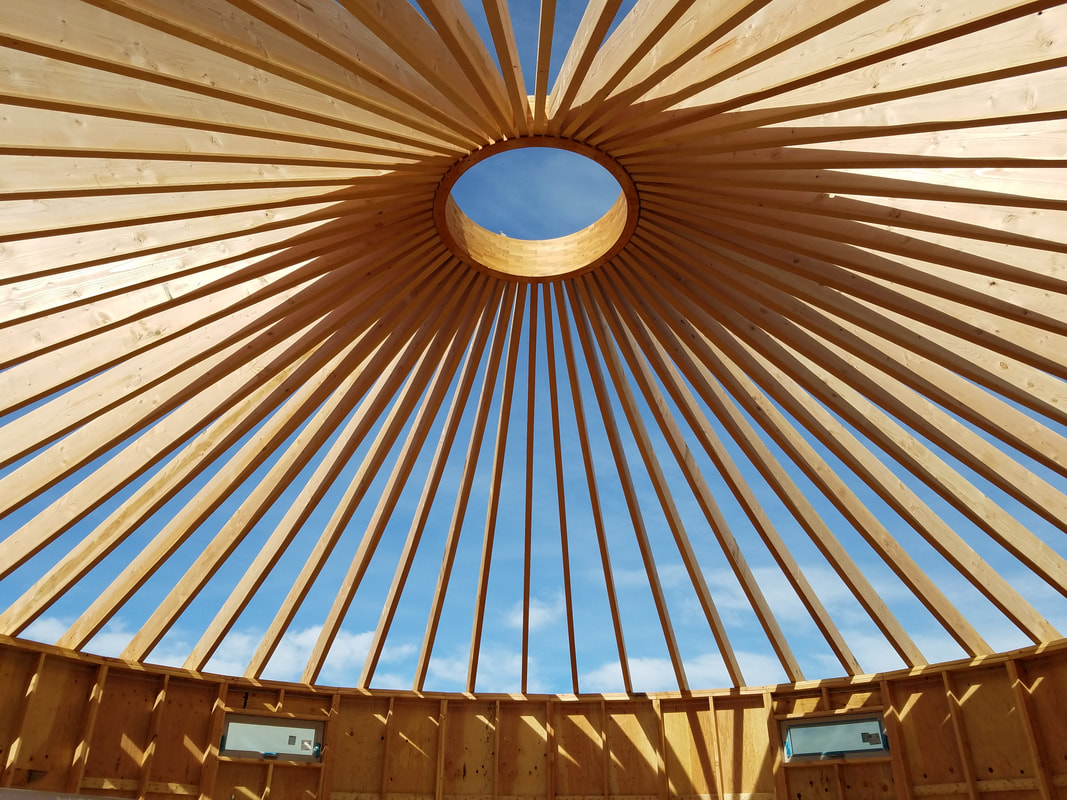
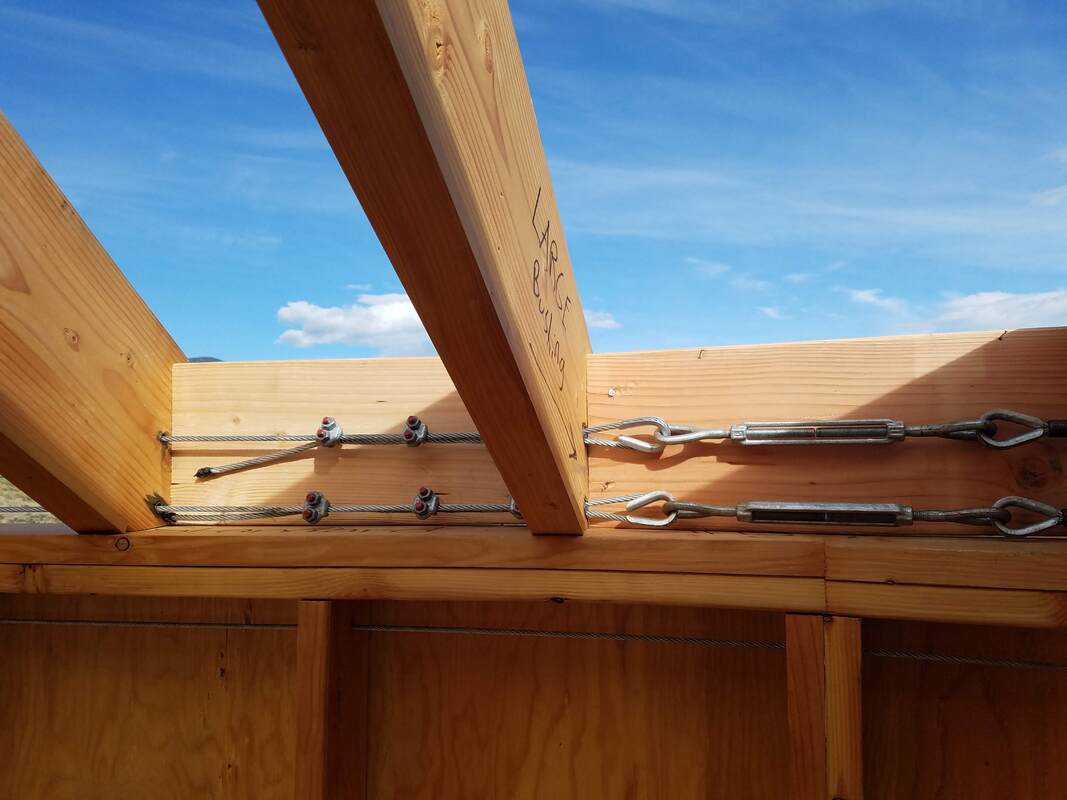
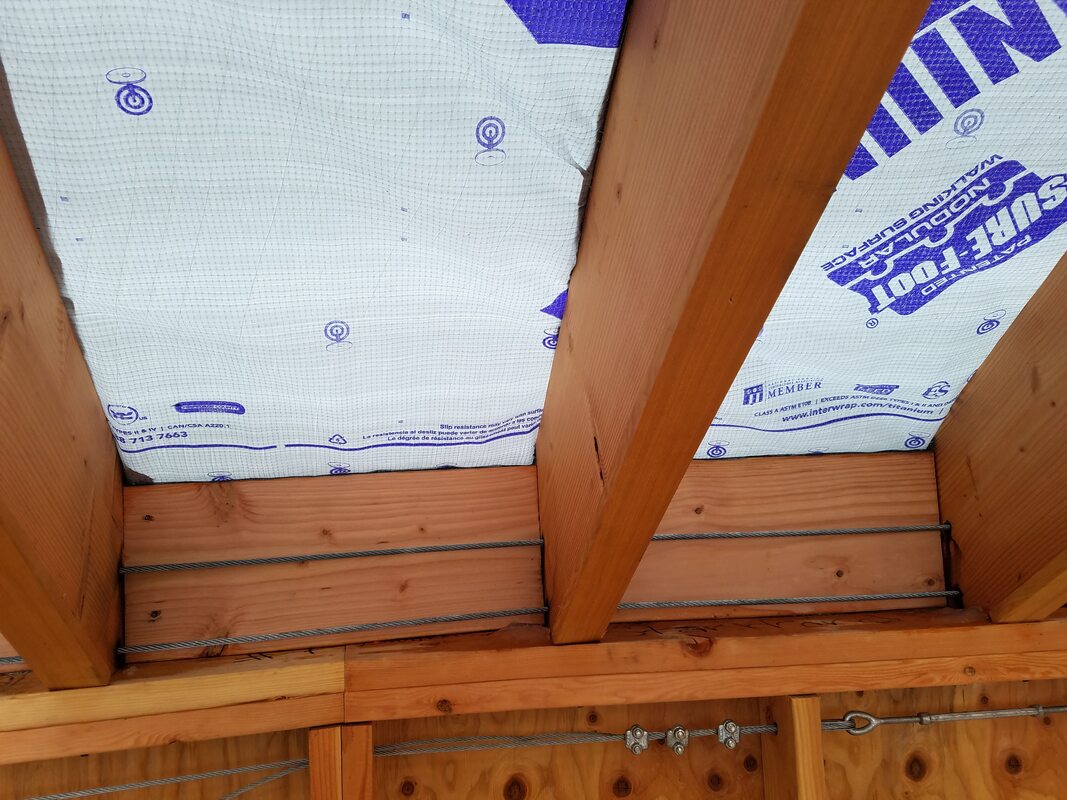
Next up: installing the cabling system and starting on roof membrane and then roof panels. Like a conventional yurt, the entire structure is pulled tight with three tensioning cables: one inside the upper wall panels running through the studs, and dual cables running though all rafters.
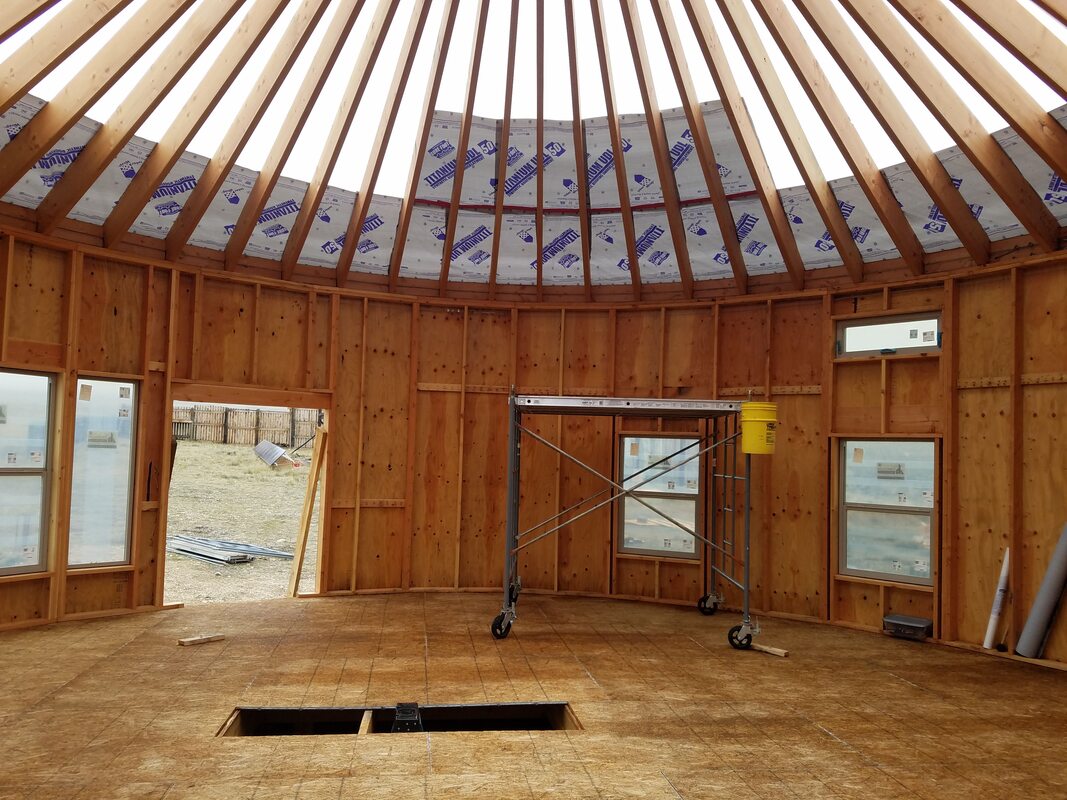
I chose a very unusual roofing system. After consulting with the insulation company and the maker of the ultra premium roofing membrane (Titanium UDL 50), I decided to clear span the rafters with membrane, then spray foam directly onto the underside of it. I reversed the orientation of the membrane so that the traction control texture was on the underside and would give better adhesion with the foam. Again I was nervous about the wind damaging the membrane during the time it was up but insulation wasn't sprayed yet, but it survived a legit wind storm of perhaps 50 mph and nothing budged.
While not necessary in my case, the roof system is designed to be vented (note furring strips on the rafters), but some other people instead have opted to spray foam directly to the underside of the roof steel and avoid the membrane altogether. While I considered this, it would permanently fuse the foam to the roof and make any roof repairs (like hail damage) or future replacement virtually impossible.
I chose a very unusual roofing system. After consulting with the insulation company and the maker of the ultra premium roofing membrane (Titanium UDL 50), I decided to clear span the rafters with membrane, then spray foam directly onto the underside of it. I reversed the orientation of the membrane so that the traction control texture was on the underside and would give better adhesion with the foam. Again I was nervous about the wind damaging the membrane during the time it was up but insulation wasn't sprayed yet, but it survived a legit wind storm of perhaps 50 mph and nothing budged.
While not necessary in my case, the roof system is designed to be vented (note furring strips on the rafters), but some other people instead have opted to spray foam directly to the underside of the roof steel and avoid the membrane altogether. While I considered this, it would permanently fuse the foam to the roof and make any roof repairs (like hail damage) or future replacement virtually impossible.
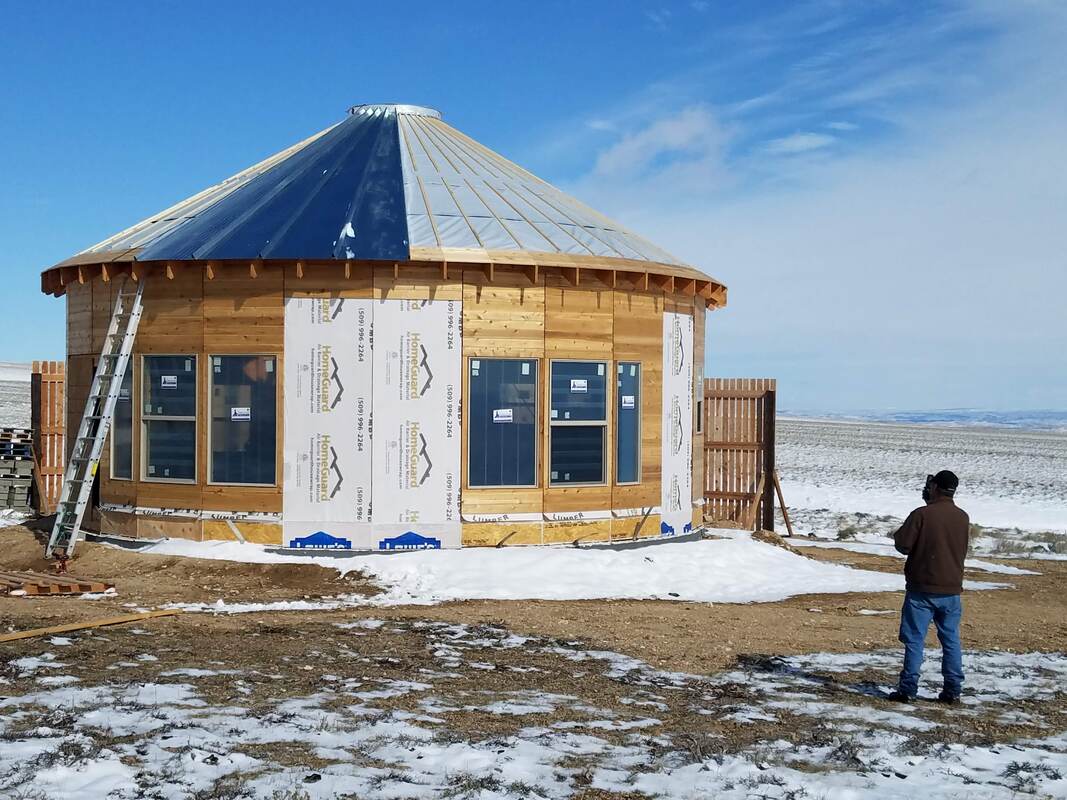
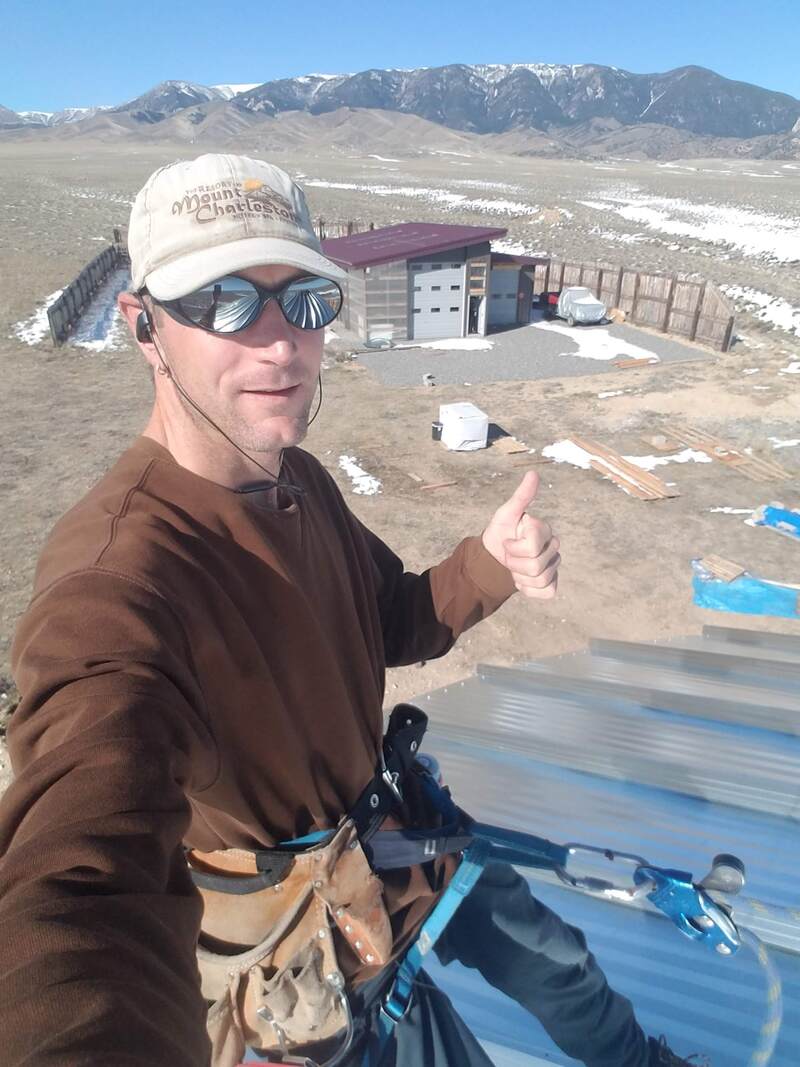
The single nearest miss of the entire project happened when putting up the roof steel. I was on the scaffolding and working within the dome ring, using a rope to haul up the panels and fasten them from the top. Bill was on the ground and lifting and guiding the panels up the ladder until I could pull them up with my own power. A small utility carabiner connected the rope to the steel sheets via a pre drilled hole in the steel (part of the fastening design). Bill was halfway up the ladder with the sharp edge at his neck level when the carabiner somehow failed completely and broke in half (despite not loading it nearly to capacity). It slid down the roof, knocked Bill off the ladder and over backwards, and sent the panel edge into his neck. Fortunately he never let up his tight grasp of the panel and kept it securely in his hands, but it still graced his neck and almost drew blood. Had he let go, it easily could have landed right on his neck with all its force. I don't want to ponder what that could have looked like.
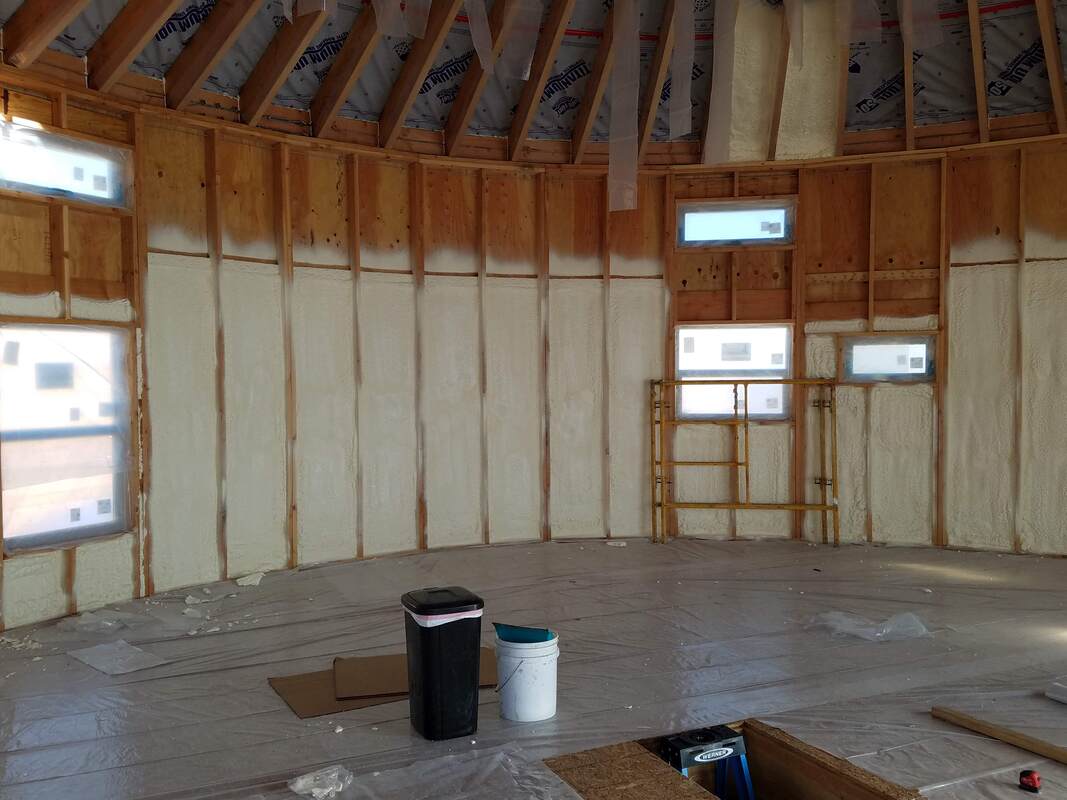
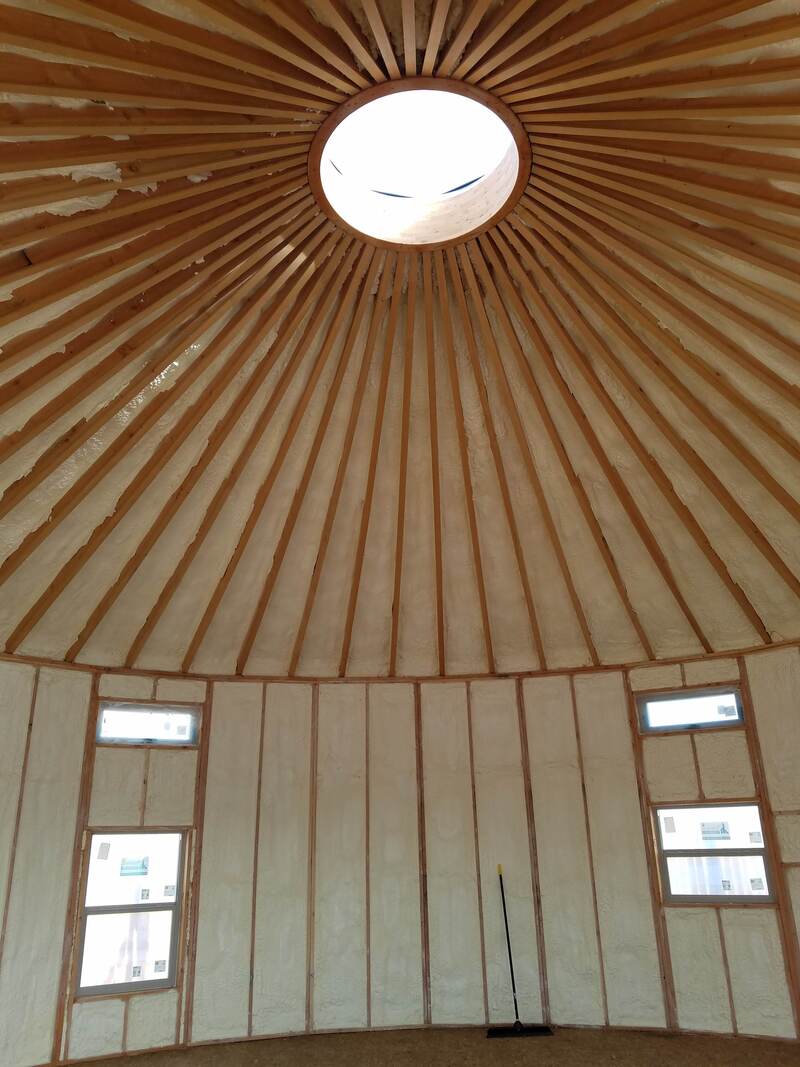
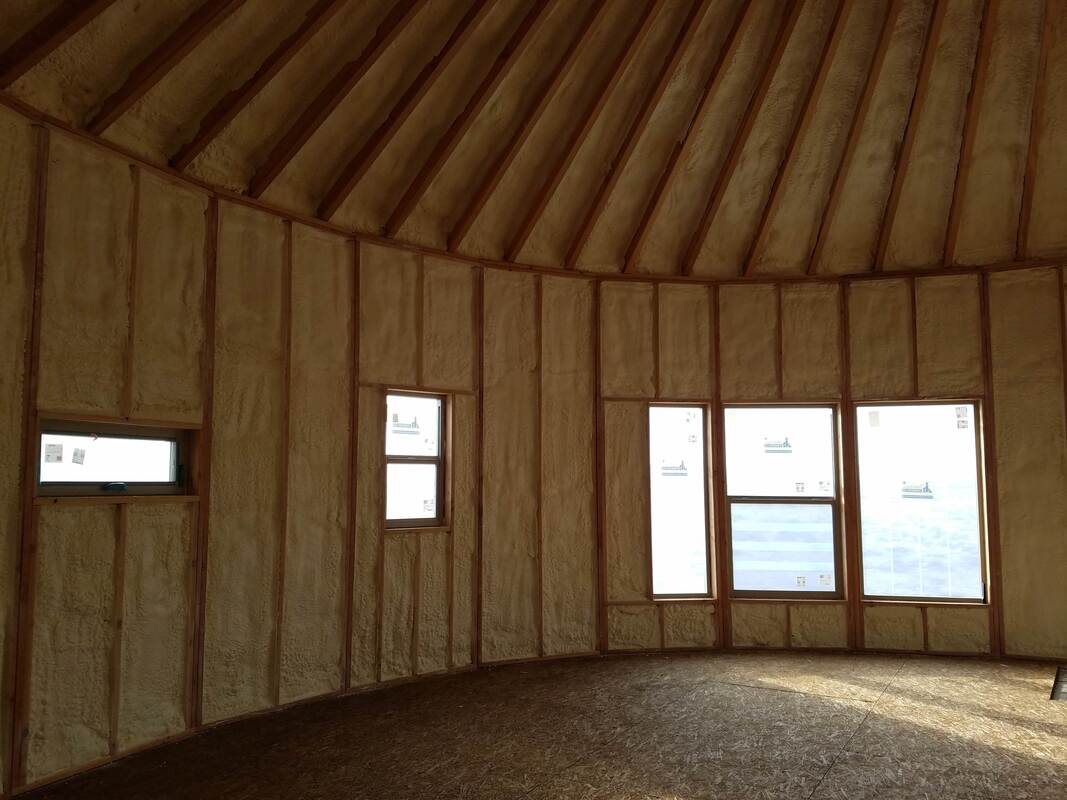
Anyway, with all that done, it was finally time to start spray foaming. John over at CC Insulation in Billings was awesome to work with and really guided me with all the physics and techniques in the world of insulation. The entire structure was foamed, from the rim joists to the dome ring, at a cost of about $7500 in 2019 dollars -- an expenditure worth every single penny many times over. In addition to 5.5 inches of foam, the 2 x 12 rafter bays also got R 38 bats, making the ceiling about R 80. Incredibly tight, the home is insulated ridiculously well and loses almost no heat to drafts. I later installed a heat recovery ventilation system -- more on that later where I get into performance.
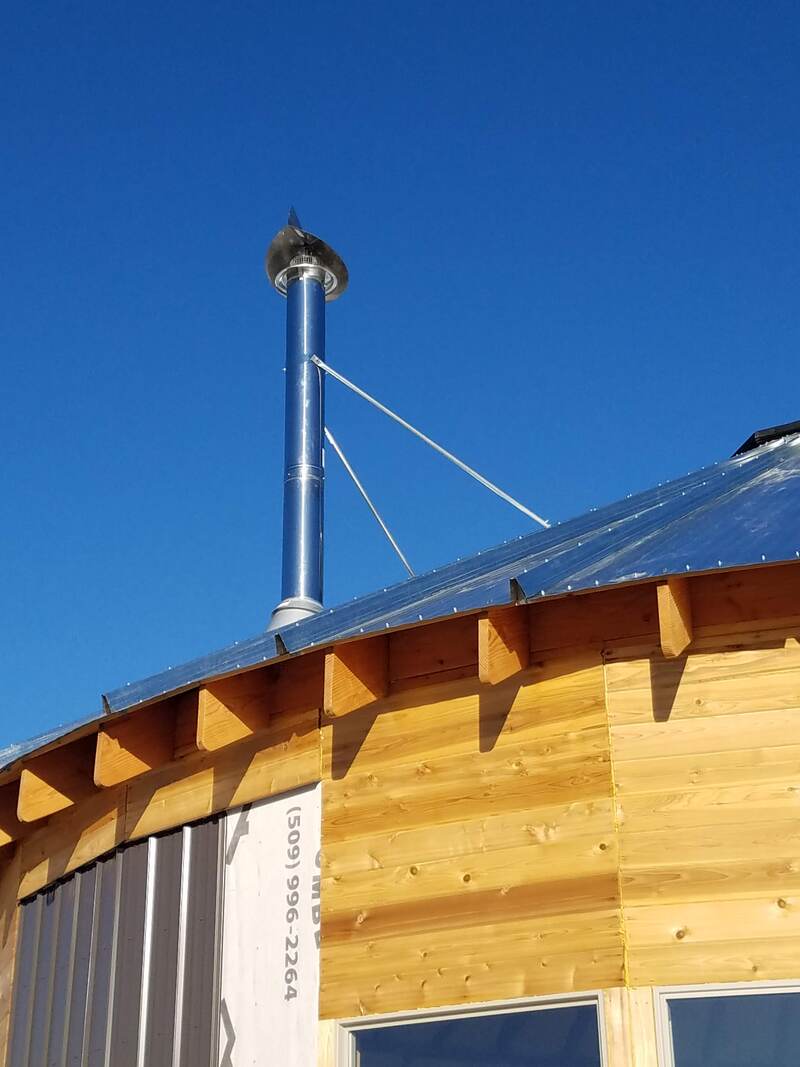
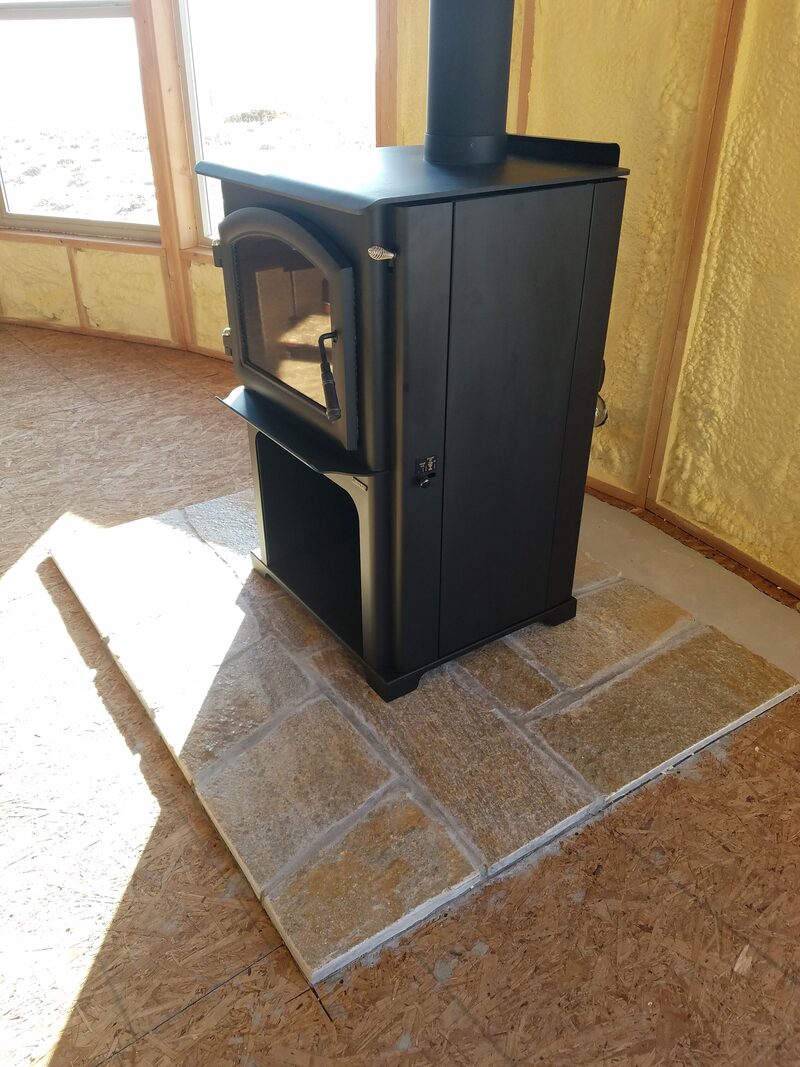
I also selected a high performance, EPA certified wood stove and while I did the masonry work using natural quartzite slabs on the hearth platform, chose to have the stovepipe and roof manifold system professionally installed. Note the directional wind cap: it tracks with the wind and actually aids the drafting of the stove in windy conditions. Pretty much mandatory here.
Anyway, with all that done, it was finally time to start spray foaming. John over at CC Insulation in Billings was awesome to work with and really guided me with all the physics and techniques in the world of insulation. The entire structure was foamed, from the rim joists to the dome ring, at a cost of about $7500 in 2019 dollars -- an expenditure worth every single penny many times over. In addition to 5.5 inches of foam, the 2 x 12 rafter bays also got R 38 bats, making the ceiling about R 80. Incredibly tight, the home is insulated ridiculously well and loses almost no heat to drafts. I later installed a heat recovery ventilation system -- more on that later where I get into performance.
I also selected a high performance, EPA certified wood stove and while I did the masonry work using natural quartzite slabs on the hearth platform, chose to have the stovepipe and roof manifold system professionally installed. Note the directional wind cap: it tracks with the wind and actually aids the drafting of the stove in windy conditions. Pretty much mandatory here.
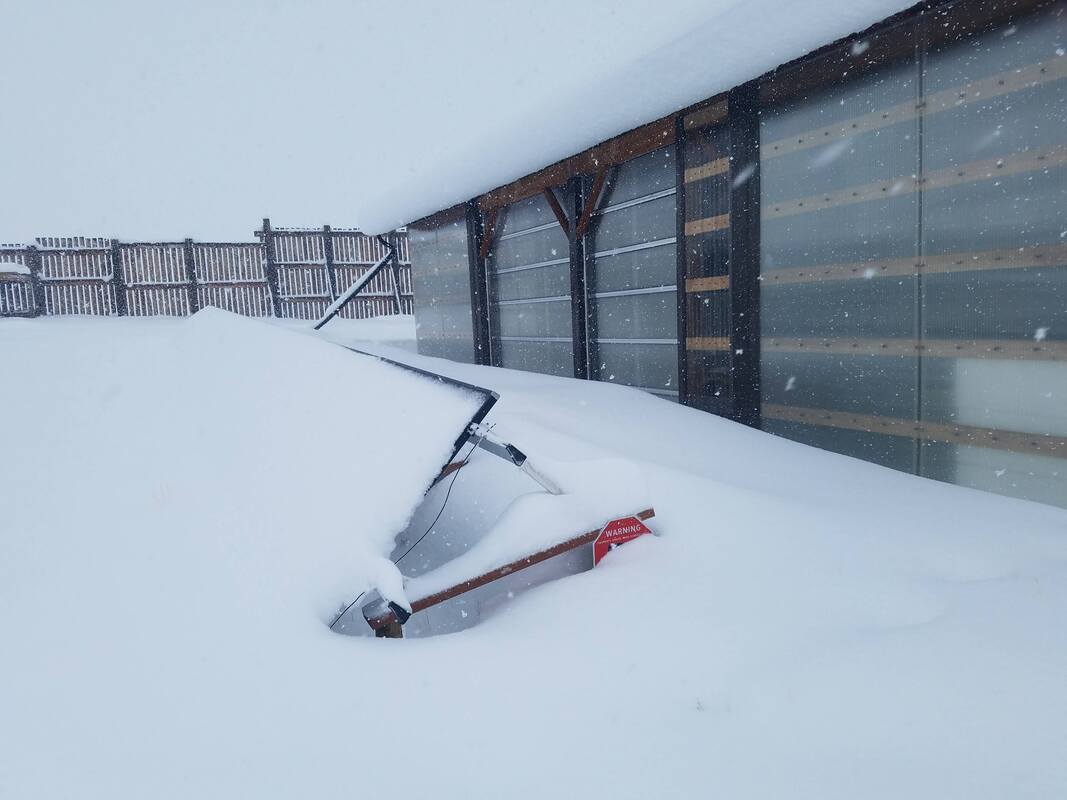
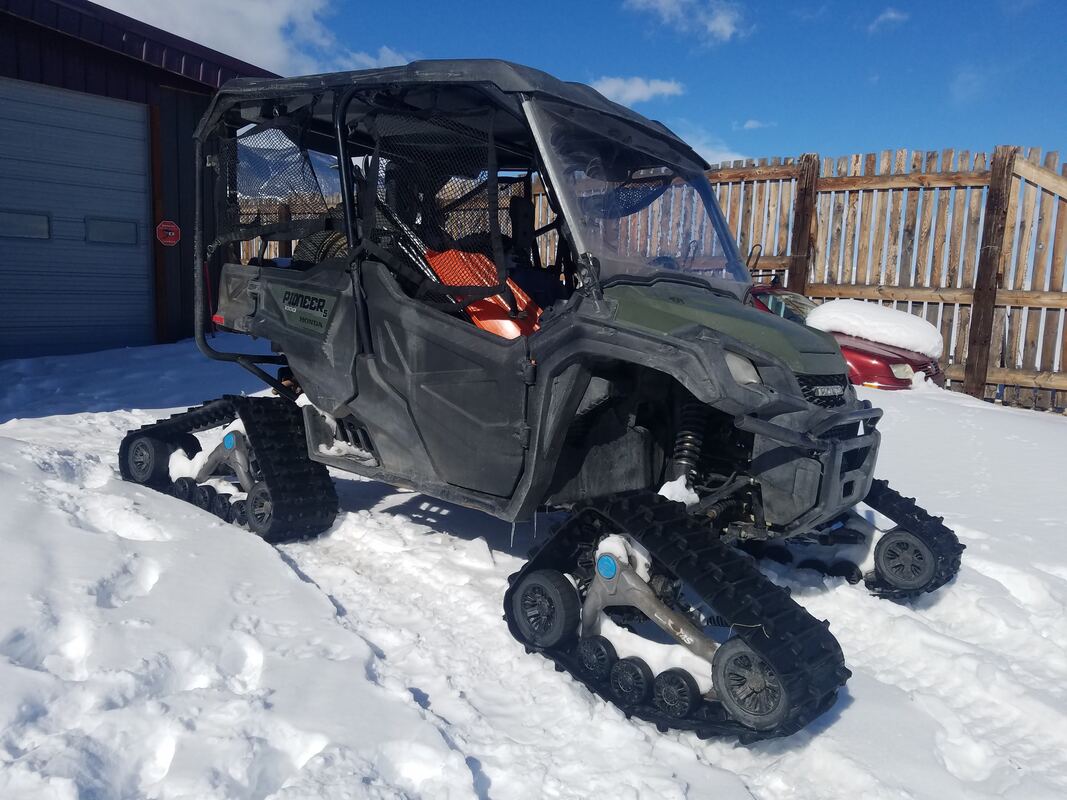
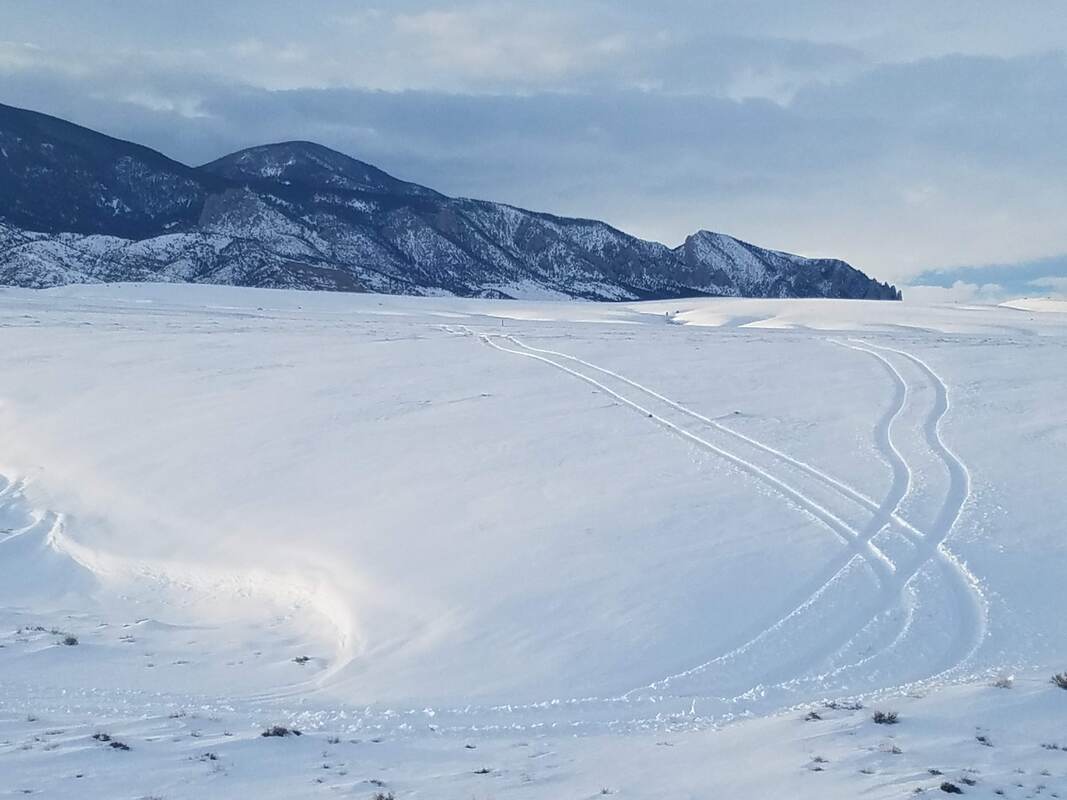
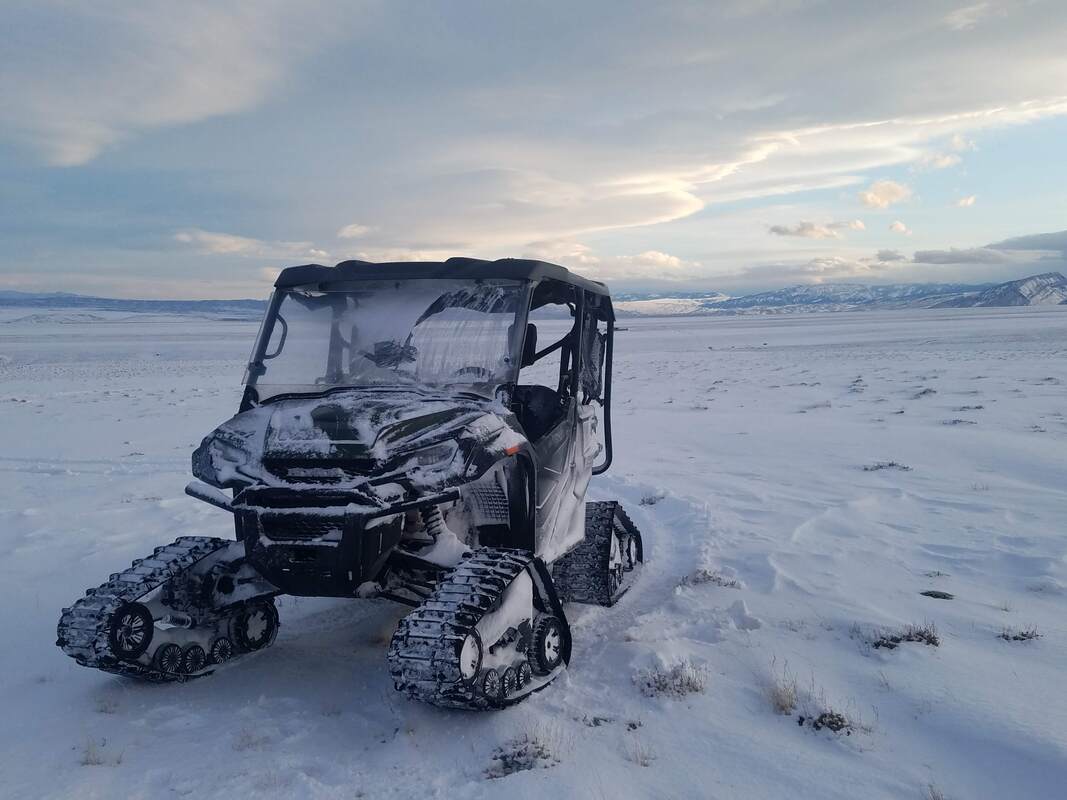
The winter of 2019 to 2020 was another massive one, and the homestead once again got fully snowed in. I skied in and out a few times (14 miles round trip) until I finally decided to purchase a Honda Pioneer 1000 with Camso snow tracks. Not a toy, this is insurance for those times when the place is snowed in for weeks, if not months. Anyway, during that time I got busy framing in the interior walls and installing the loft joists. The wood stove was keeping the place warm but my actual dwelling was still my freezing cold fifth wheel in the barn, winterized and with no running water.
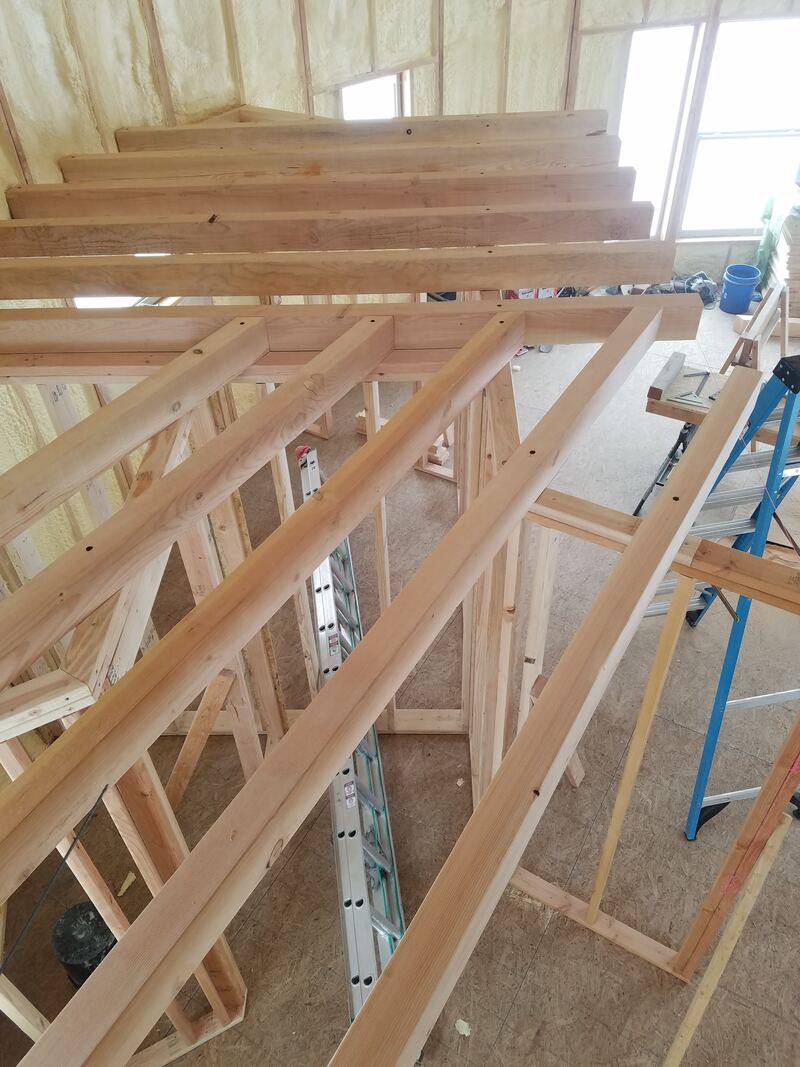
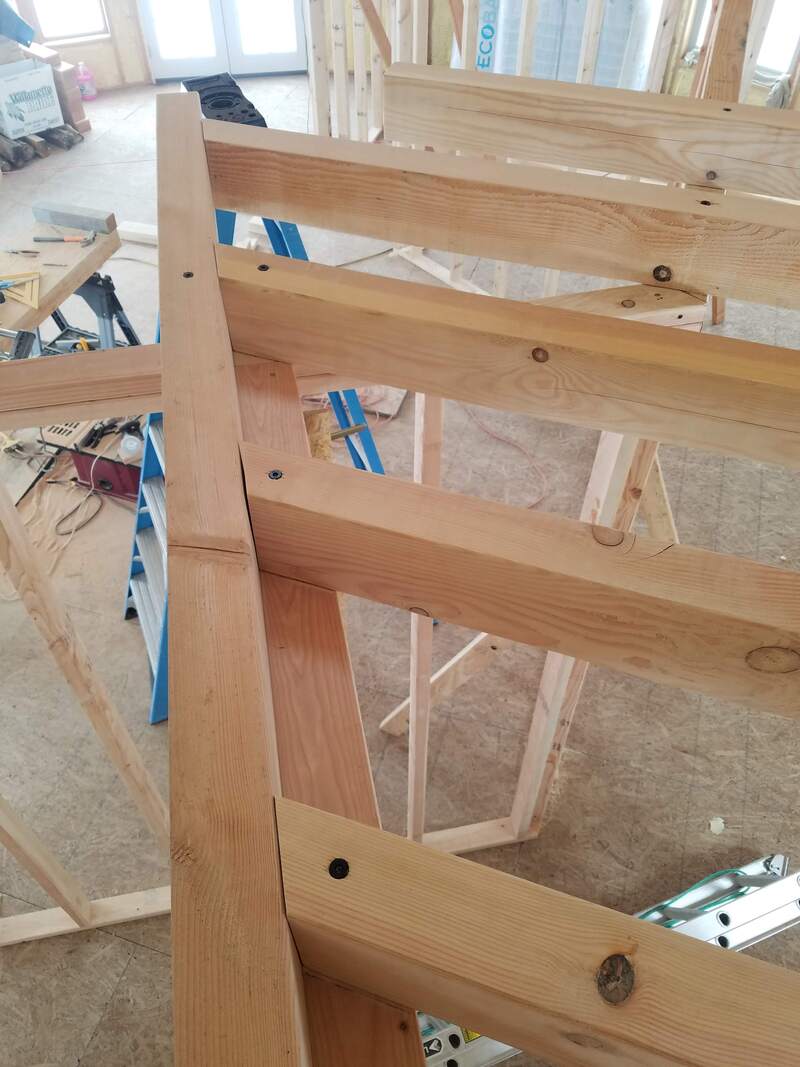
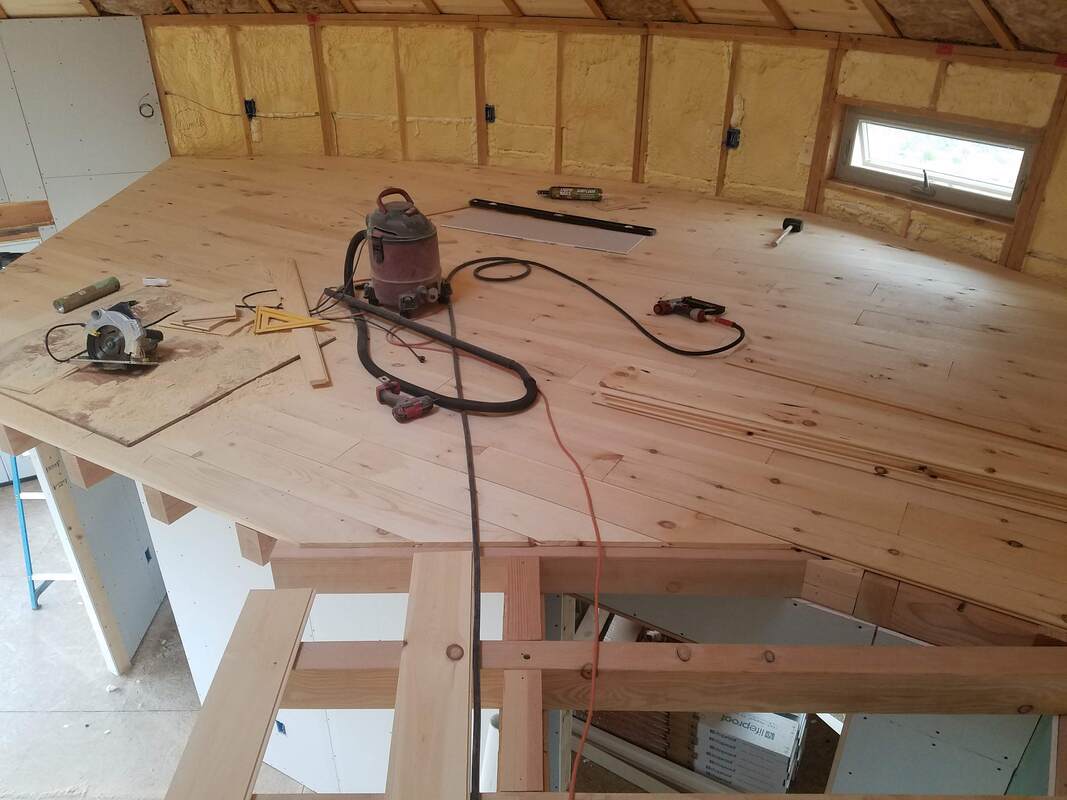
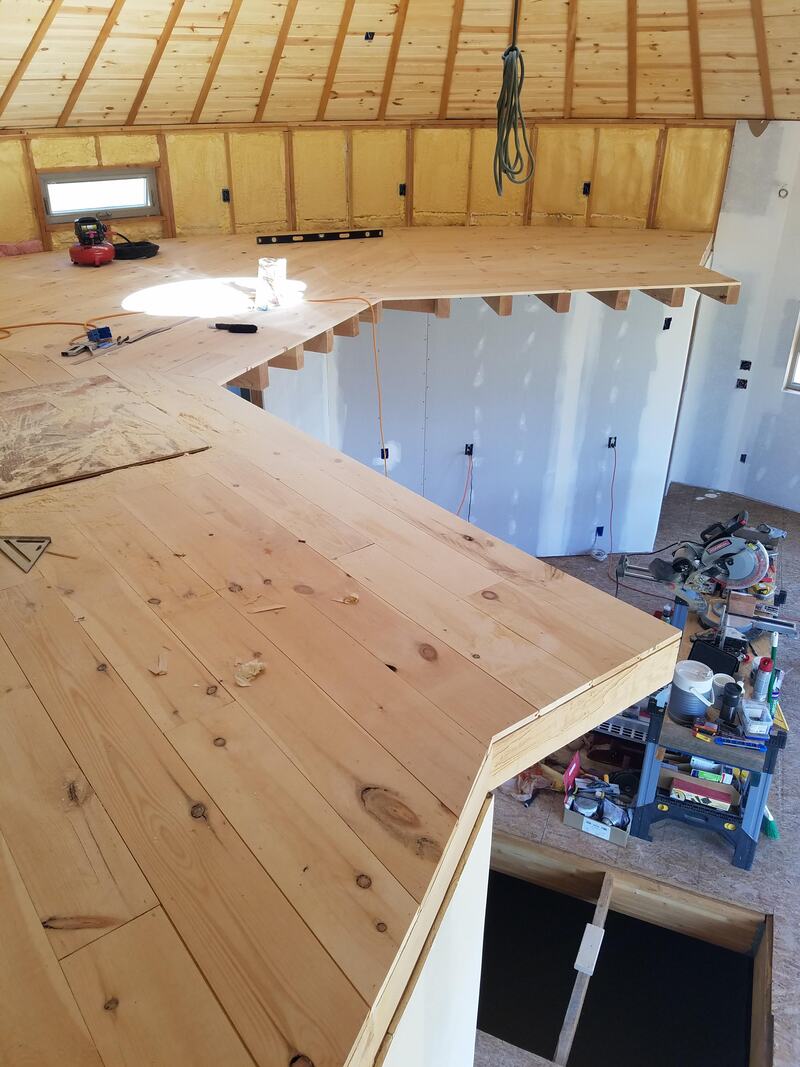
While interesting and, in retrospect, enjoyable work, the interior framing was exceedingly tedious. Essentially nothing joined at a right angle. Getting the loft joists to land on the top plates on perfect centering and without interference with one another was also a non-casual task.
While interesting and, in retrospect, enjoyable work, the interior framing was exceedingly tedious. Essentially nothing joined at a right angle. Getting the loft joists to land on the top plates on perfect centering and without interference with one another was also a non-casual task.
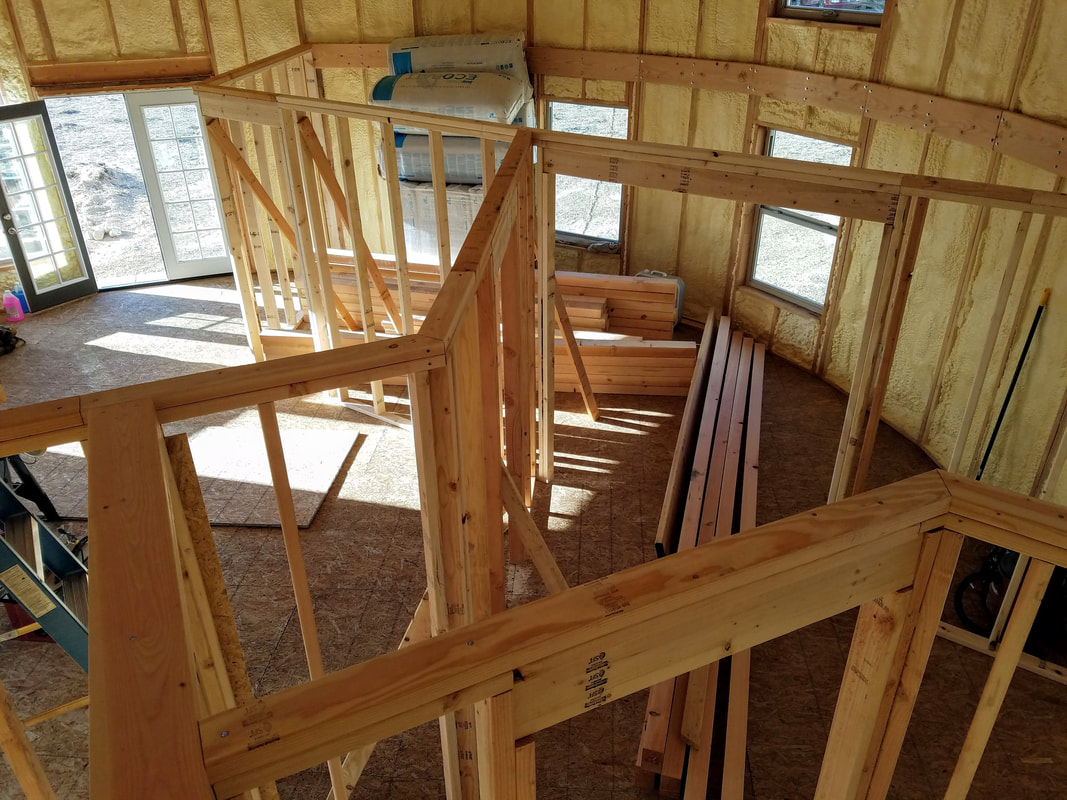
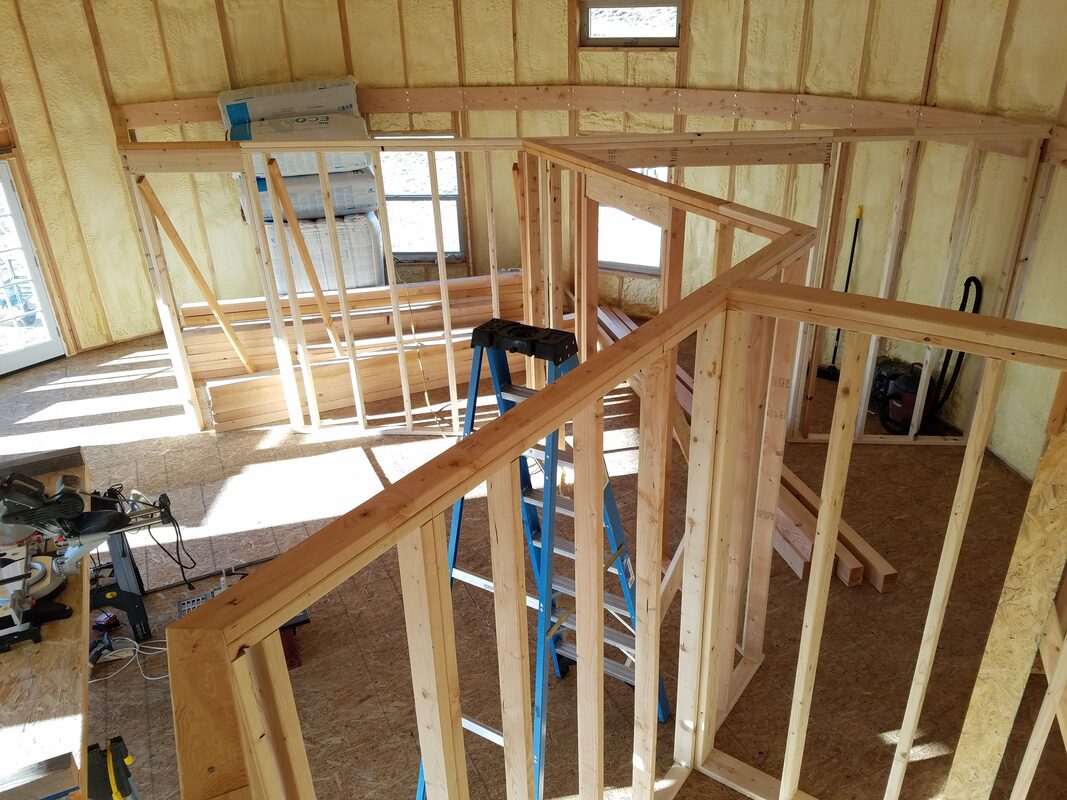
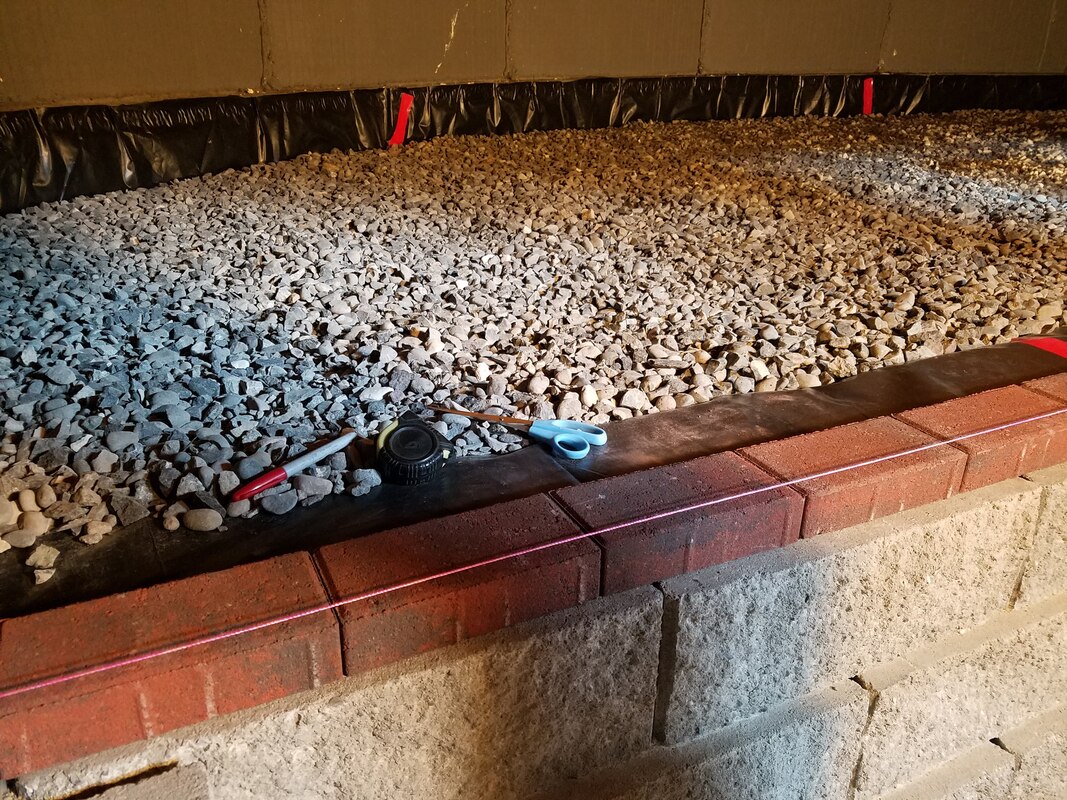
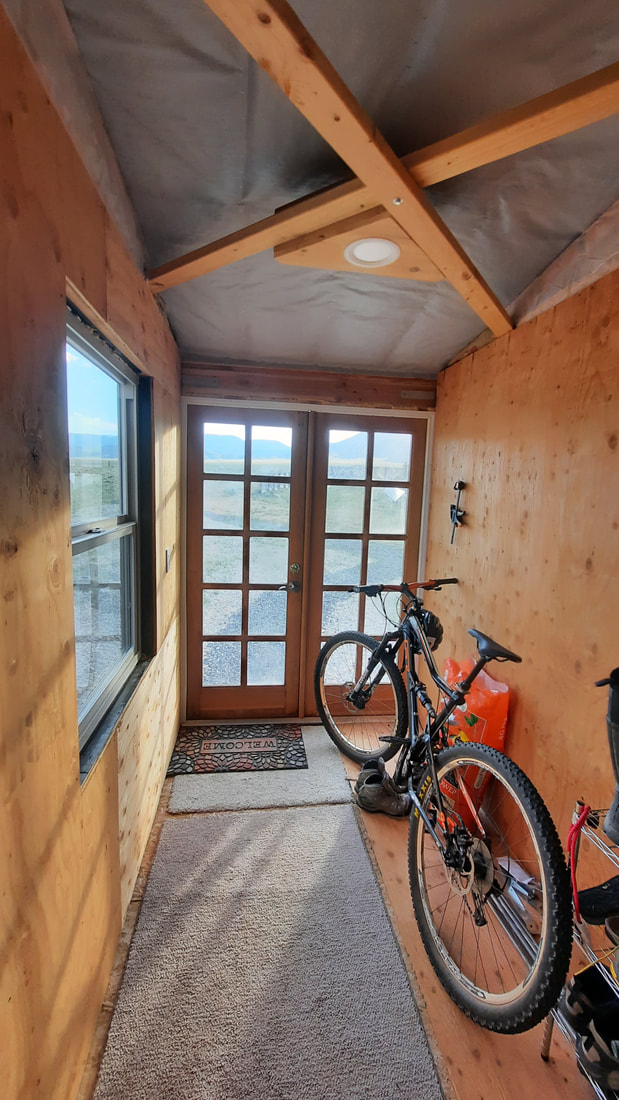
After the big winter, I continued to finish loft joists, wiring, ceiling batt insulation, ceiling panels, framing up the mud room, and beginning to hang drywall. Installing the ceiling panels was super frustrating, as there was only 1/2 inch tolerance and many of the rafters weren't on perfect spacing in the middle of the rafter span. This resulted in trimming panels that were then too big, and having to get new panels from Smiling Woods that I could cut to the right size in every place they were needed. I also had to install a double vapor barrier in the basement as humidity levels were getting way too high. This involved removing all the gravel I had put down before and then re-spreading it all again a second time. My friend and neighbor, Frank, a damn fine electrician who's now retired, handled most of wiring, including tying into the existing AC distribution system in the garage and wiring the new breaker box I'd installed in the basement. I helped him as I could along the way to learn as much about residential wiring as I could.
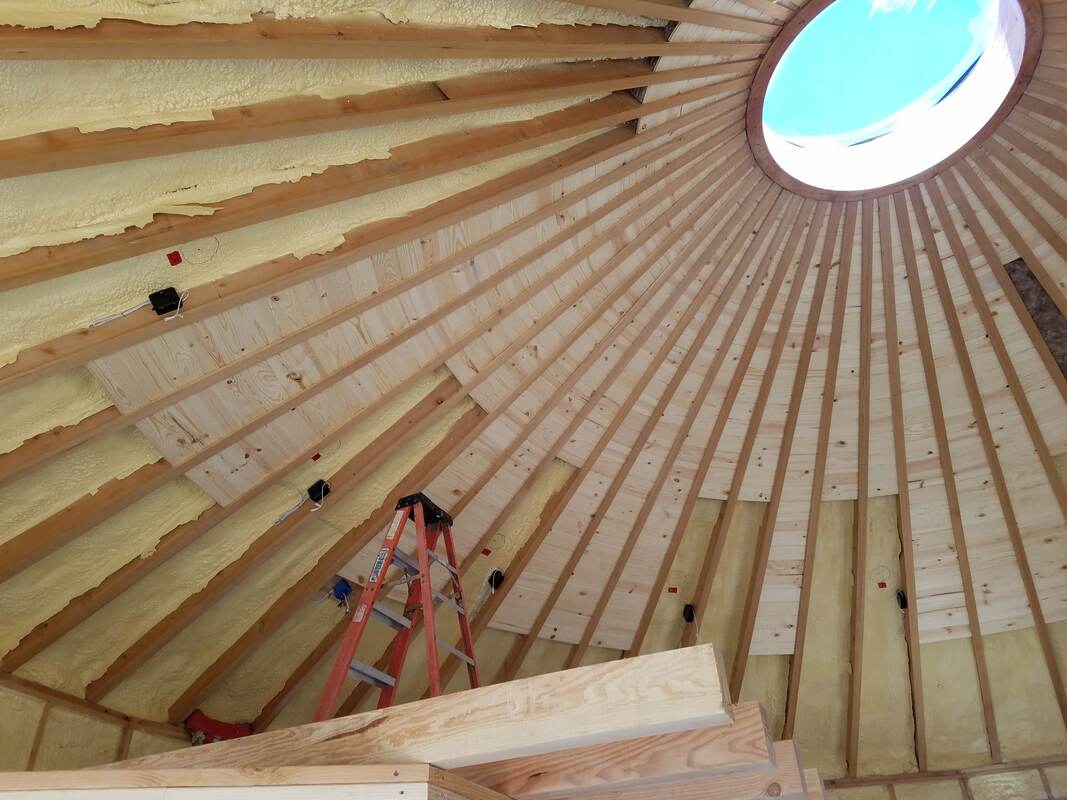
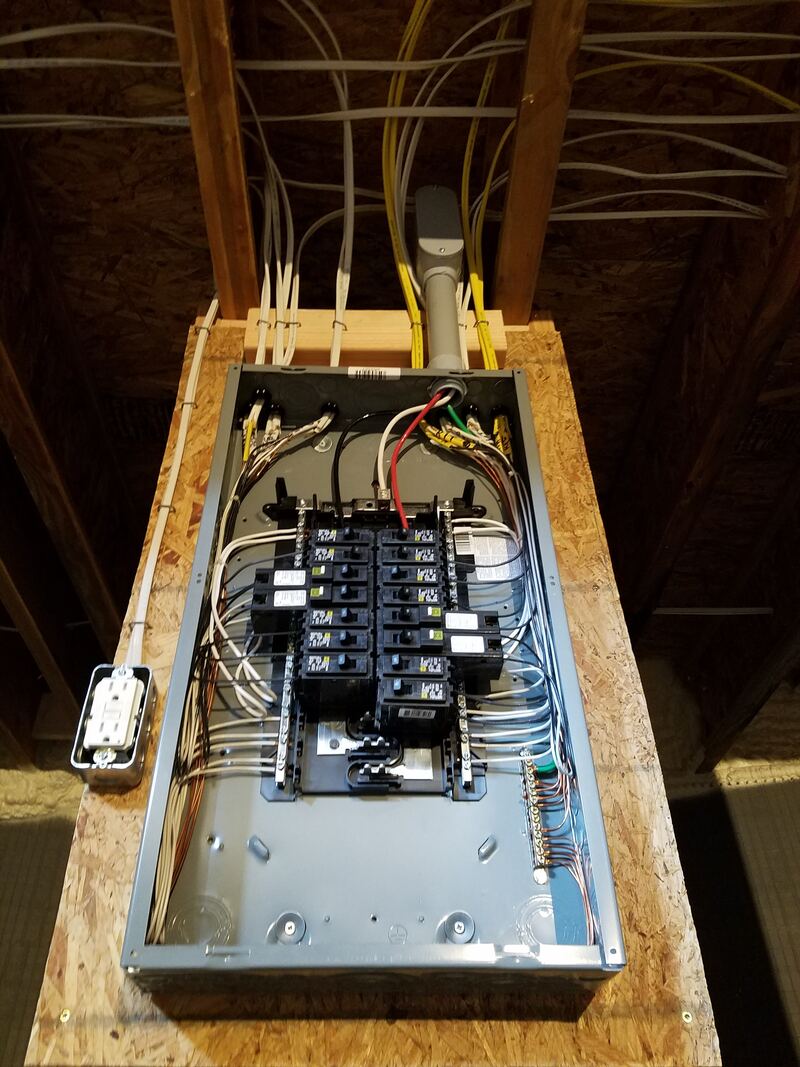
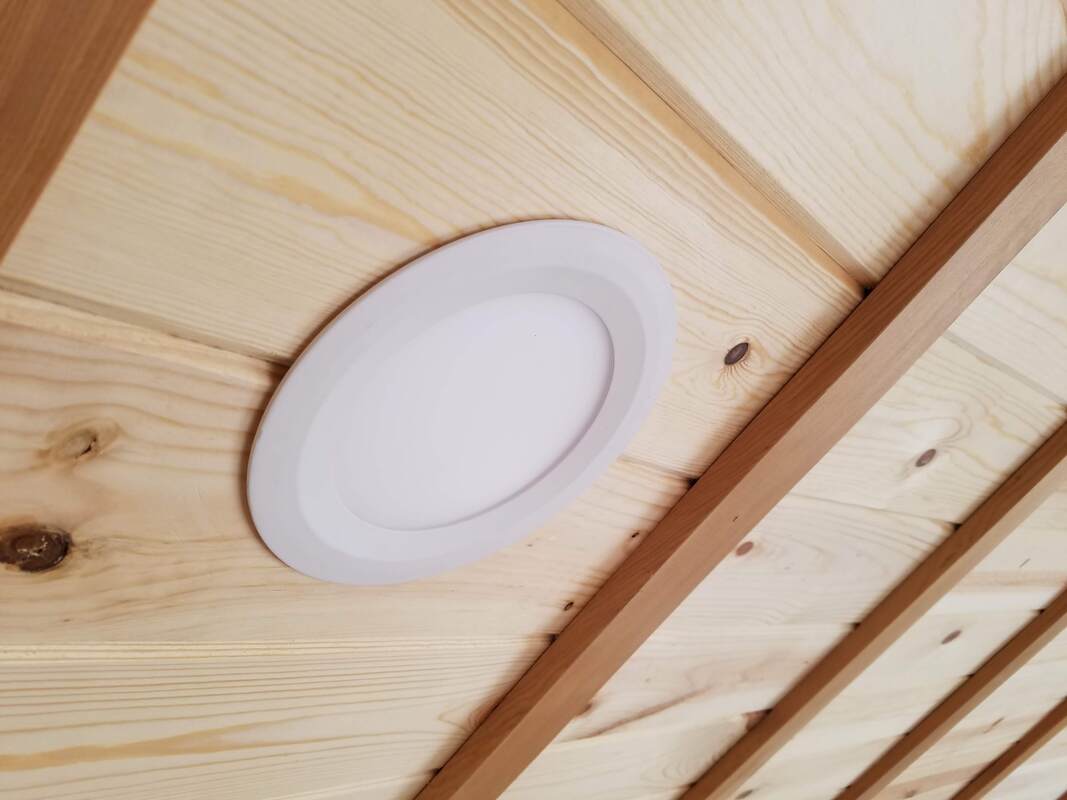
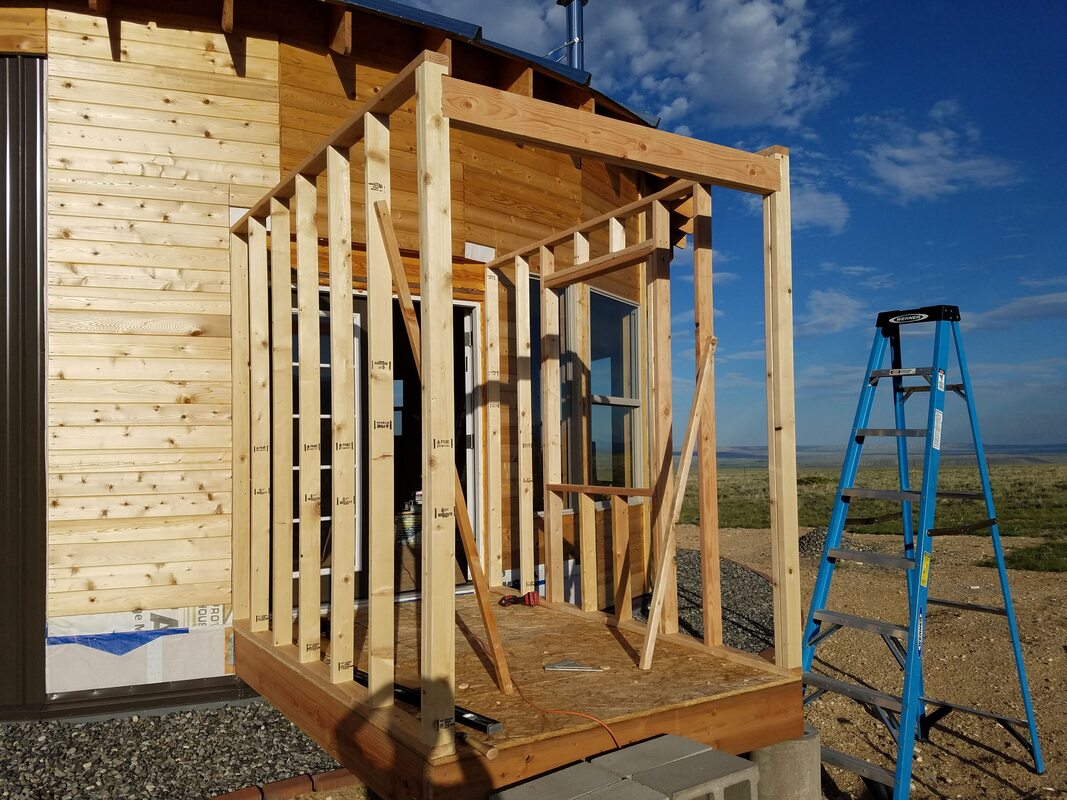
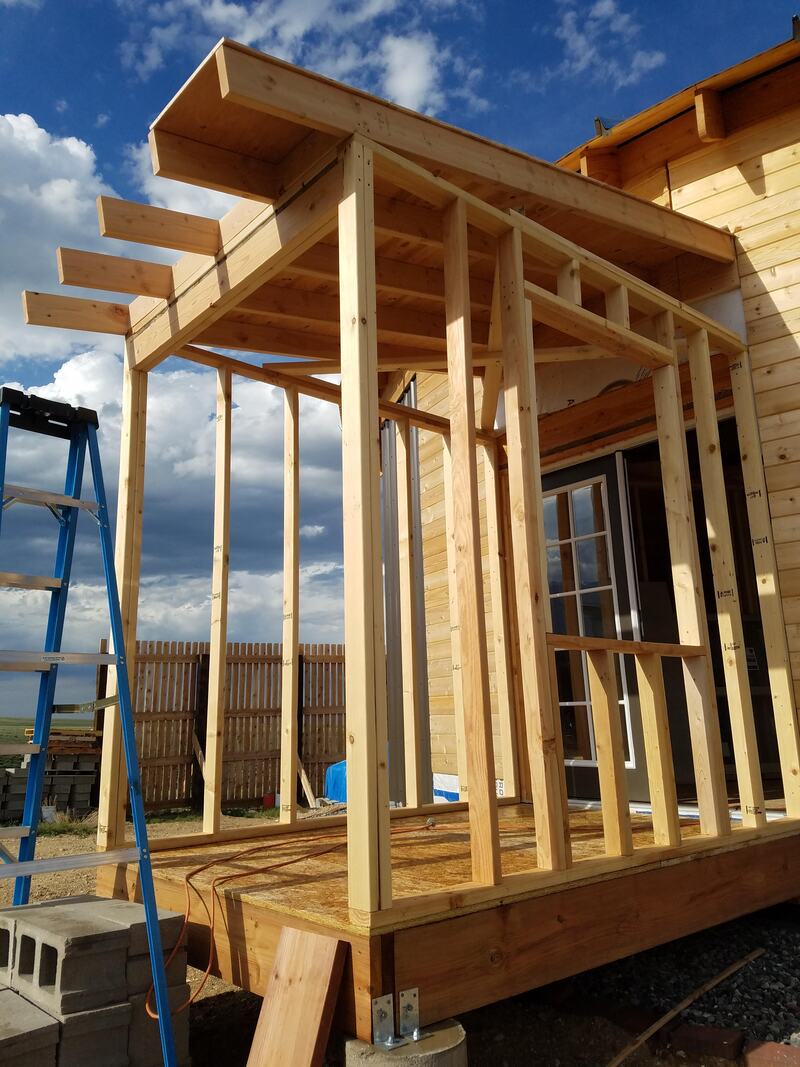
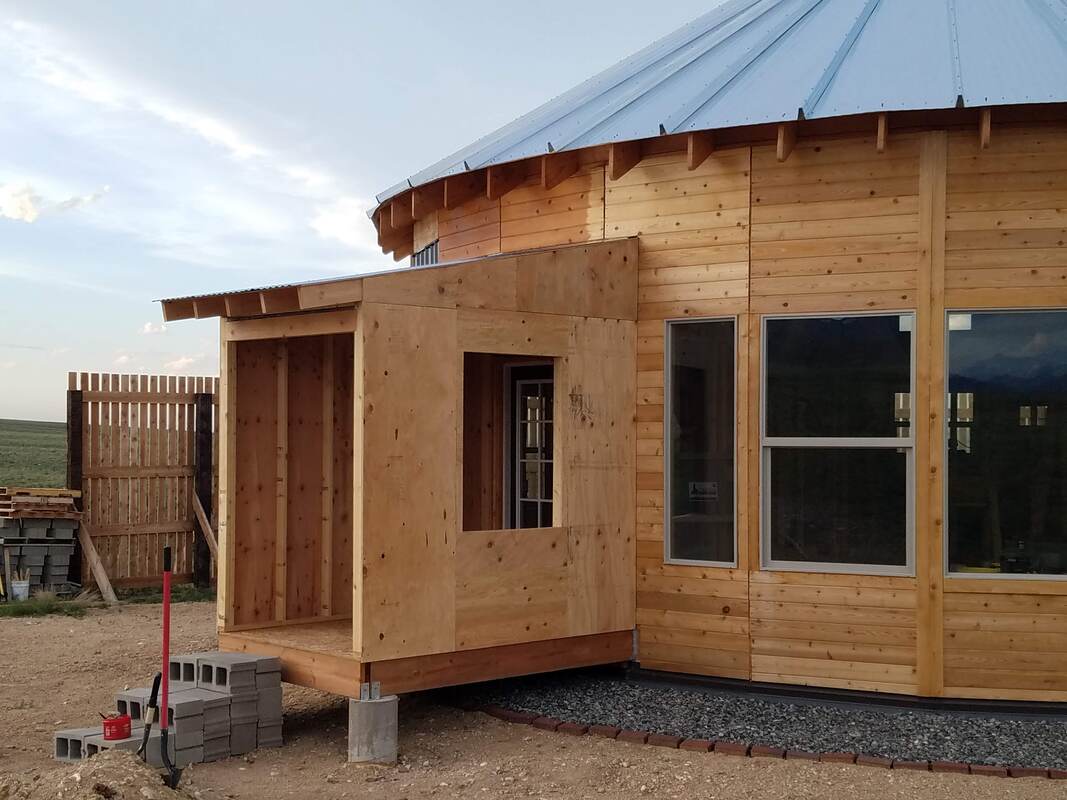
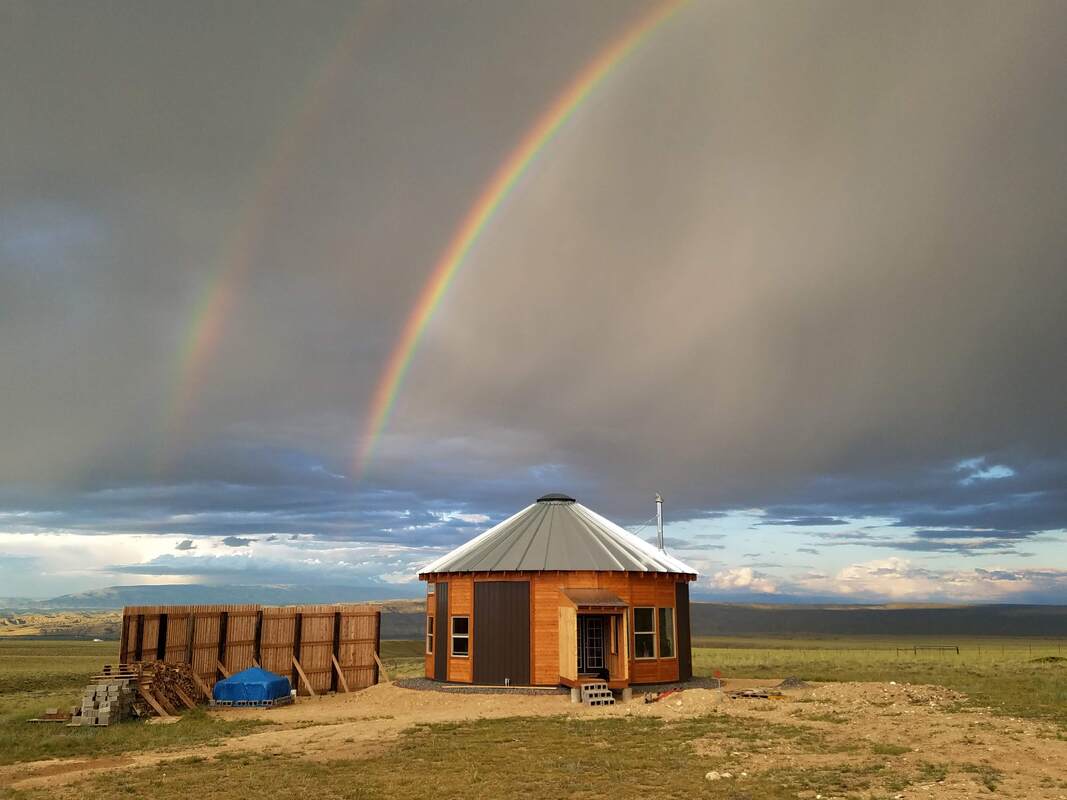
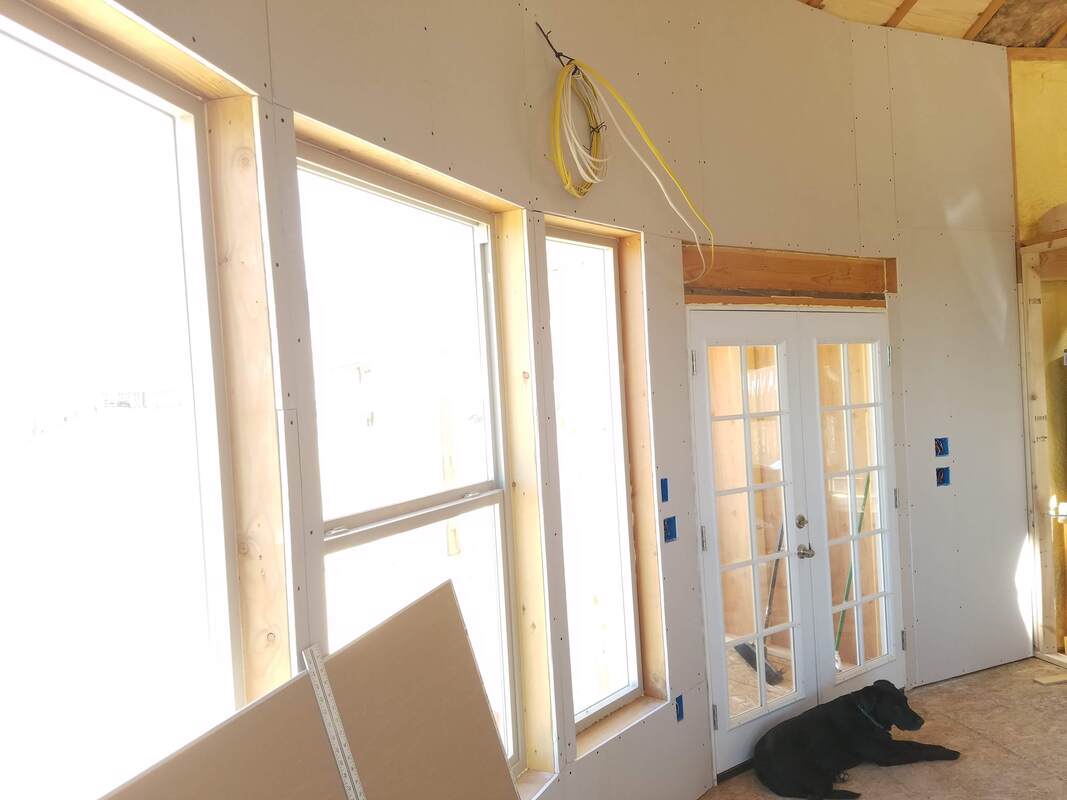
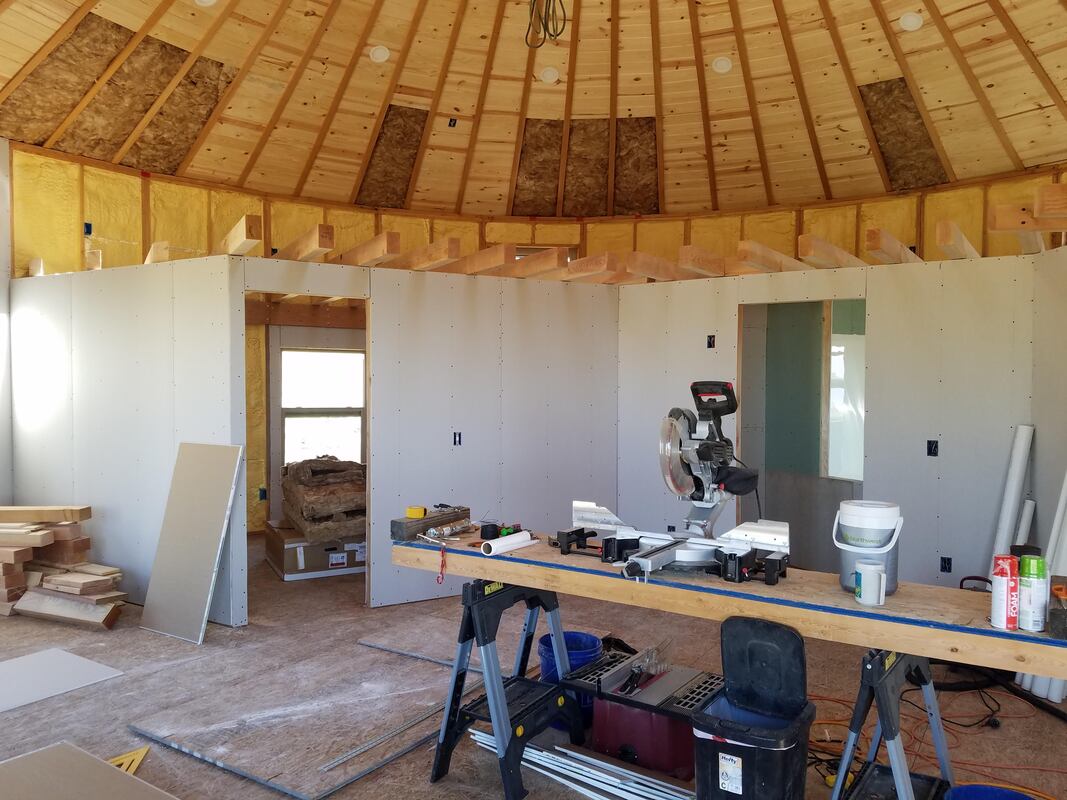
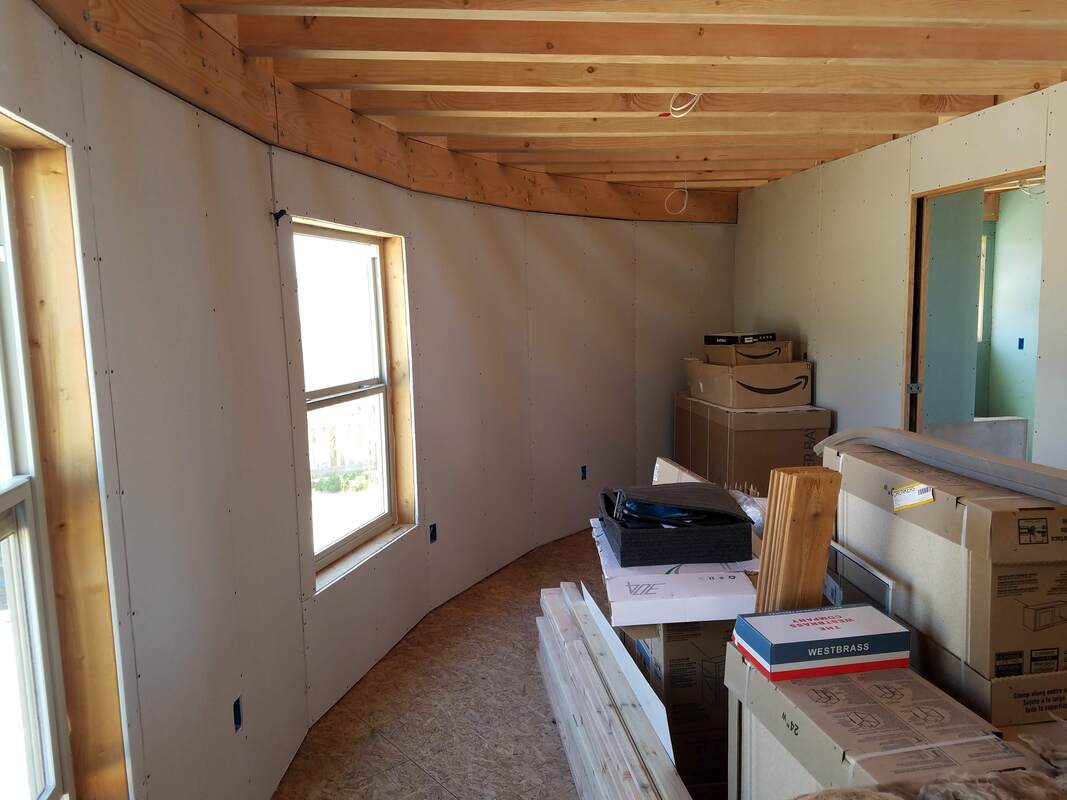
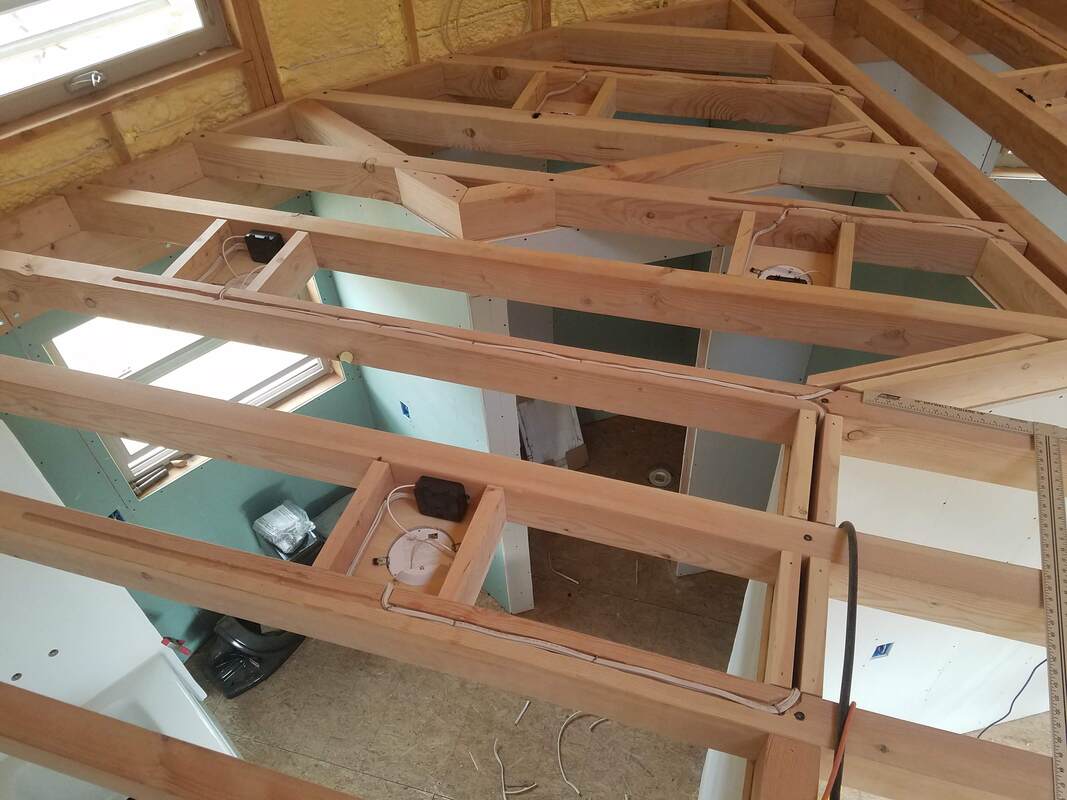
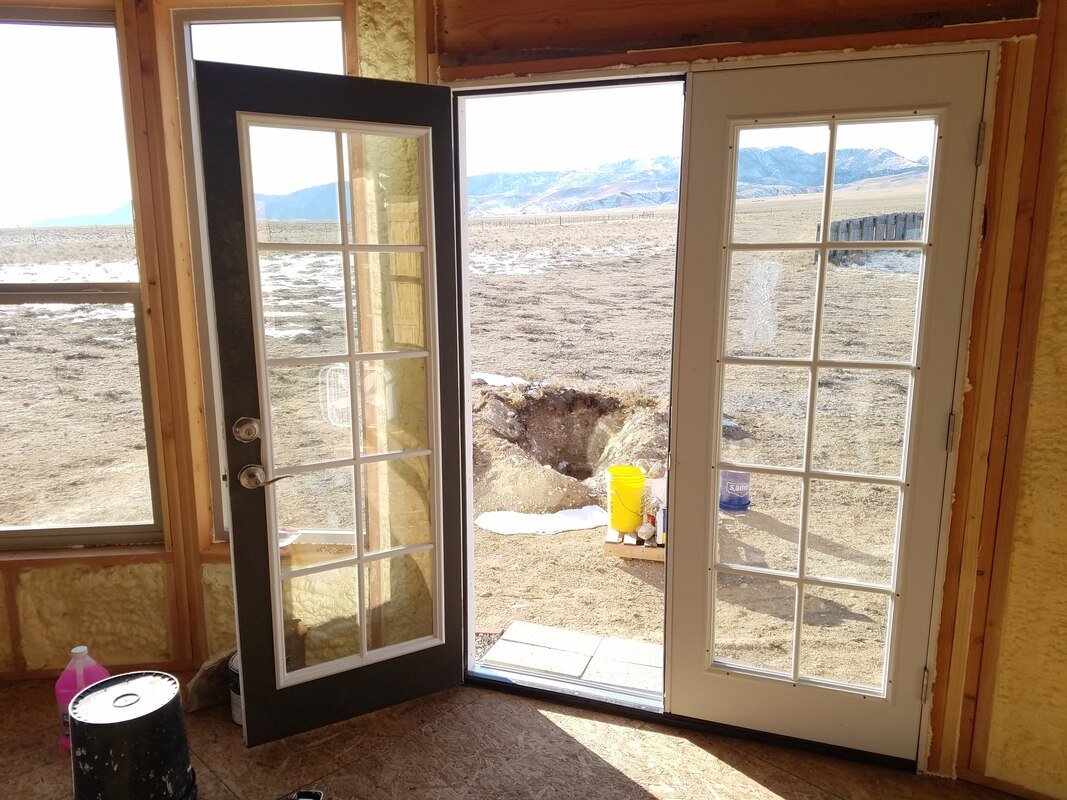
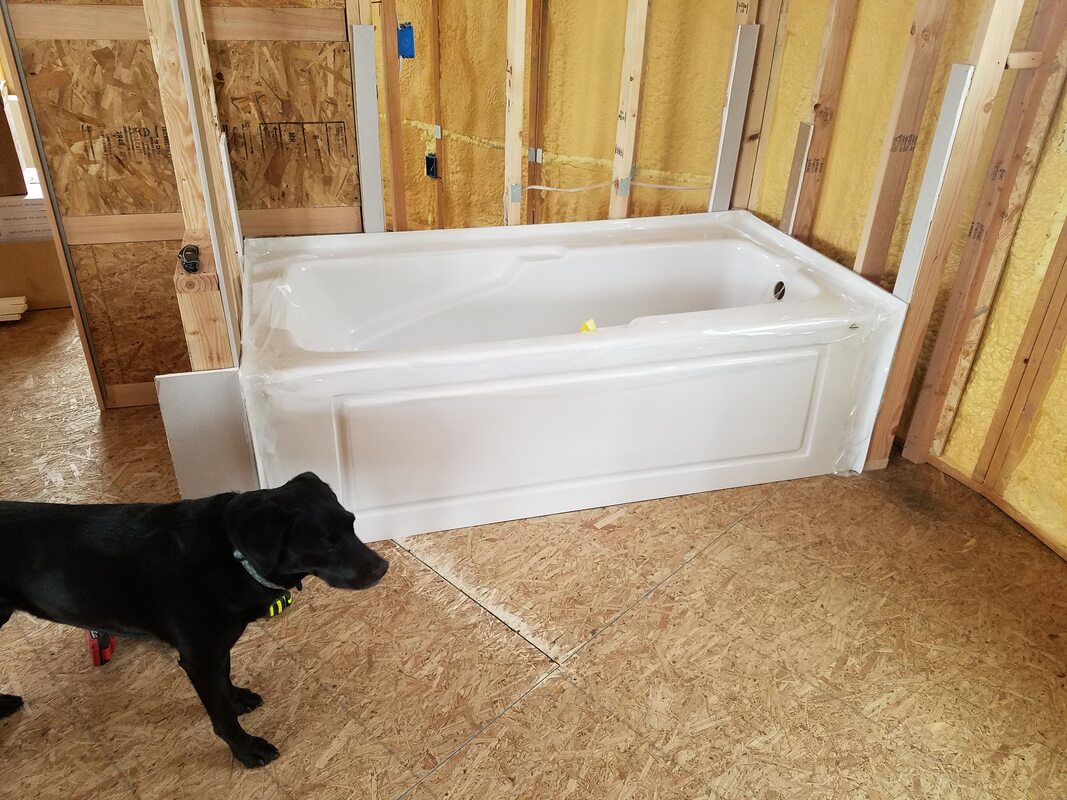
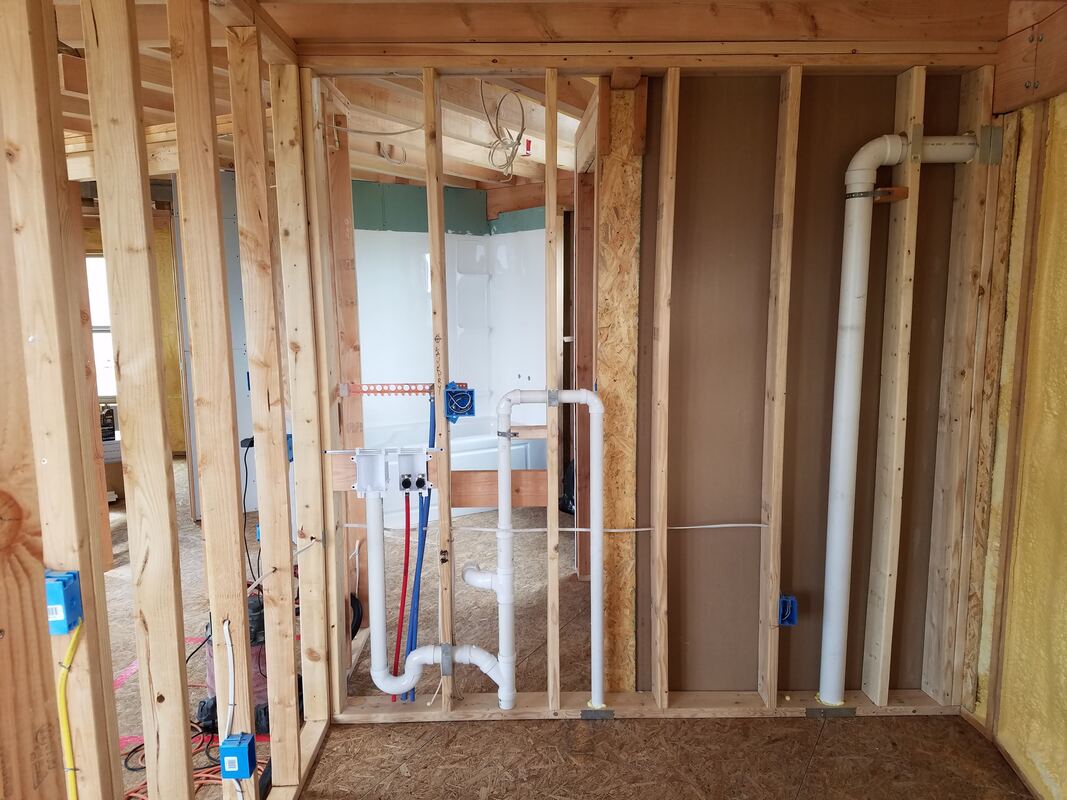
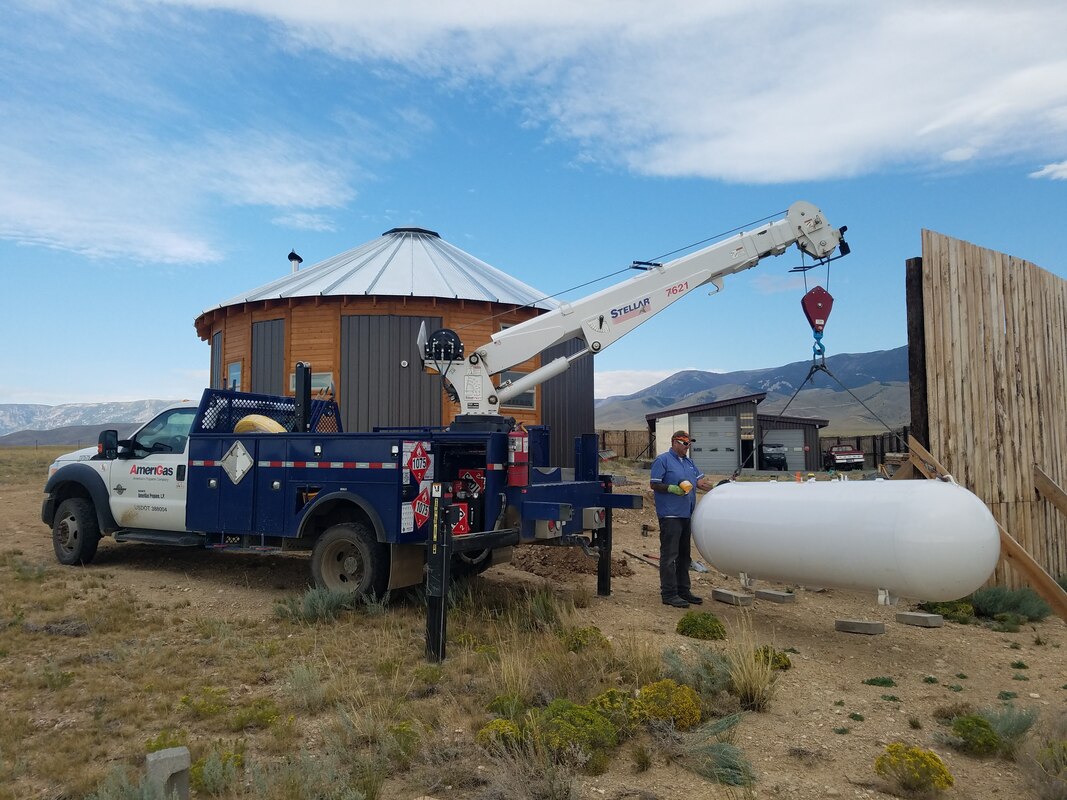
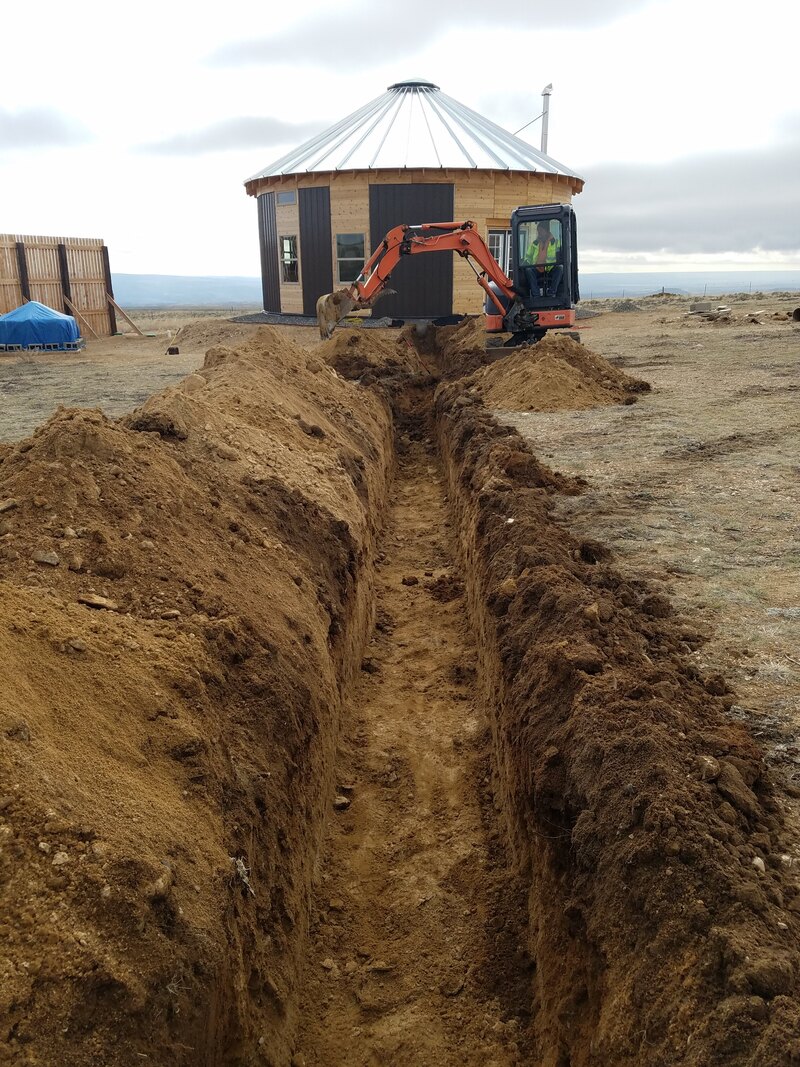
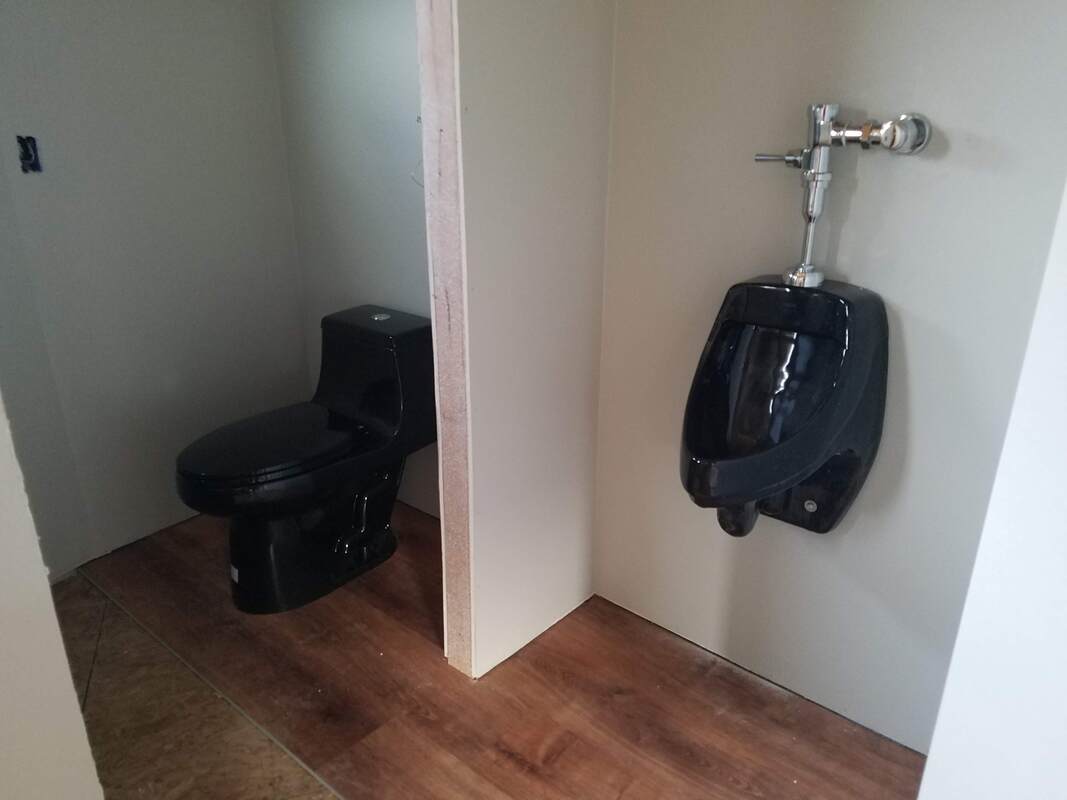
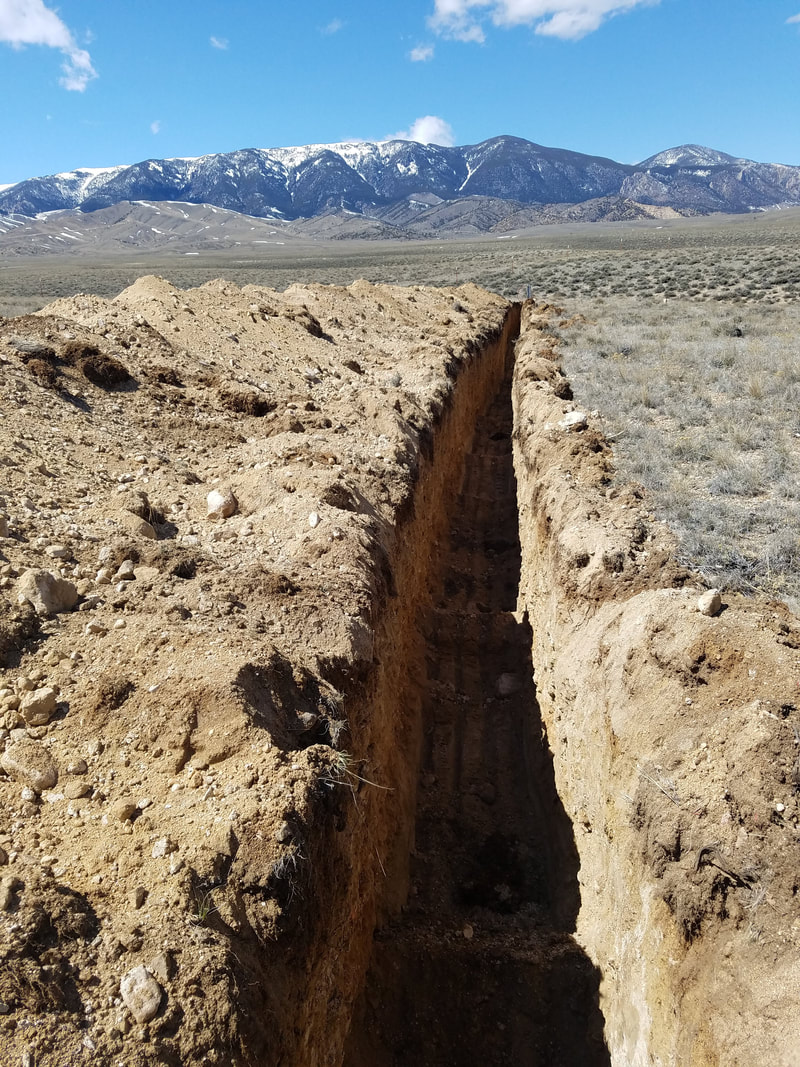
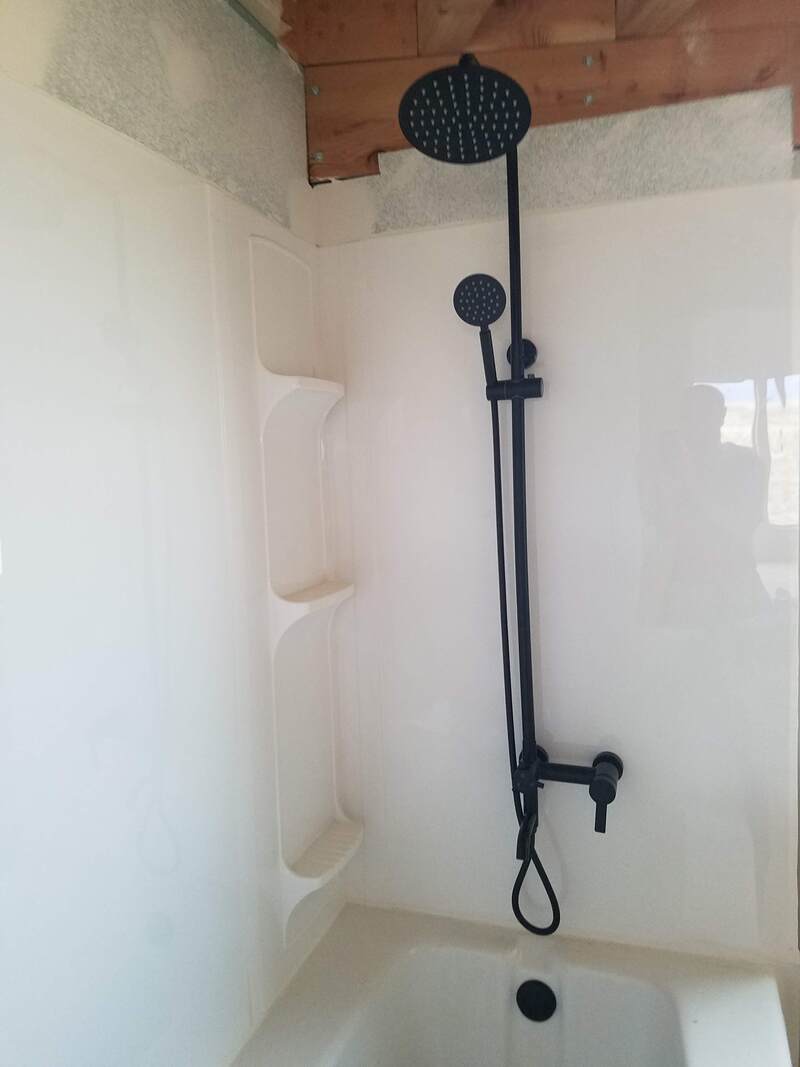
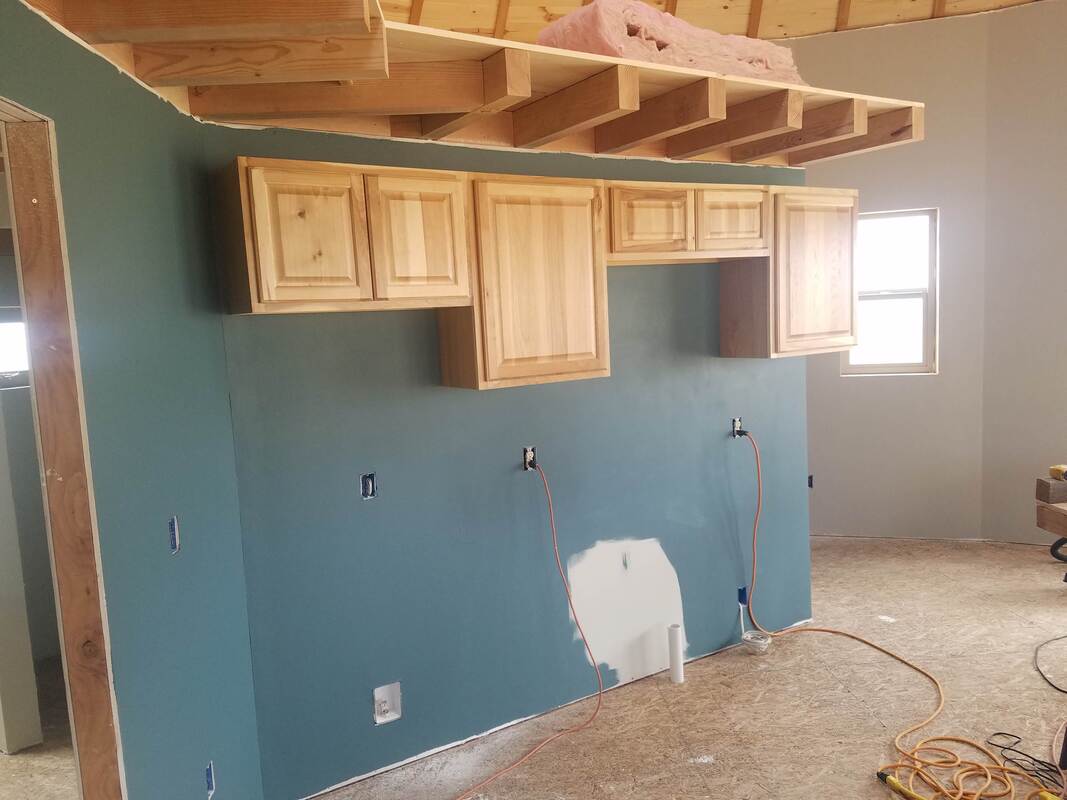
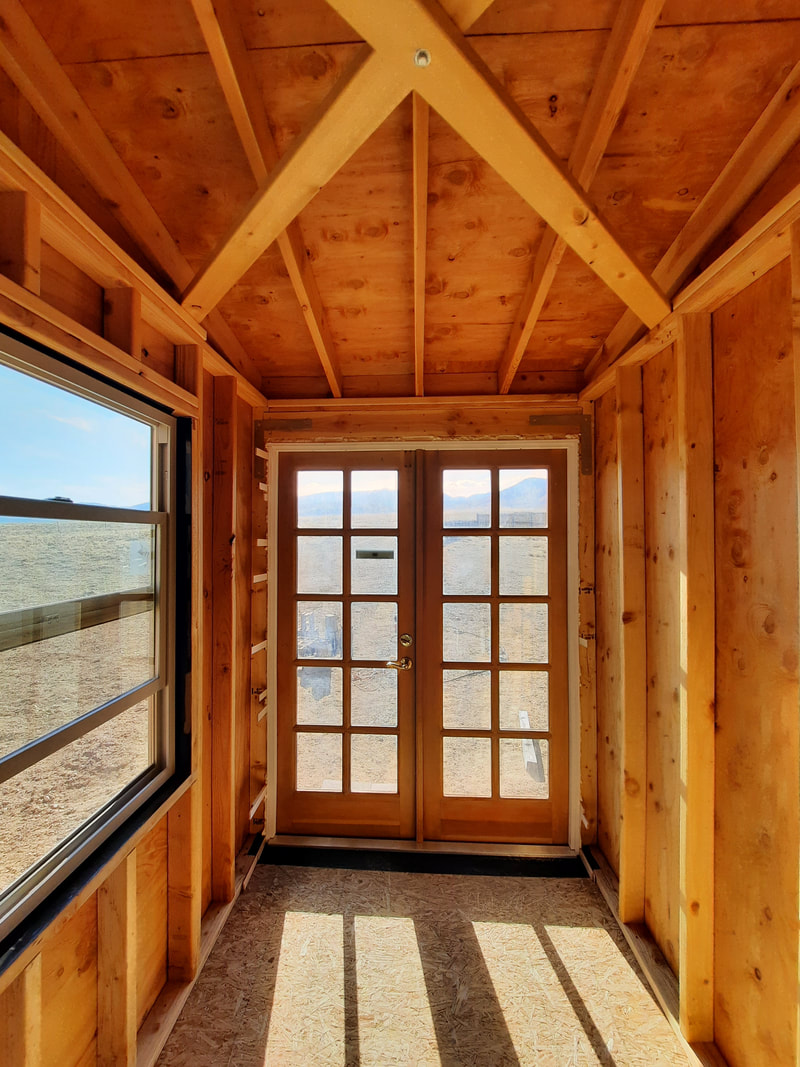
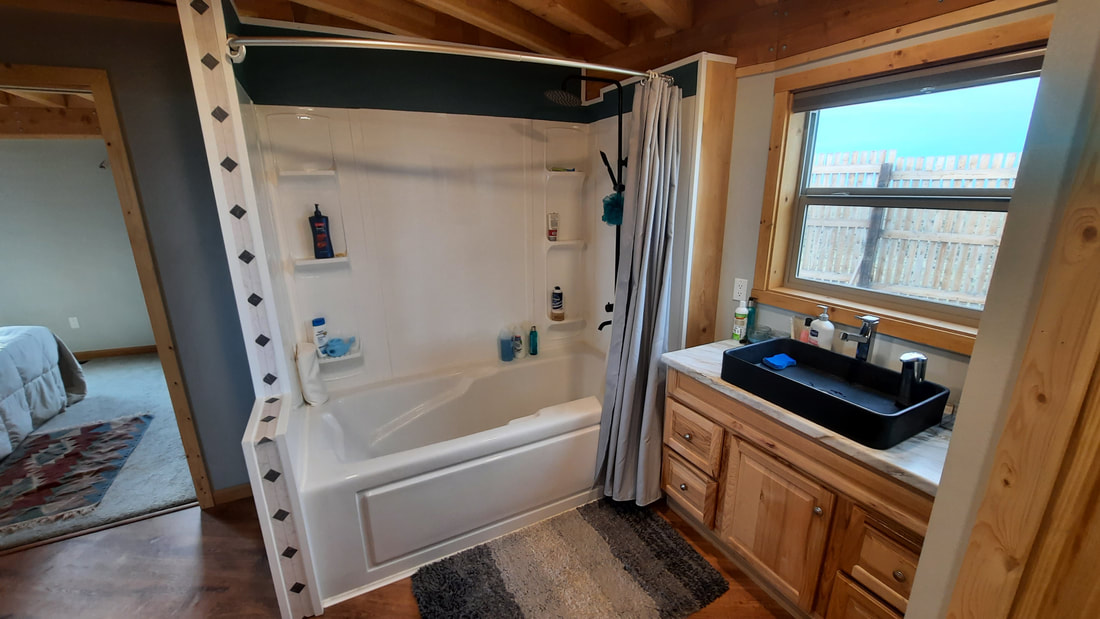
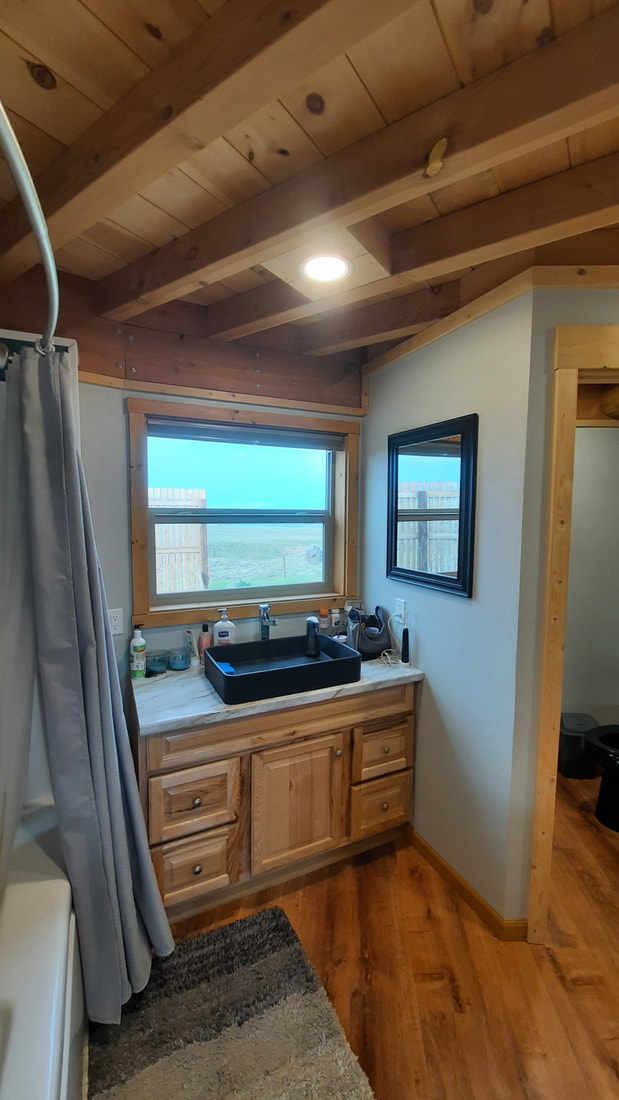
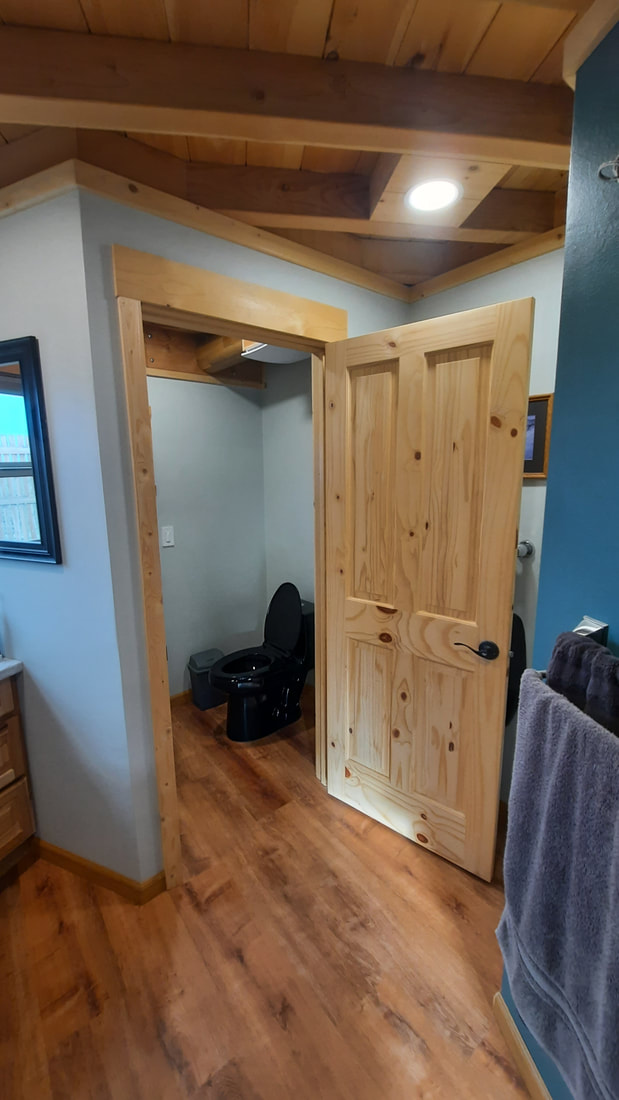
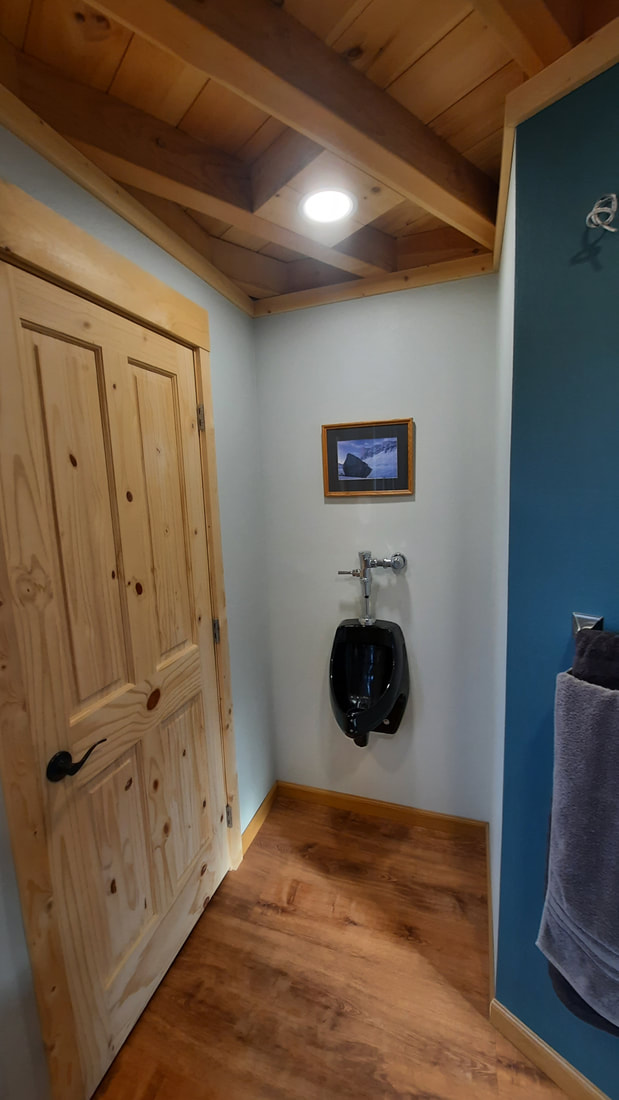
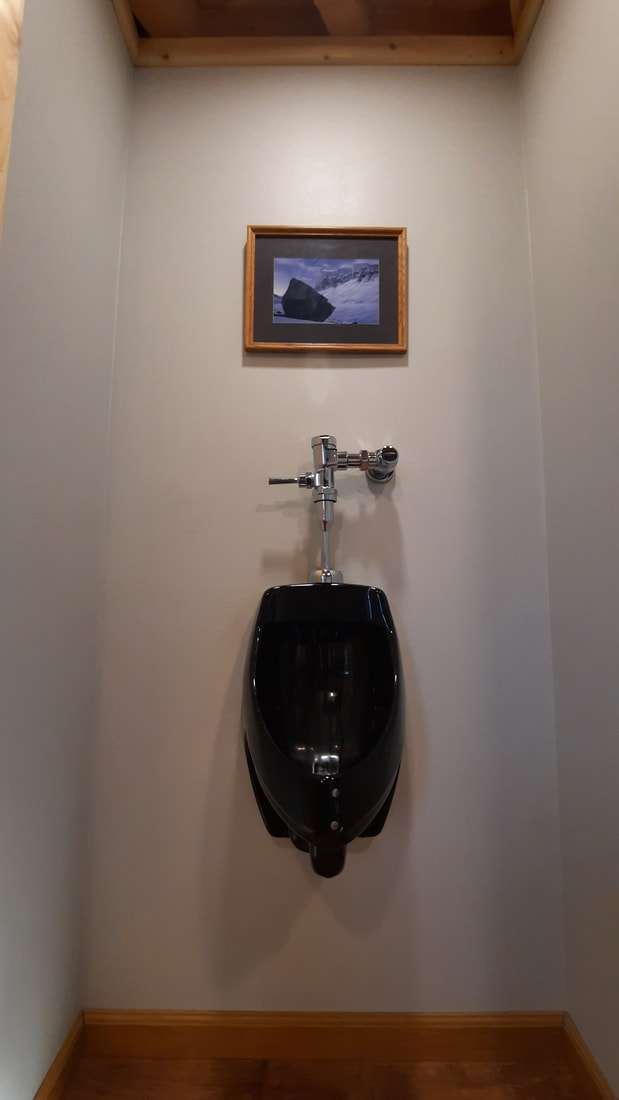
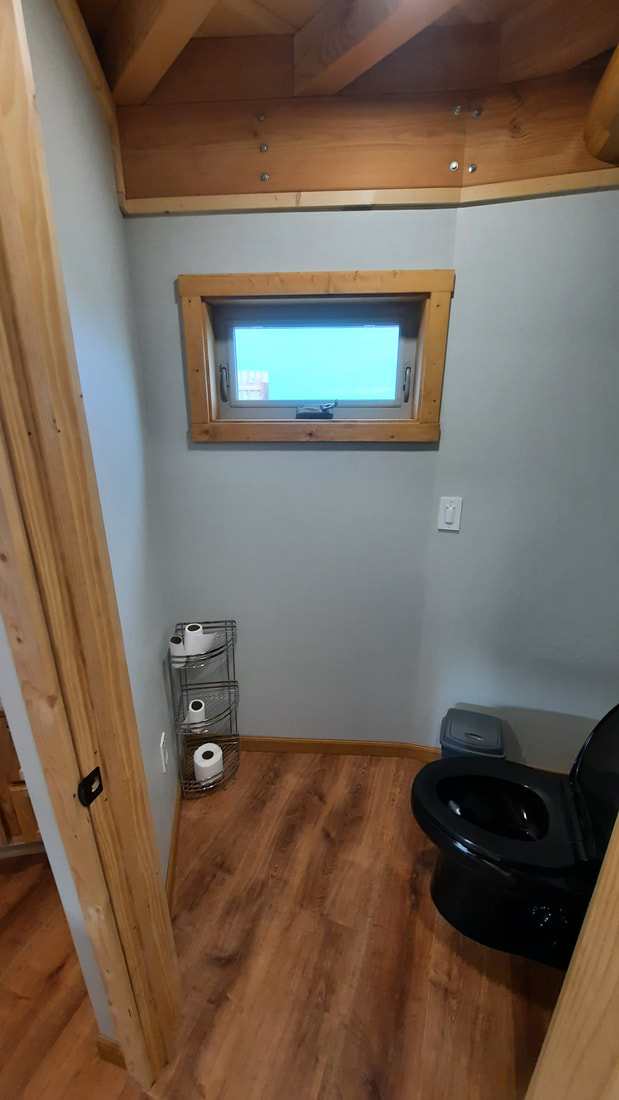
Next up: plumbing rough in, on-demand water heater installation, installing the whole-house water pump, trenching the electrical service feed from the garage, building out main floor lighting fixtures, setting the propane tank, trenching out the water line feed from the water well, setting exterior French doors in the mud room, and installing kitchen and bath fixtures. I was able to build custom light fixtures from scrap material at a cost of about $2 each and I think they look quite nice. And yes, I have a urinal! The plumbing rough in was the other main component that I needed quite a bit of help with. Working alongside a master plumber who came from Cody each day, he took my plans and turned them into reality over the course of about 5 days. I then was able to install fixtures myself when the time came with the plumber's stub outs. He was critical in making sure I used the best materials and practices that would meet standard codes.

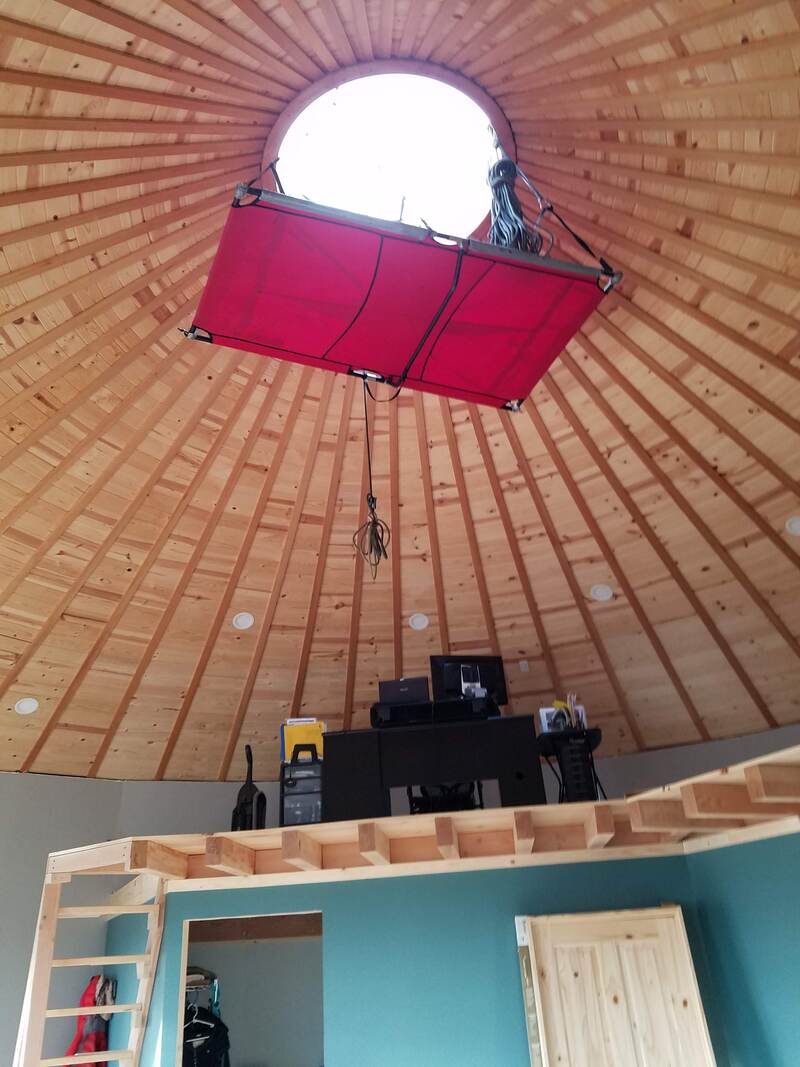
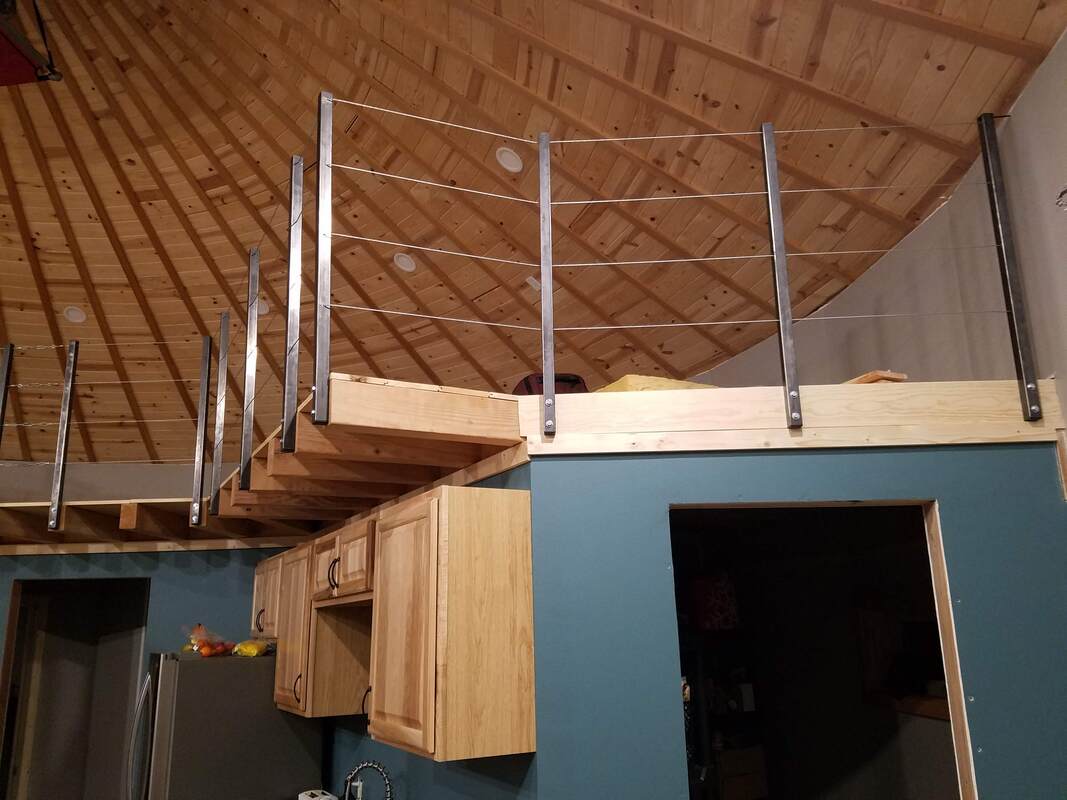
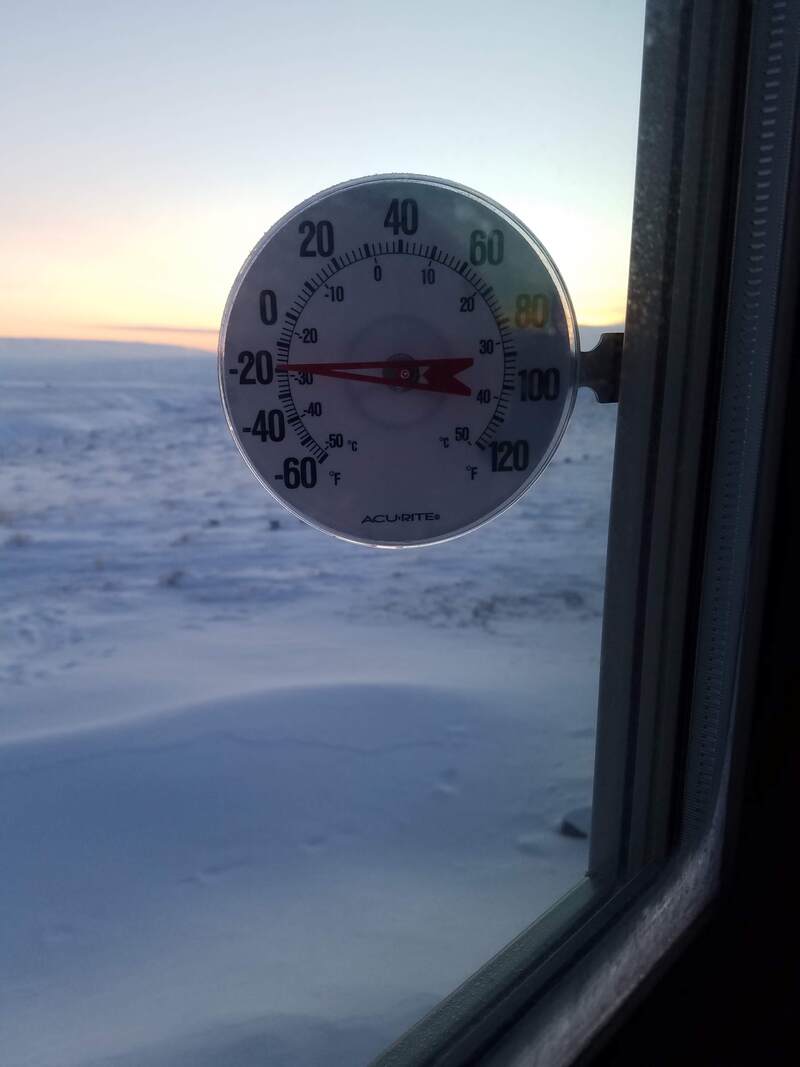
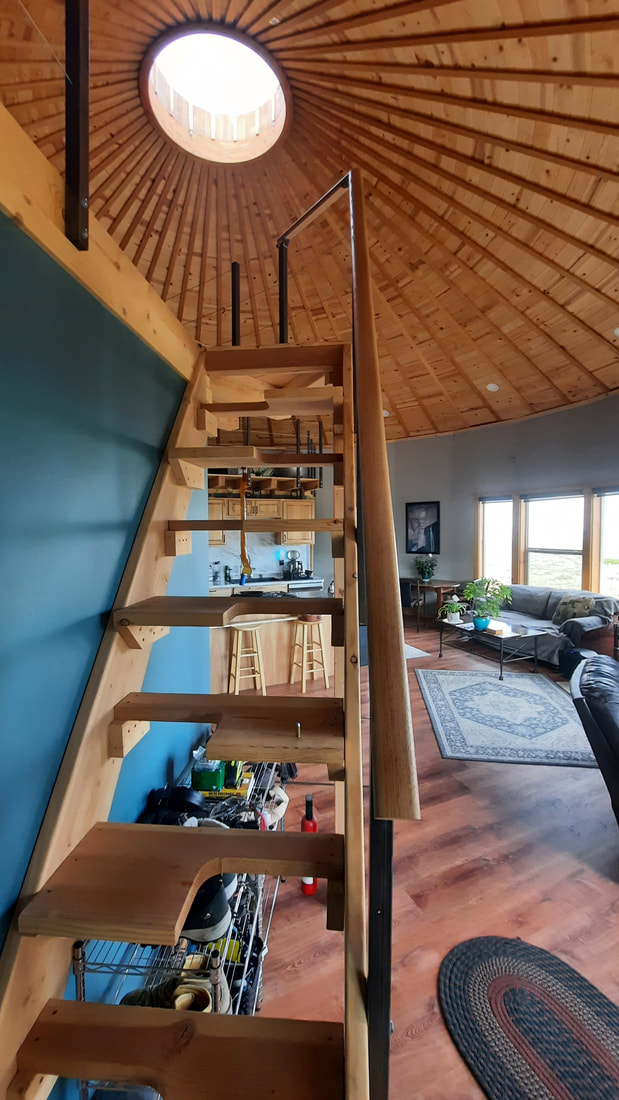
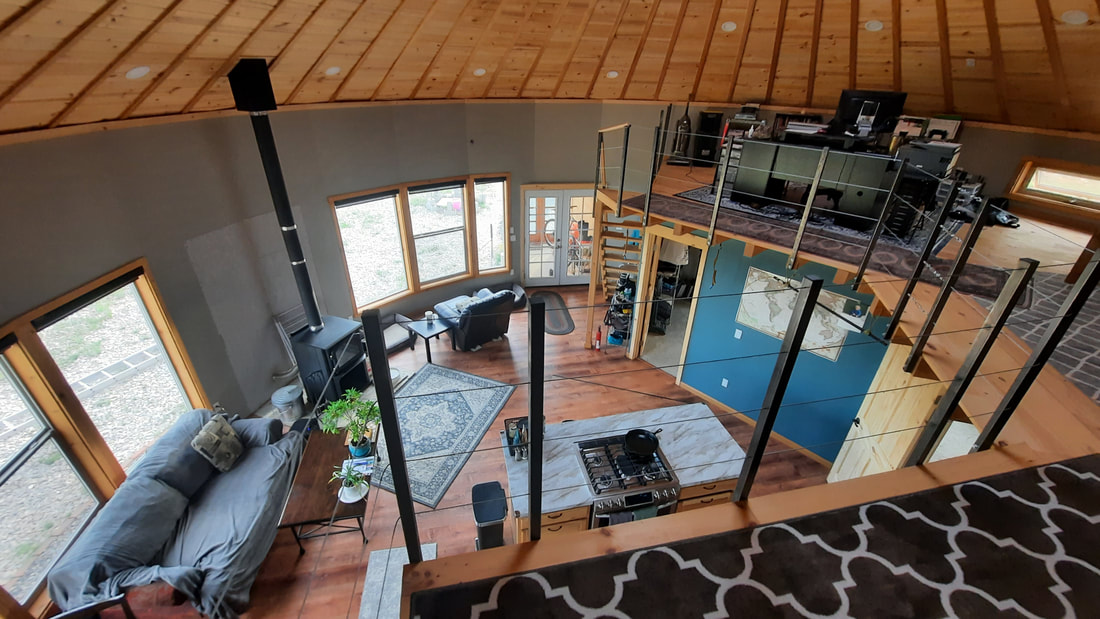
During a massive and powerful wind storm, I realized I had to permanently fix the dome skylight. The stock design has the entire skylight on a opener and it can crack about 5 inches open to help with ventilation. But it isn't very strong, and the entire lid nearly blew off its frame in 80 mph winds. The picture below shows my climbing portaledge up there as a work platform so I could insulate it and better seal it up. I then used lots of sheet metal screws to fix the moving parts together and it's never been an issue since. I also built a cable railing system for the loft. Oh, and the temps we can get are pretty legit -- this photo is from the prior winter.
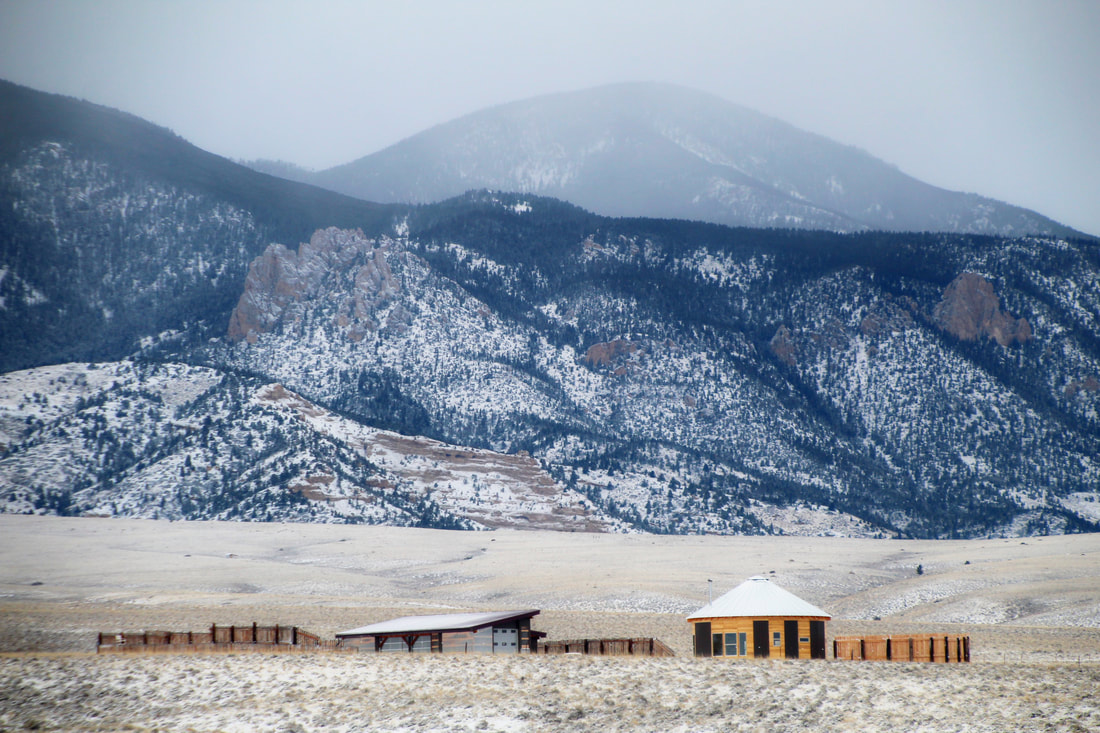
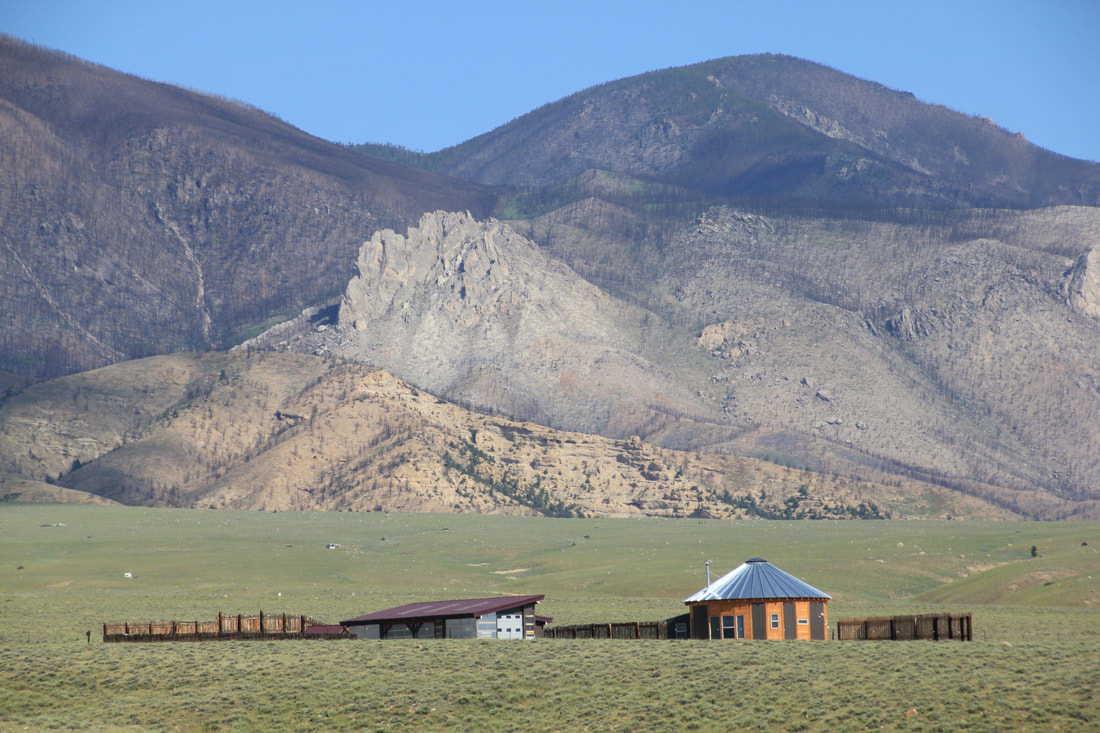
I should probably also mention that in June 2021, a massive wildfire ripped across our backyard -- the eastern Beartooth Front -- and destroyed 38,000 acres of the face of the mountain. The Robertson Draw fire was human caused -- by a dirt biker riding his bike illegally on a foot trail around the headwaters of Line Creek -- and a finger of it came within 1/2 mile of my property via the sagebrush. We were extremely fortunate that our immediate surroundings were unscathed, but at one point we thought it might all go down in flames. The culprit apparently was a convicted poacher and vehicle thief, living about 25 miles from here. That whole event was deeply personal -- numerous neighbors lost their properties, and I hope to reflect more deeply on it someday. But at least for now, you can see the before and after images in the final section of this page. Five months later, the biggest wind storm I've likely ever experienced anywhere ripped through the freshly burned areas and created apocalyptic scenes of ash clouds while sending wind driven gravel into my window and shattering it while I braced for the worst inside. It was pure chaos. My neighbor recorded a peak gust of 123 mph before his anemometer broke -- equal to a category III hurricane. 2021 was a pretty bad year but the house did very well.
I should probably also mention that in June 2021, a massive wildfire ripped across our backyard -- the eastern Beartooth Front -- and destroyed 38,000 acres of the face of the mountain. The Robertson Draw fire was human caused -- by a dirt biker riding his bike illegally on a foot trail around the headwaters of Line Creek -- and a finger of it came within 1/2 mile of my property via the sagebrush. We were extremely fortunate that our immediate surroundings were unscathed, but at one point we thought it might all go down in flames. The culprit apparently was a convicted poacher and vehicle thief, living about 25 miles from here. That whole event was deeply personal -- numerous neighbors lost their properties, and I hope to reflect more deeply on it someday. But at least for now, you can see the before and after images in the final section of this page. Five months later, the biggest wind storm I've likely ever experienced anywhere ripped through the freshly burned areas and created apocalyptic scenes of ash clouds while sending wind driven gravel into my window and shattering it while I braced for the worst inside. It was pure chaos. My neighbor recorded a peak gust of 123 mph before his anemometer broke -- equal to a category III hurricane. 2021 was a pretty bad year but the house did very well.
Finally Done!!!!!!
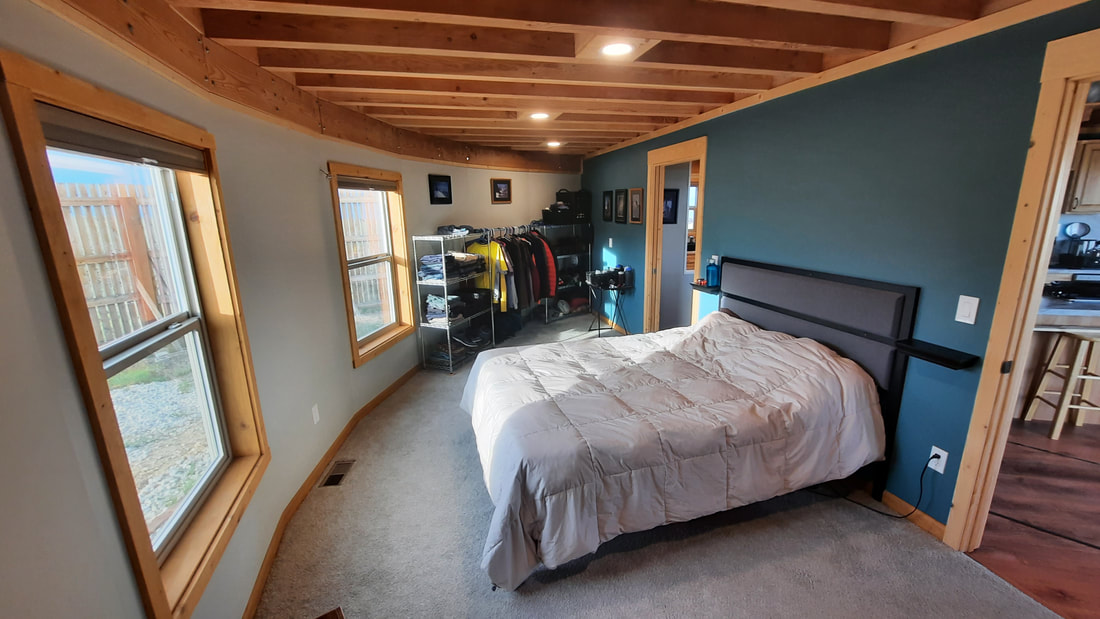
Carolin and I moved into the house on Thanksgiving evening of 2020. All systems were functional, but there was still no finished floor, no interior doors, no window casings, and many other details that I would eventually get to. But first, it was time to start enjoying life again after about 18 months of non-stop work -- both a 40 hour a week day job and every other minute spent working on the house. But it was livable, and warm! We cooked a massive thanksgiving feast and retired into my bed, which I had just hauled in from storage in the barn.
I'm writing this a couple years later -- late November 2022 -- when I can finally say that everything is now done. I took my time on the remaining finish work and frankly, I don't even remember when exactly it was officially finished. Maybe it never really is, as I tend to want to constantly improve on everything. But for all intents and purposes, the entire house process basically took me three years, using April 1, 2019 as the time I really got going and moved here full time, even though I made substantial progress the year before. I've been here ever since and currently have no plans to move away.
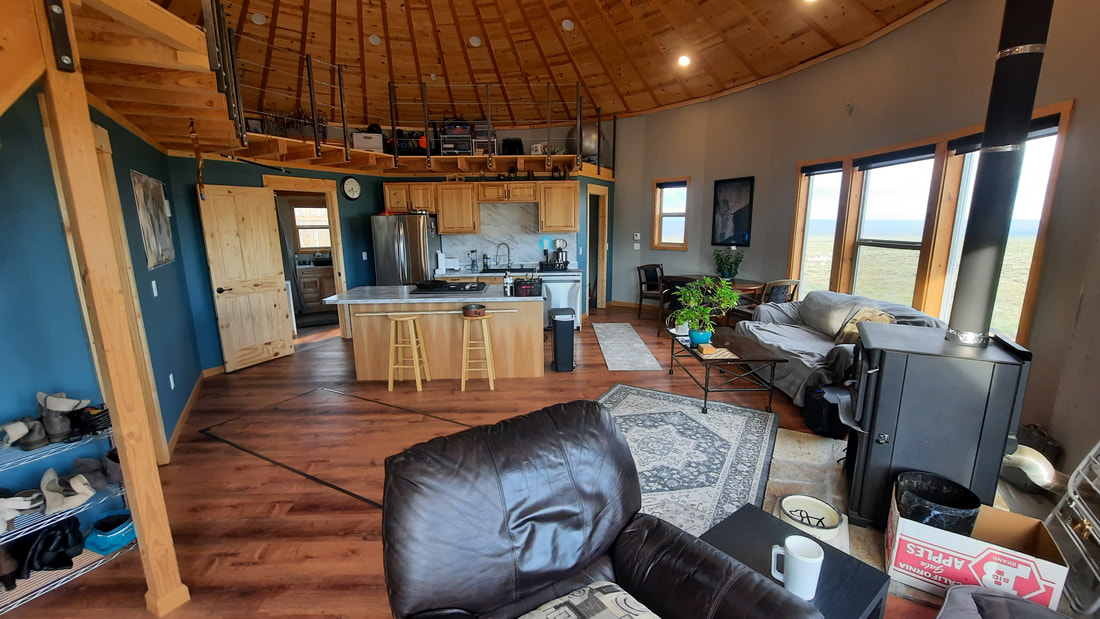
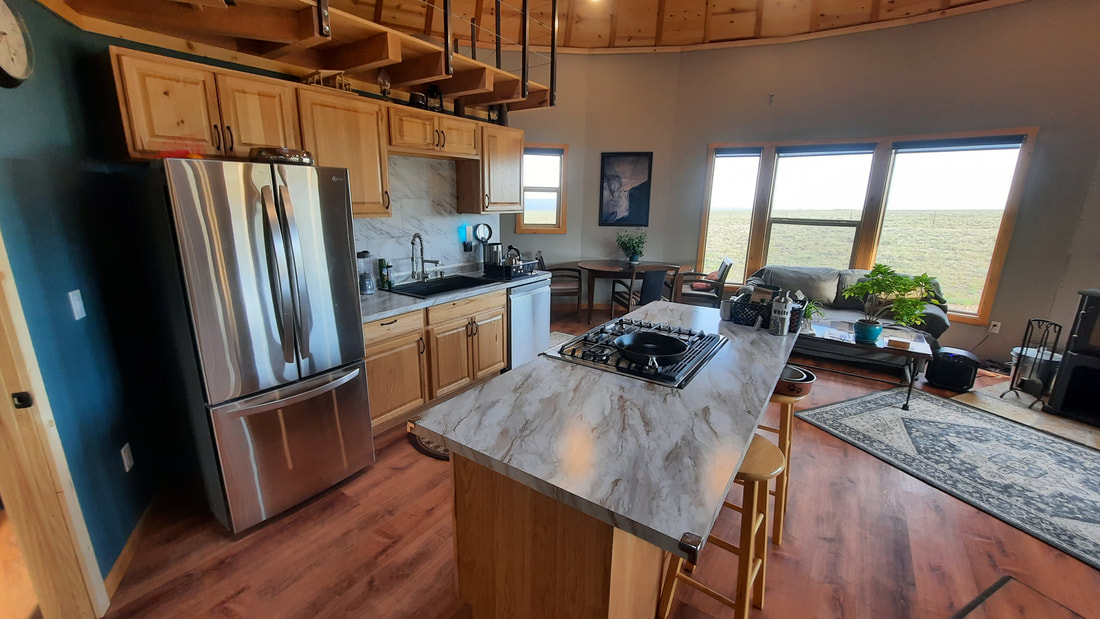
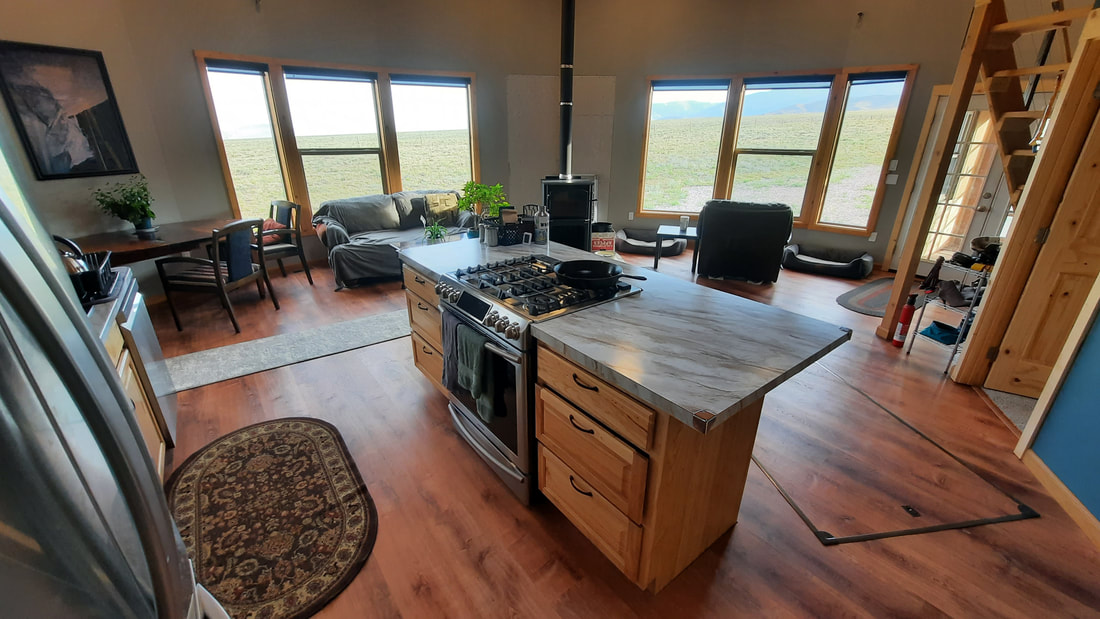
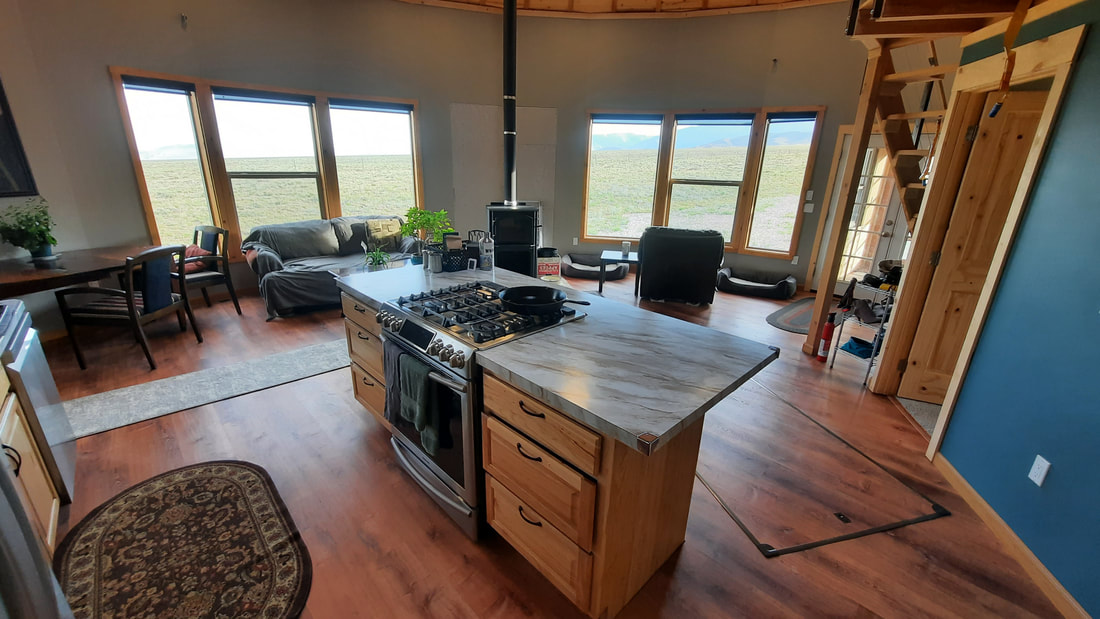
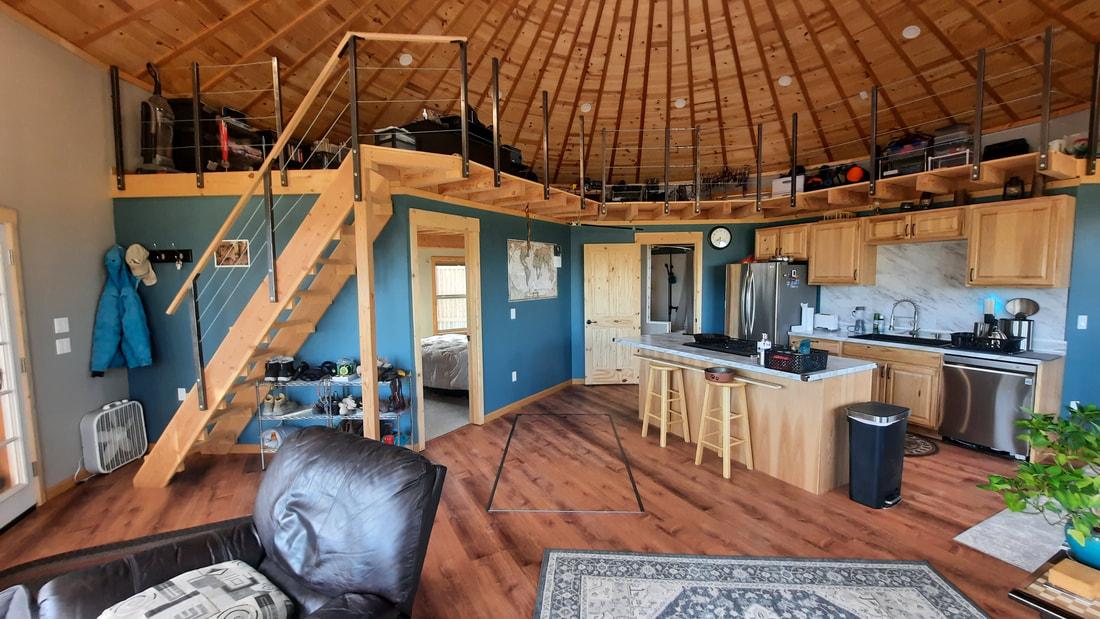
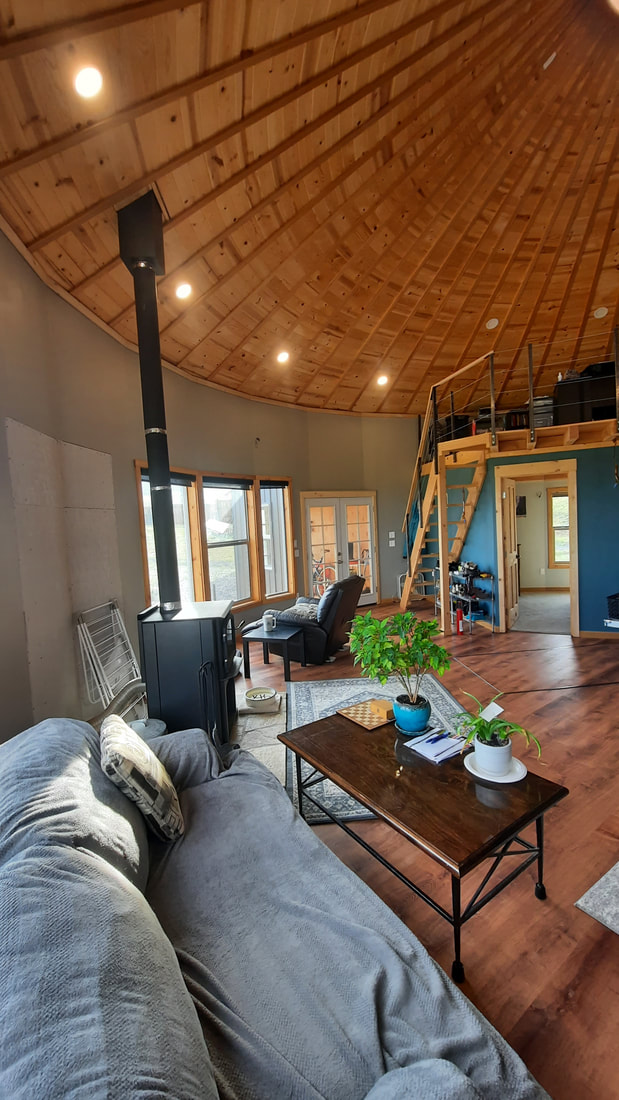
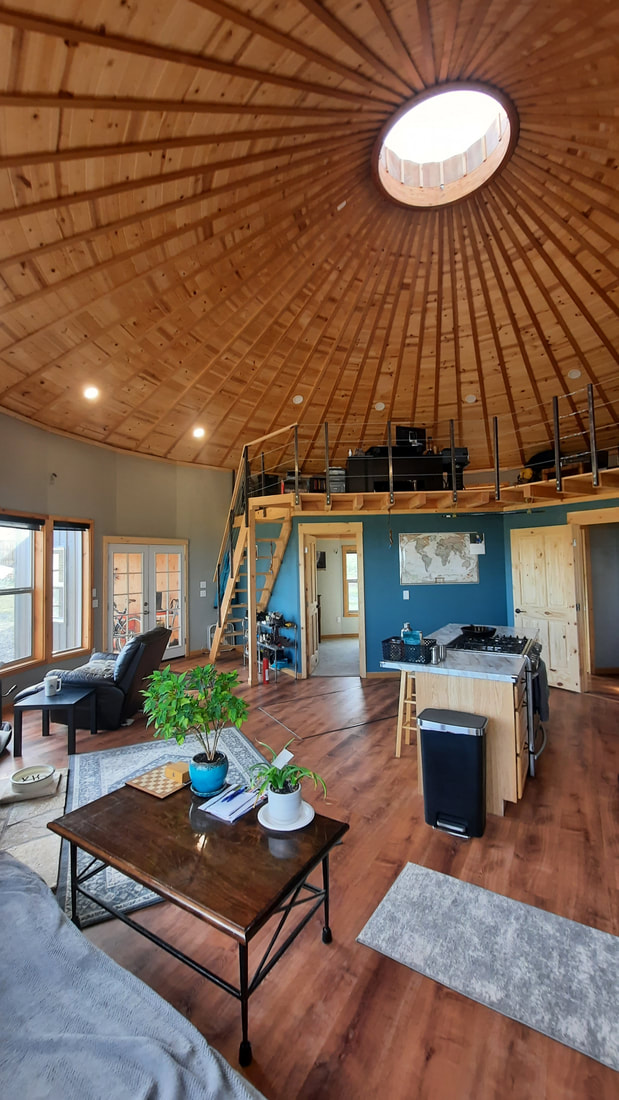
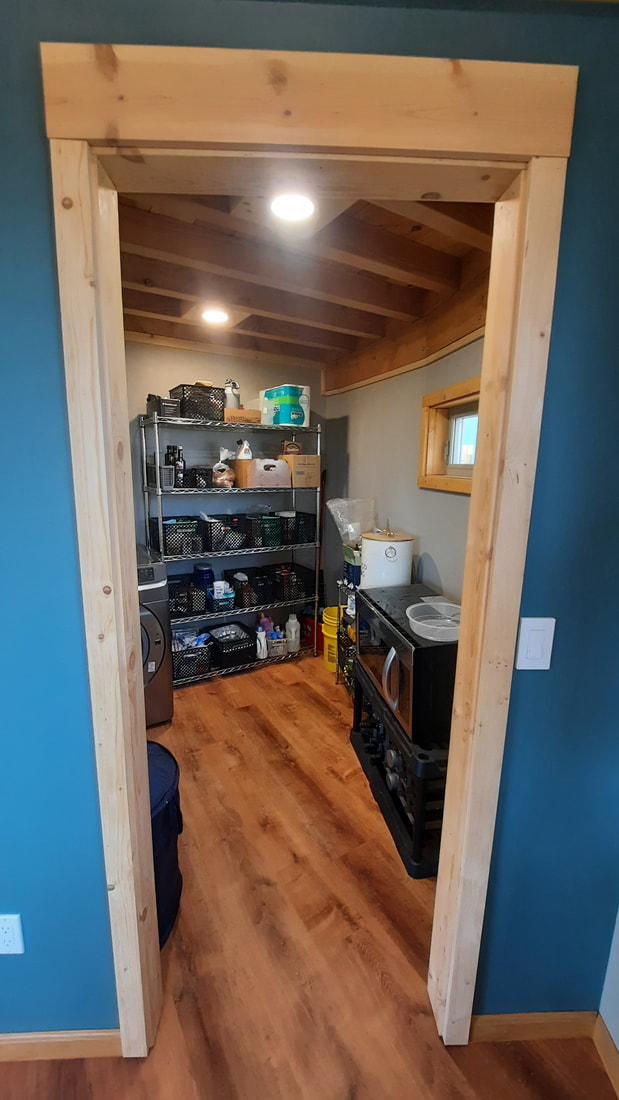
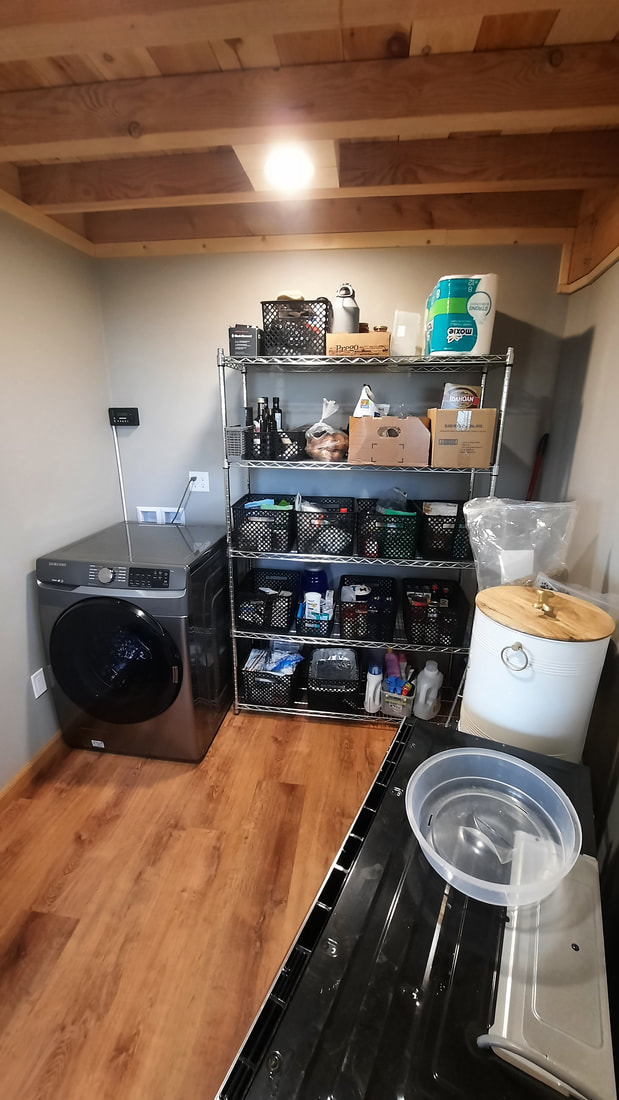
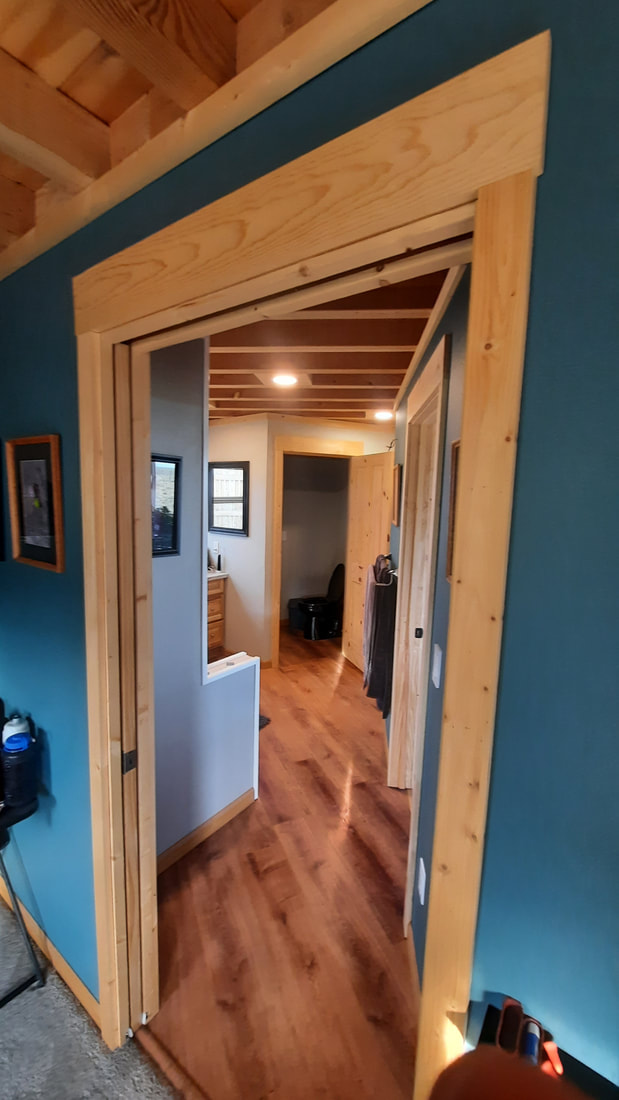
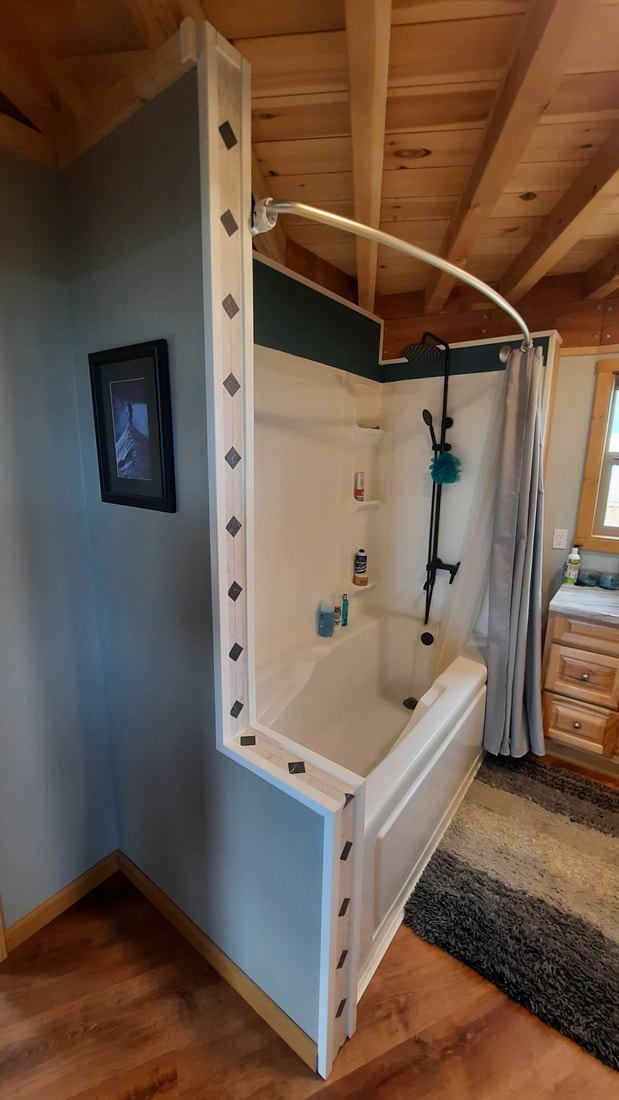
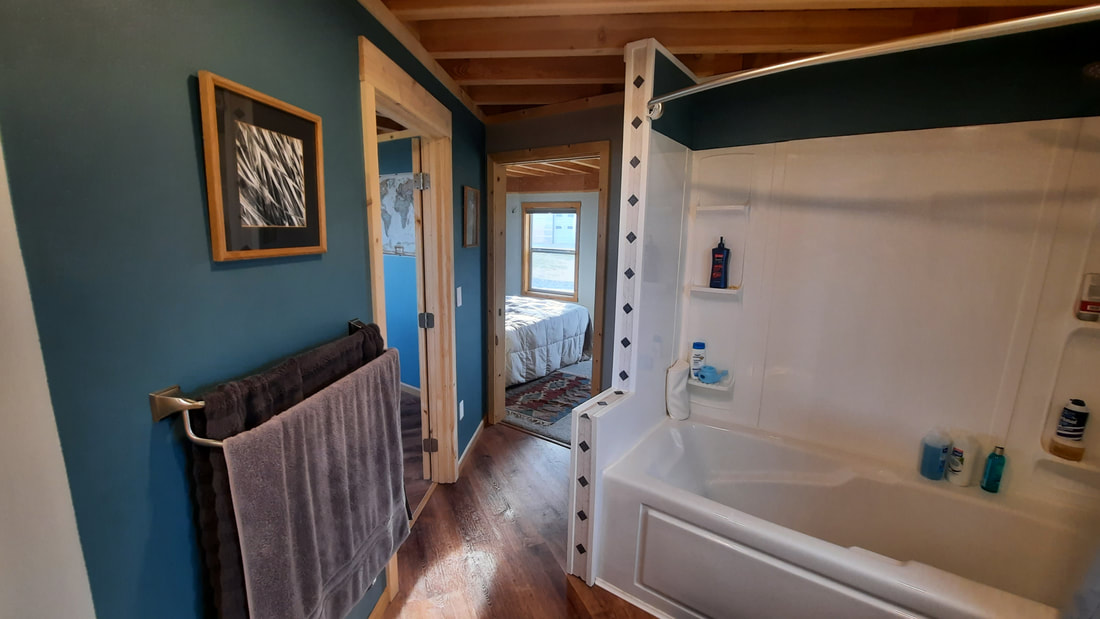
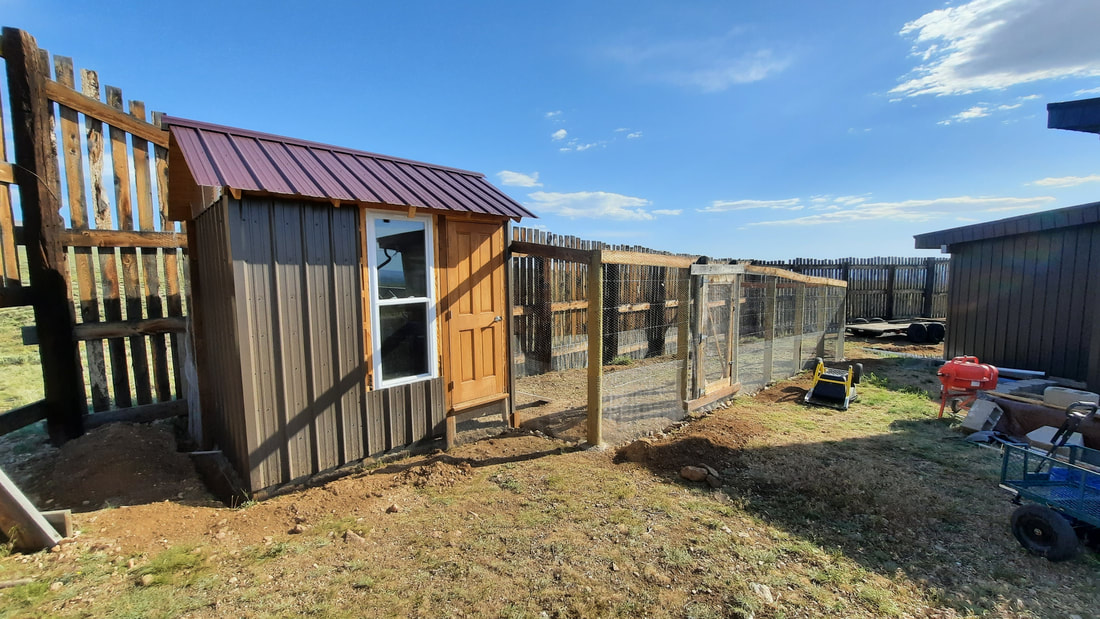
I set aside some time to shoot final photos of the house as I'd like to present it: enjoy! I've added more detail in some of the captions. You'll also note an ultra deluxe insulated chicken coop that Carolin and I spent over a year chipping away on, and is now functioning as intended, with seven birds calling it home and providing us eggs. Next year (2023) I intend to erect my 32 x 10 galvanized steel greenhouse kit and place it next to the barn. I've already taken delivery on it, and I don't think it will be too long before we are growing and raising much of our own food here, for if times get tough, or even if they don't, to quote Jack Spirko.
I'm writing this a couple years later -- late November 2022 -- when I can finally say that everything is now done. I took my time on the remaining finish work and frankly, I don't even remember when exactly it was officially finished. Maybe it never really is, as I tend to want to constantly improve on everything. But for all intents and purposes, the entire house process basically took me three years, using April 1, 2019 as the time I really got going and moved here full time, even though I made substantial progress the year before. I've been here ever since and currently have no plans to move away.
I set aside some time to shoot final photos of the house as I'd like to present it: enjoy! I've added more detail in some of the captions. You'll also note an ultra deluxe insulated chicken coop that Carolin and I spent over a year chipping away on, and is now functioning as intended, with seven birds calling it home and providing us eggs. Next year (2023) I intend to erect my 32 x 10 galvanized steel greenhouse kit and place it next to the barn. I've already taken delivery on it, and I don't think it will be too long before we are growing and raising much of our own food here, for if times get tough, or even if they don't, to quote Jack Spirko.

A bit on performance:
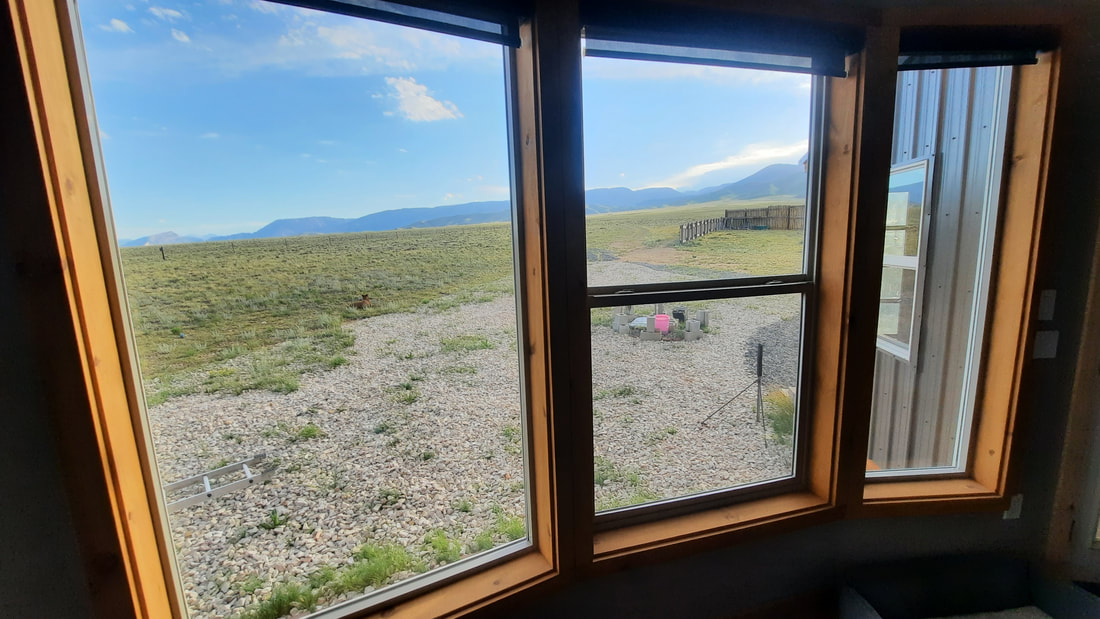
The house, situated at 5000 feet, is performing extremely well, especially in winter. The percentage of wall square footage dedicated to solar gain is just about ideal for this climate, and the north elements have relatively few windows. All the south and west facing windows are ultra low-E glazed and specialized for passive solar homes. The spray foamed R-80 ceiling and and R 40 walls are extremely tight and insulative; therefore, the house requires less than a cord of wood per year to heat -- that is approximately one full size truck pickup load of neatly stacked split logs. There is no other heating system aside from wood. Comparably sized structures in this area that only rely on wood burn several times this much; in one case, more like 10 cords. The heating season is roughly mid November through early April -- and the solar gain takes care of the rest until the summer heat kicks in.
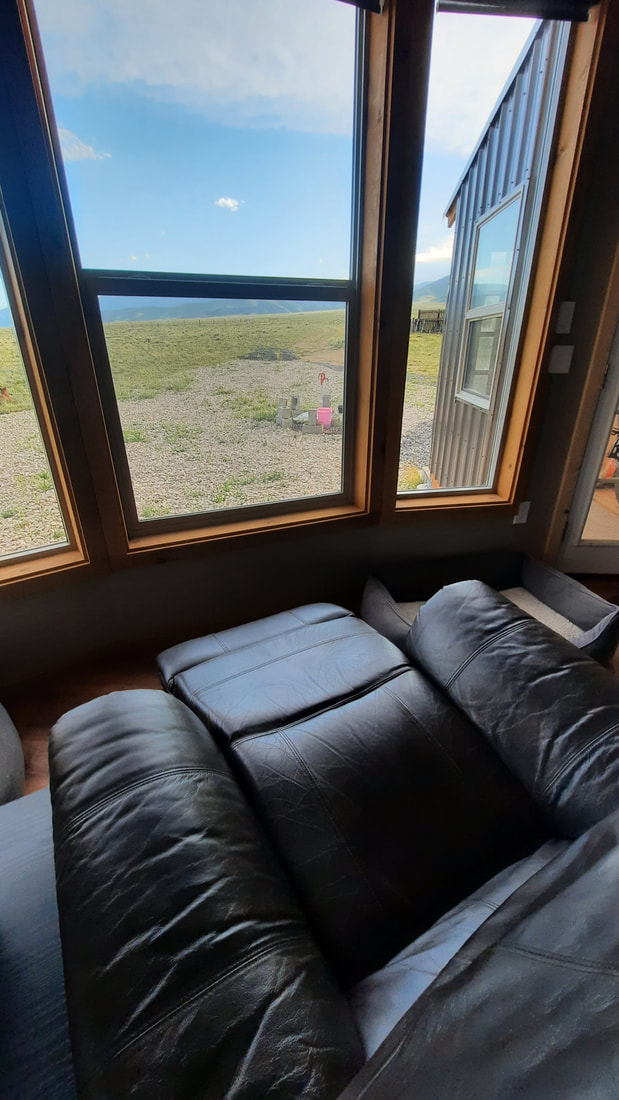
In early summer, the house is generally a perfect temperature, with occasional to frequent window opening desirable. But come late July, when the solar altitude is lower and the sun isn't blocked as much by the 18 inch roof overhang, the solar gain becomes a nuisance and interior temps often reach 85 degrees when the exterior temps are in the 90's. I installed interior pull down black solar shades with the hope that they would help cut down solar gain in late summer, but the purpose of their installation was actually mostly for winter glare when snow is on the ground, or for other times when one is hanging out on the couch or lounge chair directly in the patch of a strong sun. They're also black, so they absorb solar radiation and this heat ultimately gets inside the house.
To bring down the late summer temperatures, I've built custom window covers by laminating 1.5 inch blue board insulating foam panels to sheet siding material. The panels will hang on anchor bolts permanently installed on the house's exterior, but the panels themselves will be easily removable each summer. This will black out 4 of the 6 south facing windows from the outside and allow almost no infrared energy to enter the home. While it will be slightly darker inside, there will be no need for air conditioning, as each night the windows are opened to cool the it down for the next day. They will also serve as emergency storm window covers in case we ever get a repeat of the brutal wind storm of November 2021. A 250 watt swamp cooler will fine tune the interior temps back into the 70's without a problem. So, temps that can reach 100 degrees, and no AC needed.
On some days -- usually in winter -- when we see little sun, a 5000 watt backup generator keeps the batteries topped off as needed. It only takes about 3/4 of a gallon of gasoline to bring the 20 kilowatt hour battery bank from 70% state of charge back to 100%, which represents a full day with no sun. An average year will require perhaps 10 days total of such conditions, but hopefully some day I'll have a much larger battery bank so this will almost never be needed.
Propane is only used to heat water and for the cook stove and oven. The average annual usage for 2 people has averaged 0.34 gallons per day, which I think is super minimal.
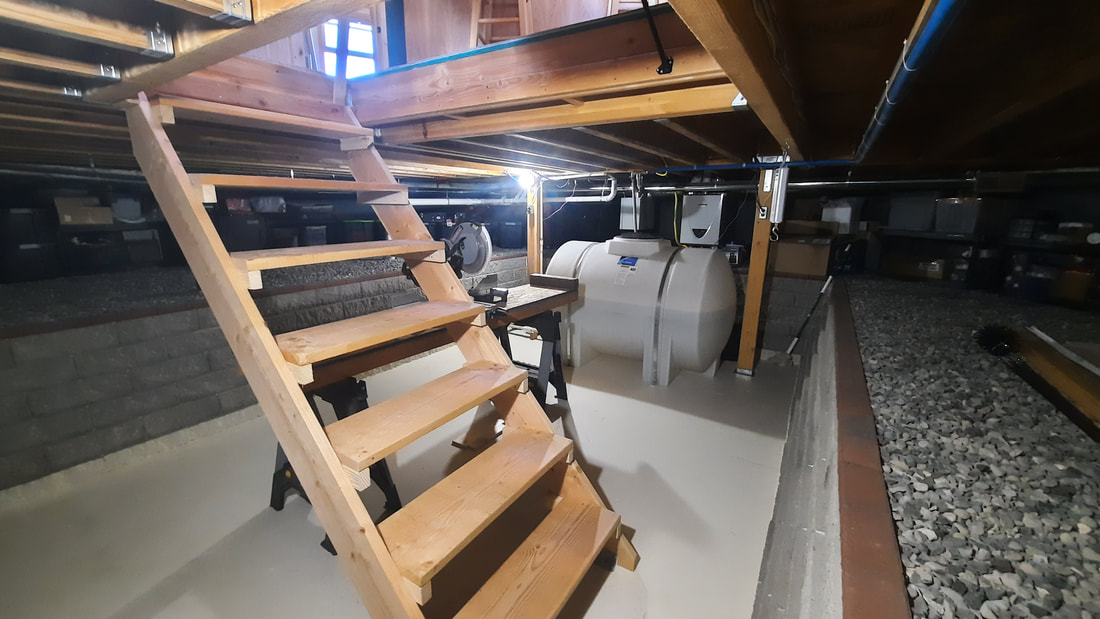
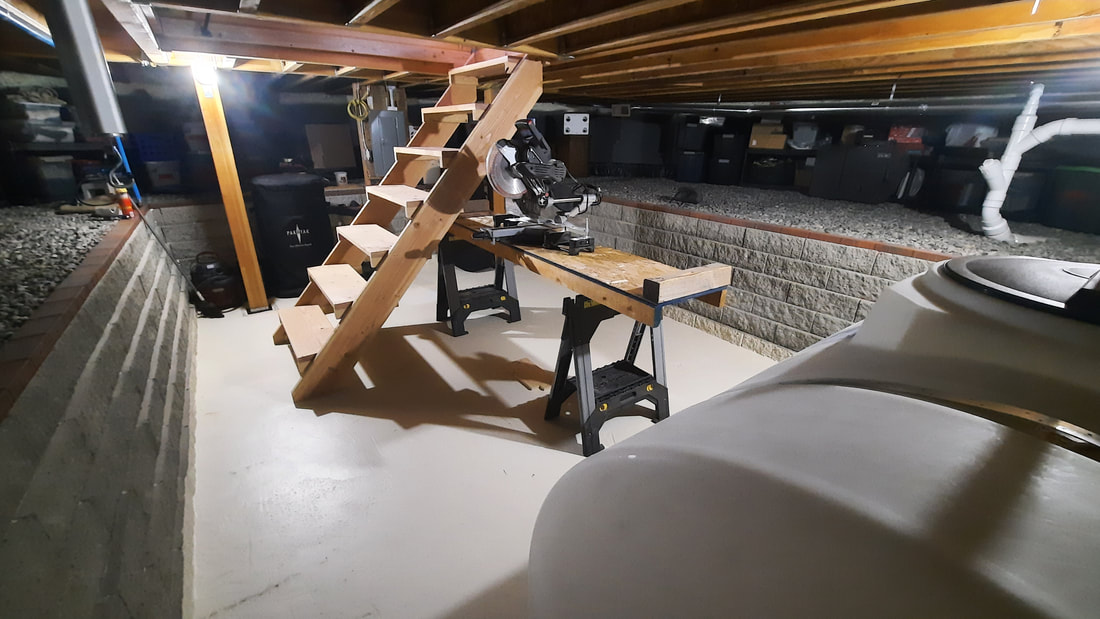
The basement has never frozen, even in subzero temperatures with no supplemental heat in the house. This allows for storage of paints and other materials that should never freeze, and it offers protection for plumbing freezing in the basement. I intend to integrate an antifreeze winterizing system into the plumbing soon just so I could theoretically leave the house for an entire winter and never have to worry about it, but I'm not sure the house would freeze anyway given the solar gain. It would take an exceptional and prolonged storm to test that. Besides, almost all interior plumbing runs along interior partition walls, not on exterior walls, and uses pex line, which is highly freeze tolerant anyway.
Finally, in a house this tight, ventilation is mandatory, so I installed a simple 60 CFM high efficiency heat recovery ventilation system. It has just a single pair of intake and supply vents in the floor, and the same in the basement to keep that air fresh and reduce any possible radon levels. There's also a carbon monoxide and propane gas detector in the basement, plus hard wired fire alarms throughout the house and basement. Everything is code compliant and passed a state electrical inspection.
If you're interested in off grid living, I'm available to help. Feel free to reach out at seven seven five, 815, nine nine three six or pdronkers at gmail dot com.
The house, situated at 5000 feet, is performing extremely well, especially in winter. The percentage of wall square footage dedicated to solar gain is just about ideal for this climate, and the north elements have relatively few windows. All the south and west facing windows are ultra low-E glazed and specialized for passive solar homes. The spray foamed R-80 ceiling and and R 40 walls are extremely tight and insulative; therefore, the house requires less than a cord of wood per year to heat -- that is approximately one full size truck pickup load of neatly stacked split logs. There is no other heating system aside from wood. Comparably sized structures in this area that only rely on wood burn several times this much; in one case, more like 10 cords. The heating season is roughly mid November through early April -- and the solar gain takes care of the rest until the summer heat kicks in.
In early summer, the house is generally a perfect temperature, with occasional to frequent window opening desirable. But come late July, when the solar altitude is lower and the sun isn't blocked as much by the 18 inch roof overhang, the solar gain becomes a nuisance and interior temps often reach 85 degrees when the exterior temps are in the 90's. I installed interior pull down black solar shades with the hope that they would help cut down solar gain in late summer, but the purpose of their installation was actually mostly for winter glare when snow is on the ground, or for other times when one is hanging out on the couch or lounge chair directly in the patch of a strong sun. They're also black, so they absorb solar radiation and this heat ultimately gets inside the house.
To bring down the late summer temperatures, I've built custom window covers by laminating 1.5 inch blue board insulating foam panels to sheet siding material. The panels will hang on anchor bolts permanently installed on the house's exterior, but the panels themselves will be easily removable each summer. This will black out 4 of the 6 south facing windows from the outside and allow almost no infrared energy to enter the home. While it will be slightly darker inside, there will be no need for air conditioning, as each night the windows are opened to cool the it down for the next day. They will also serve as emergency storm window covers in case we ever get a repeat of the brutal wind storm of November 2021. A 250 watt swamp cooler will fine tune the interior temps back into the 70's without a problem. So, temps that can reach 100 degrees, and no AC needed.
On some days -- usually in winter -- when we see little sun, a 5000 watt backup generator keeps the batteries topped off as needed. It only takes about 3/4 of a gallon of gasoline to bring the 20 kilowatt hour battery bank from 70% state of charge back to 100%, which represents a full day with no sun. An average year will require perhaps 10 days total of such conditions, but hopefully some day I'll have a much larger battery bank so this will almost never be needed.
Propane is only used to heat water and for the cook stove and oven. The average annual usage for 2 people has averaged 0.34 gallons per day, which I think is super minimal.
The basement has never frozen, even in subzero temperatures with no supplemental heat in the house. This allows for storage of paints and other materials that should never freeze, and it offers protection for plumbing freezing in the basement. I intend to integrate an antifreeze winterizing system into the plumbing soon just so I could theoretically leave the house for an entire winter and never have to worry about it, but I'm not sure the house would freeze anyway given the solar gain. It would take an exceptional and prolonged storm to test that. Besides, almost all interior plumbing runs along interior partition walls, not on exterior walls, and uses pex line, which is highly freeze tolerant anyway.
Finally, in a house this tight, ventilation is mandatory, so I installed a simple 60 CFM high efficiency heat recovery ventilation system. It has just a single pair of intake and supply vents in the floor, and the same in the basement to keep that air fresh and reduce any possible radon levels. There's also a carbon monoxide and propane gas detector in the basement, plus hard wired fire alarms throughout the house and basement. Everything is code compliant and passed a state electrical inspection.
If you're interested in off grid living, I'm available to help. Feel free to reach out at seven seven five, 815, nine nine three six or pdronkers at gmail dot com.